
Common quail
Coturnix coturnix
Description
How to identify
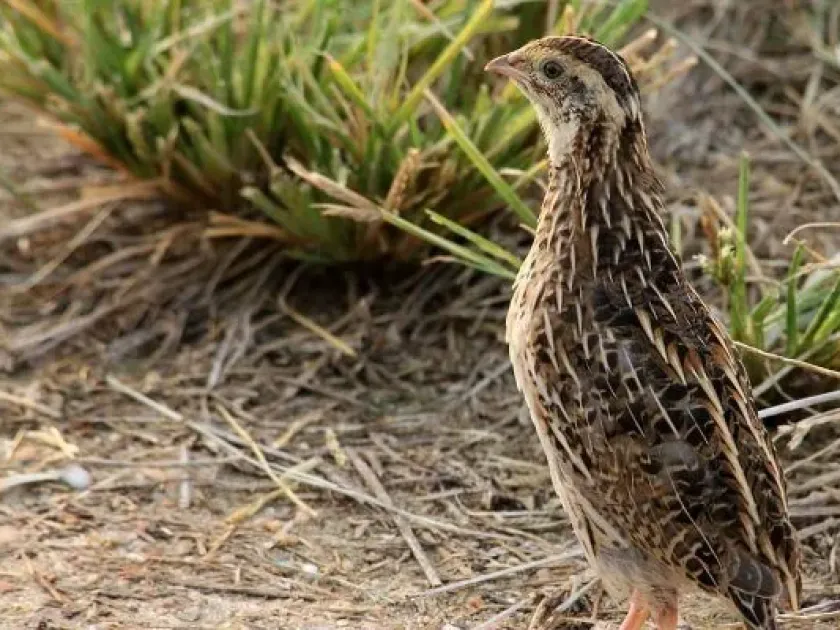
The common quail (Coturnix coturnix) is a small ground-dwelling bird belonging to the order Galliformes and the family Phasianidae. It is characterized by a stocky build and cryptic plumage, which features a complex pattern of brown, buff, and black stripes, providing excellent camouflage in tall grass and grain fields.
Adult quails are small, measuring approximately 16 to 20 cm in length. Both sexes have similar coloring, although male quails typically have a darker throat patch compared to the lighter, spotted throat of the females, which is a key identifying trait during the nesting season.
What it damages
This bird species is known to cause significant agricultural damage to cereals such as wheat, barley, millet, and oats. Quails often target freshly sown fields, feeding on the seeds before they have a chance to germinate, which creates gaps and reduces overall crop density.
Furthermore, during the ripening stages, quails feed on the grain when it is in the milk or dough phase. While individual consumption might seem small, a local population or a migratory flock can cause substantial yield losses in localized areas of the field, especially near field margins.
When it appears
The common quail is a migratory species that arrives at its breeding grounds between April and May. This arrival coincides with the early vegetative development of crops, providing ideal cover for nesting and shelter throughout the warmer months of the year.
The period of highest activity and potential damage occurs from late June through August. During this time, newly hatched chicks reach maturity and the grains reach the milky-wax stage, making the fields highly attractive to the birds until harvest time or the onset of autumn migration.
Signs of infestation
Signs of infestation include small, shallow holes in the soil surface where birds have scratched to find seeds. Additionally, farmers may observe broken stems or empty husks on the stalks of the crops, indicating that the grain has been consumed by ground-feeding birds.
The presence of quails is often signaled by the distinct repetitive calls of the males, which can be heard echoing from within the dense canopy of the crop field. Droppings found along tramlines and the edges of the field are also indicative of a settled population of quails in the area.
Control measures
Control strategies for the common quail are primarily non-lethal due to the protected status of migratory birds in many jurisdictions. The use of visual deterrents, such as scarecrows, holographic tapes, and reflective surfaces, is standard practice to keep birds away from sensitive crop areas.
Acoustic deterrents that broadcast predator sounds or bird alarm calls are also widely used. From an agronomic perspective, maintaining weed-free fields and minimizing cover at the edges of the plantation can discourage the birds from nesting and foraging within the crop rows, thereby mitigating potential losses.
Taxonomy
- Latin name
- Coturnix coturnix
- Family
- Phasianidae
- EPPO code
- COTXCO
Discussion
No discussions yet — be the first.