
Cosymbia moth
Cosymbia
Description
How to identify
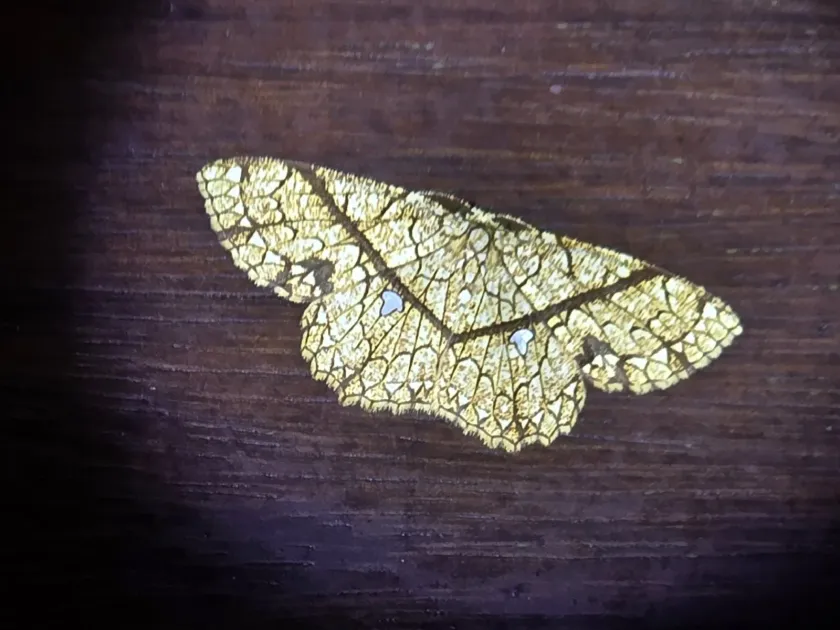
The Cosymbia moth belongs to the family Geometridae. These moths are characterized by their medium size and wingspans adorned with intricate, fine lines that provide excellent camouflage against tree bark, making them difficult to detect during the day.
Adult moths are primarily nocturnal, resting during the daylight hours on trunks or the undersides of leaves. Their larvae, commonly known as inchworms, move by looping their bodies, pulling the rear portion toward their thoracic legs.
The coloration of the caterpillars ranges from green to brown, allowing them to mimic young shoots or twigs seamlessly. They typically have a smooth body texture, lacking prominent hairs, which helps them remain unnoticed by predators.
The life cycle encompasses egg, larva, pupa, and adult stages. Depending on the local climate and temperature, this species often completes one or two generations per season, increasing the risk of population outbreaks.
Overwintering usually occurs in the pupal stage. They spin dense cocoons within leaf litter or deep in the crevices of tree bark, providing significant protection against winter frost and environmental stress.
What it damages
This pest primarily affects deciduous trees and shrubs. In horticultural environments, it poses a significant threat to fruit-bearing crops, including apple, pear, plum, and cherry trees, which are susceptible to larval grazing.
Beyond cultivated gardens, the Cosymbia moth is frequently found on forest species such as birch, oak, and alder. These woodland areas often serve as reservoirs, allowing the pest to spread easily into nearby orchards or backyards.
The primary damage is caused by the caterpillars feeding on foliage. They consume leaf tissue, creating irregular holes, and in cases of high infestation, they may defoliate entire branches, leaving only the veins behind.
Extensive foliage loss weakens the host tree, significantly reducing its photosynthetic capacity. This physiological stress hampers the tree's ability to store energy, ultimately leading to poor fruit set and decreased winter hardiness.
Young trees and nursery stock are particularly vulnerable. Heavy defoliation can stunt growth, lead to misshapen branches, and make the plants more susceptible to secondary infections and opportunistic diseases.
Signs of infestation
The most immediate sign of an infestation is the presence of irregular holes in the leaves. Caterpillars often graze from the leaf edges inward, which is a classic indicator of their feeding behavior.
During regular inspections, small dark granules of frass (caterpillar excrement) can often be found on the leaves or on the ground beneath the canopy. Additionally, fine silk threads may be visible near damaged leaf clusters.
In the evenings, adult moths may be attracted to porch lights or other artificial light sources, serving as a warning that egg-laying is likely occurring or has already commenced in the garden canopy.
Severe infestations manifest as noticeable thinning of the tree crown. When branches look prematurely bare or foliage appears tattered, it indicates a high population density of larvae actively consuming the canopy.
Early in the spring, caterpillars may target emerging buds. This early-season feeding can prevent the development of healthy blossoms and new vegetative growth, which is critical for the season's development.
Control measures
Managing the Cosymbia moth requires an integrated pest management approach. Cultural practices, such as removing dead bark and clearing debris from around the base of trees, can destroy overwintering pupae.
Biological control agents, such as formulations containing Bacillus thuringiensis, are highly effective against young larvae. These treatments are target-specific and minimize harm to beneficial insects and pollinators.
When populations exceed economic thresholds, contact-systemic insecticides may be necessary. Applications should be timed carefully, targeting the window when the caterpillars are newly hatched and most vulnerable.
Light traps can be utilized during the flight period of adult moths to monitor population levels and reduce the number of egg-laying females in the vicinity of the trees.
- Encouraging insectivorous bird species to nest in the garden.
- Pruning to maintain crown aeration and health.
- Applying horticultural oils during dormancy to smother overwintering stages.
- Regular scouting to detect early signs of larval activity.
Taxonomy
- Latin name
- Cosymbia
- Order
- Lepidoptera (butterflies)
- Family
- Geometridae
- EPPO code
- COSYSP
Discussion
No discussions yet — be the first.