
Lace bug
Corythucha obliqua
Description
How to identify
The lace bug (Corythucha obliqua) belongs to the family Tingidae within the order Hemiptera. These insects are easily recognized by their highly detailed, lacy, or net-like patterns on their wings and pronotum, which provide excellent camouflage.
Adult specimens are typically very small, measuring between 3 and 4 millimeters in length. Their coloration ranges from pale yellow to tan, often featuring dark, irregular markings on the wings that mimic natural debris or shadows on the leaf surface.
Nymphs undergo several developmental stages, during which they often appear more spiny and darker than the adults. They usually congregate in groups on the underside of leaves, where they remain relatively sedentary while feeding.
The eggs are laid in clusters, often embedded in the lower surface of the leaf tissue and covered with a brownish, protective secretion. This makes them notoriously difficult to detect without careful inspection with a magnifying lens.
The life cycle is highly dependent on climate, with multiple generations per year in warmer regions. They typically overwinter as adults, seeking shelter under loose tree bark, leaf litter, or in dense plant debris near their host plants.
What it damages
The lace bug primarily feeds on members of the Asteraceae family, with a significant preference for ragweed (Ambrosia). They pierce the leaf epidermis with their specialized mouthparts to suck cell sap, which disrupts the normal physiology of the plant.
While often viewed as a specialist insect, the lace bug can cause substantial stress to plants when populations reach high densities. By removing the contents of the leaf cells, they impair the plant's ability to conduct photosynthesis.
The feeding activity results in the loss of chlorophyll, leading to chlorosis. This stress reduces the plant's vigor, stunted growth, and can significantly decrease the yield of any affected crops or ornamental plantings.
The physical damage caused by feeding punctures also serves as an entry point for secondary pathogens. Fungal and bacterial infections are frequently observed to thrive on leaves previously damaged by lace bug colonies.
Severe infestations can lead to premature leaf drop or senescence. In sensitive plant species, the cumulative damage can cause the entire plant to wilt and decline if not managed promptly.
Signs of infestation
The most characteristic sign of a lace bug infestation is the presence of stippling—a pattern of tiny white or yellow spots on the upper leaf surface. Over time, these spots coalesce into larger bleached or chlorotic areas.
A closer look at the underside of the leaf will reveal the presence of adult insects, nymphs, and their dark, sticky excrement. These dark spots are often confused with soil particles until examined closely.
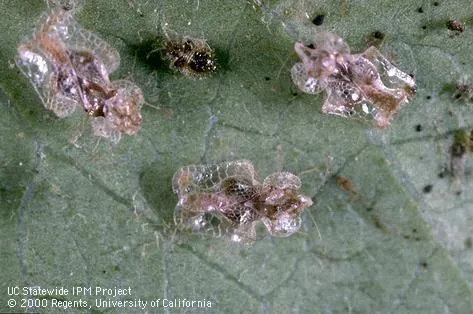
Exuviae, which are the discarded skins shed by nymphs during their molting process, are a tell-tale sign of active infestation. They look like pale, translucent shells scattered across the underside of the leaves.
Affected leaves may curl or become distorted as the plant loses moisture and structural integrity. A scorched or dried appearance of the foliage is common in advanced stages of infestation.
A black, sooty mold may grow on the leaf surface, feeding on the sugary excretions of the lace bugs. This mold can further interfere with light absorption, worsening the impact of the infestation.
Control measures
Biological control plays a significant role in managing lace bug populations. Predatory insects such as lacewings, lady beetles, and certain species of predatory bugs can effectively keep lace bug numbers in check.
For chemical intervention, systemic insecticides are the most effective solution, as they are absorbed into the plant's vascular system, ensuring the bugs ingest the toxin while feeding on the sap.
Cultural control involves the rigorous removal of host weeds, such as ragweed, from the vicinity of protected crops. Sanitation practices, including the removal of dead leaves in the fall, help to eliminate overwintering sites.
Routine scouting is essential for early detection. Inspecting the undersides of leaves, particularly during the early growing season, can help identify incipient colonies before they spread.
- Application of insecticidal soaps to knock down active populations.
- Use of entomopathogenic fungi (e.g., Beauveria bassiana) as a sustainable pest control measure.
- Maintaining healthy plant nutrition to improve the plant's natural resilience to minor infestations.
Taxonomy
- Latin name
- Corythucha obliqua
- Order
- Hemiptera (bugs, aphids, leafhoppers)
- Family
- Tingidae
- EPPO code
- CRTHOB
Discussion
No discussions yet — be the first.