
Lace bug
Corythucha incurvata
Description
How to identify
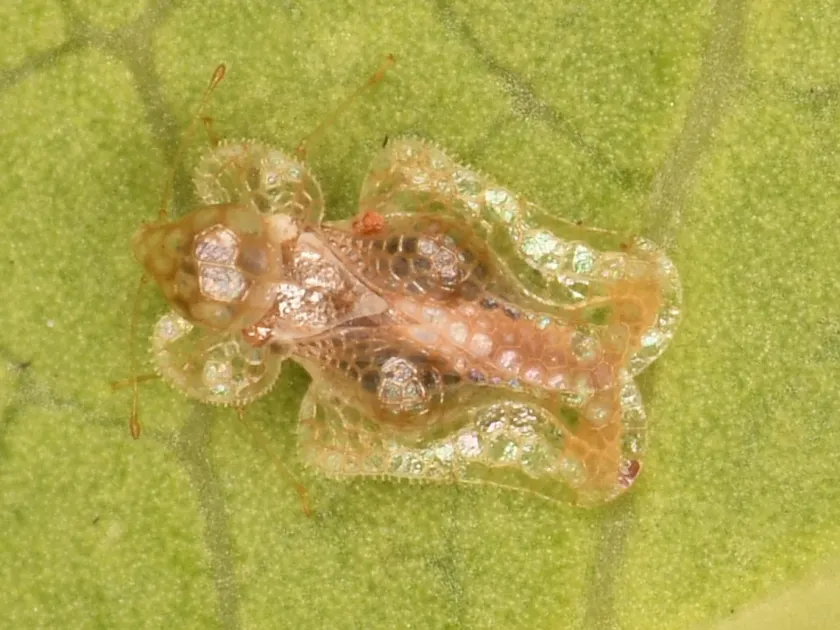
The lace bug (Corythucha incurvata) is a small, sap-sucking insect belonging to the family Tingidae. It is widely recognized for the intricate, net-like pattern on its wings and thorax, which resembles fine lace.
Adult insects are typically 3 to 4 millimeters in length, with a flattened body structure that allows them to hide effectively in the dense foliage of host trees.
The nymphs of this species are distinct from adults, often appearing darker and protected by an array of spines, which serve as a primary defense mechanism against natural predators.
Being members of the order Hemiptera, lace bugs possess specialized piercing-sucking mouthparts designed to extract sap directly from the vascular tissue of plant leaves.
They are colonial insects, frequently found in large groups on the undersides of leaves, where they remain sheltered from direct sunlight and environmental hazards.
What it damages
Corythucha incurvata primarily infests various willow species (Salix), causing significant damage to the plant tissue through continuous feeding activities.
While willow is the preferred host, in areas with high population pressure, these insects can colonize other ornamental woody plants, potentially causing widespread aesthetic and physiological harm.
As the insects feed, they inject toxic saliva into the plant, which leads to the breakdown of chlorophyll and the development of discolored, chlorotic spots on the leaf surface.
This persistent loss of sap significantly weakens the tree, hindering its ability to perform efficient photosynthesis and reducing overall vigor throughout the growing season.
Severe infestations can result in total leaf browning, premature leaf drop, and stunted growth, particularly in young saplings that have not yet established a strong defense system.
When it appears
The life cycle of the lace bug is closely synchronized with the phenology of its host plants, beginning with the emergence of overwintered adults in early spring.
Once active, females deposit eggs in clusters on the undersides of leaves, typically near the midrib, ensuring the larvae have immediate access to nutrients upon hatching.
The species produces multiple generations per year, with population numbers peaking during the hottest months of summer when development rates are at their highest.
Environmental conditions, particularly prolonged periods of dry and hot weather, can exacerbate infestations, leading to rapid expansion of the bug colonies.
As autumn approaches and temperatures drop, the insects begin to seek protected sites, such as bark crevices or leaf litter, to enter diapause and survive the winter months.
Signs of infestation
The most characteristic sign of a lace bug infestation is the stippling effect on the upper leaf surface, manifesting as tiny yellow or white spots that eventually merge.
Close inspection of the underside of the leaves usually reveals the presence of the insects, their shed skins (exuviae), and characteristic black, tar-like spots of excrement.
As the damage progresses, the affected leaves may curl, turn brown, and eventually wither, causing a noticeable decline in the tree's health and appearance.
- Stippled or mottled chlorotic foliage.
- Presence of black, varnish-like excrement spots on leaves.
- Premature yellowing and leaf loss throughout the summer.
Early detection is crucial, as the visible symptoms often appear only after the population has already reached a high level of density on the foliage.
Control measures
Managing Corythucha incurvata effectively requires a combination of sanitation practices and targeted chemical interventions.
Sanitation is a vital first step, which involves removing and disposing of fallen leaves and debris during autumn and winter to eliminate potential overwintering sites for the adults.
For chemical control, systemic insecticides applied to the roots or foliar applications targeting the underside of leaves can be highly effective at reducing bug populations.
When applying pesticides, it is essential to follow label instructions strictly, ensuring minimal impact on non-target beneficial insects like pollinators and natural enemies.
Integrating monitoring protocols into routine garden maintenance helps identify early outbreaks, allowing for a proactive management strategy that protects tree health without over-reliance on broad-spectrum chemicals.
Taxonomy
- Latin name
- Corythucha incurvata
- Order
- Hemiptera (bugs, aphids, leafhoppers)
- Family
- Tingidae
- EPPO code
- CRTHIN
Discussion
No discussions yet — be the first.