
Sycamore lace bug
Corythucha confraterna
Description
How to identify
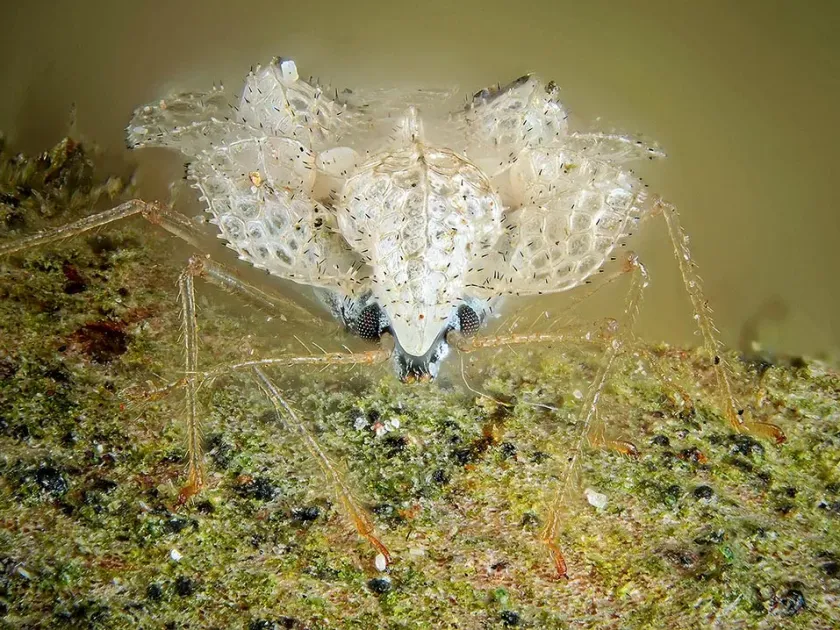
The sycamore lace bug (Corythucha confraterna) is a small insect belonging to the family Tingidae, known for its distinct, intricate wing structure that resembles delicate lace.
Adults are small, typically measuring between 3 and 4 mm in length. They have a flattened, rectangular body shape and are often cream or light brown in color, which serves as camouflage against leaves.
The nymphs go through several stages of development; they are usually darker in color than the adults and possess noticeable spines on their bodies to deter potential predators.
Because these insects are so small and prefer to dwell on the undersides of leaves, they are often overlooked until their feeding damage becomes severe and clearly visible on the foliage.
As an invasive species in many regions, the sycamore lace bug is highly adaptable, allowing it to thrive in both urban environments and natural forests where host trees are abundant.
What it damages
The primary hosts for the sycamore lace bug are trees within the genus Platanus, particularly the American sycamore and the London plane tree, which are popular in urban landscapes.
The insects feed by piercing the leaf tissue with their specialized mouthparts and extracting cell contents, which disrupts the tree's ability to undergo photosynthesis effectively.
Severe infestations often cause widespread damage, leading to significant stress on the tree, which can result in stunted growth and increased susceptibility to secondary diseases.
In mature trees, a heavy infestation might not kill the specimen immediately, but it reduces the overall health and vigor of the tree, making it look unsightly throughout the summer season.
In young plantations or nursery settings, high populations of this pest can cause serious damage, potentially leading to the death of the saplings if left unmanaged for an extended period.
When it appears
The life cycle of the sycamore lace bug is closely tied to seasonal temperature changes, starting with the emergence of overwintering adults as soon as the sycamore buds begin to open.
Throughout the warmer months, the bugs undergo multiple generations, with population numbers rising significantly during the peak of summer when temperatures are ideal for rapid reproduction.
Eggs are deposited on the undersides of the leaves, where the resulting nymphs feed in groups, creating distinct patches of damage that expand as the insects grow and move across the foliage.
The activity of the pest usually remains high until late summer or early autumn, at which point the adults seek out protective overwintering sites, such as crevices in the bark of the host tree.
Understanding the timing of these generations is critical for arborists, as it helps determine the optimal window for applying control measures to minimize population spikes.
Signs of infestation
The most recognizable symptom of a sycamore lace bug infestation is a characteristic chlorosis, where the leaves appear to have small, stippled yellow or white dots on their upper surfaces.
Upon closer inspection of the leaf undersides, one will find dark, tar-like spots of excrement, along with the cast skins of nymphs left behind as they molt throughout their life cycle.
As the infestation progresses, the stippling effect spreads across the entire leaf, eventually causing it to turn bronze or brown and drop prematurely from the branches.
- Stippled, yellowed appearance of leaf surfaces.
- Presence of dark fecal spotting on the leaf underside.
- Premature leaf drop starting in mid-summer.
- General decline in the tree's overall aesthetic quality.
Trees heavily infested with lace bugs may appear "thin" or withered, as the loss of functional leaf area compromises the tree's health and its capacity to store energy for the coming winter.
Control measures
Managing the sycamore lace bug requires an integrated pest management (IPM) strategy that considers the health of the tree, the level of infestation, and the local environmental impact.
Cultural practices, such as removing and destroying leaf litter in the fall, can help reduce the population of overwintering adults that remain near the base of the tree.
Systemic insecticides are generally the most effective chemical intervention, as they are absorbed by the tree and provide long-term protection against feeding insects.
Natural predators, including lacewings and predatory bugs, play an important role in controlling lace bug populations, and landscape management should aim to support these beneficial insects.
Early monitoring of sycamore trees during the spring is essential; detecting the presence of nymphs early in the season allows for more targeted and less intrusive management options.
Taxonomy
- Latin name
- Corythucha confraterna
- Order
- Hemiptera (bugs, aphids, leafhoppers)
- Family
- Tingidae
- EPPO code
- CRTHCO
Discussion
No discussions yet — be the first.