
Cherry lace bug
Corythucha associata
Description
How to identify
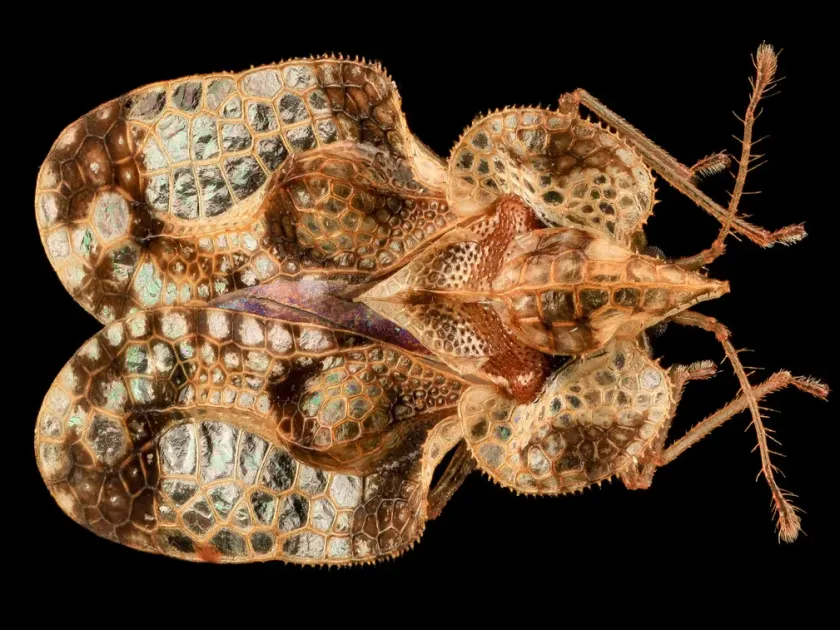
The cherry lace bug (Corythucha associata) belongs to the Tingidae family within the order Hemiptera. It is named for the intricate, net-like, translucent appearance of its wings and pronotum, which resemble delicate lace under magnification.
Adult insects are small, typically measuring 3 to 4 mm in length. Their flattened bodies and cryptic coloration, often whitish or mottled brown, provide excellent camouflage against the foliage they inhabit.
The life cycle involves several nymphal stages. Unlike adults, nymphs are wingless and often feature small spines or tubercles on their bodies, which serve as a defense mechanism against potential predators in the canopy.
These insects are highly host-specific, primarily targeting plants within the Prunus genus. They are capable of completing multiple generations during a single growing season, allowing for rapid population growth.
They overwinter as adults, seeking refuge in bark crevices, leaf litter, or other protected microhabitats near the base of host trees, which ensures their survival throughout the winter months.
What it damages
The primary host plants damaged by this pest include cherries and bird cherries. While they show a preference for specific species, they can occasionally infest other fruit-bearing trees if conditions for population expansion are met.
Both adults and nymphs cause damage by feeding on the cellular contents of the leaves. Using their piercing-sucking mouthparts, they drain fluids from the leaf tissue, which disrupts the tree’s photosynthetic capacity.
Heavy infestations lead to widespread leaf chlorosis, causing premature yellowing and leaf drop. This foliage loss significantly weakens the tree, reducing its ability to store energy for winter and negatively affecting future fruit production.
Trees stressed by lace bug feeding become more susceptible to secondary environmental stresses and various pathogens. The wounds created by feeding serve as potential entry points for opportunistic fungal or bacterial infections.
In cases of severe infestation, the cumulative impact on the foliage results in reduced vigor, poor fruit quality, and stunted growth of new shoots, making it a pest of economic concern in orchards.
Signs of infestation
The most prominent sign of an infestation is the appearance of mottled, bleached, or whitish spots on the upper leaf surface. Over time, these spots coalesce, giving the foliage a sickly, chlorotic appearance.
A closer inspection of the underside of the leaves usually reveals the presence of adult bugs, nymphs, and dark, sticky fecal spots, which are characteristic of lace bug feeding activity.
As damage progresses, the leaves lose their turgidity and may curl or show signs of premature senescence. The damage usually begins near the central vein and spreads outward as the population density increases.
Visual symptoms often include a generally unhealthy look of the tree canopy, characterized by sparse leaves and stunted growth. The loss of functional chlorophyll reduces the tree’s overall metabolic efficiency.
An early fall of leaves during the peak summer months is a strong indicator of a severe infestation, as the tree attempts to shed damaged foliage that can no longer contribute to its energy requirements.
Control measures
Managing the cherry lace bug requires an integrated pest management approach that focuses on reducing population density while maintaining the health of the host trees.
Cultural control practices are essential, such as removing and destroying infested leaf litter and pruning dead or heavily damaged branches. Keeping orchard floors clean helps limit the success of overwintering populations.
Chemical control, when necessary, involves the use of systemic or contact insecticides. Applications should be timed to coincide with the presence of active nymphs to maximize efficacy while minimizing impact on non-target species.
Biological control plays a significant role in nature, as predators like lacewings, lady beetles, and predatory bugs often keep lace bug populations in check. Avoiding broad-spectrum pesticides helps preserve these natural allies.
- Monitor tree canopies regularly for early signs of damage.
- Encourage beneficial predator populations in the orchard.
- Ensure adequate watering and nutrient management to improve tree vigor.
Taxonomy
- Latin name
- Corythucha associata
- Order
- Hemiptera (bugs, aphids, leafhoppers)
- Family
- Tingidae
- EPPO code
- CRTHAS
Discussion
No discussions yet — be the first.