
Lace bugs
Corythucha
Description
How to identify
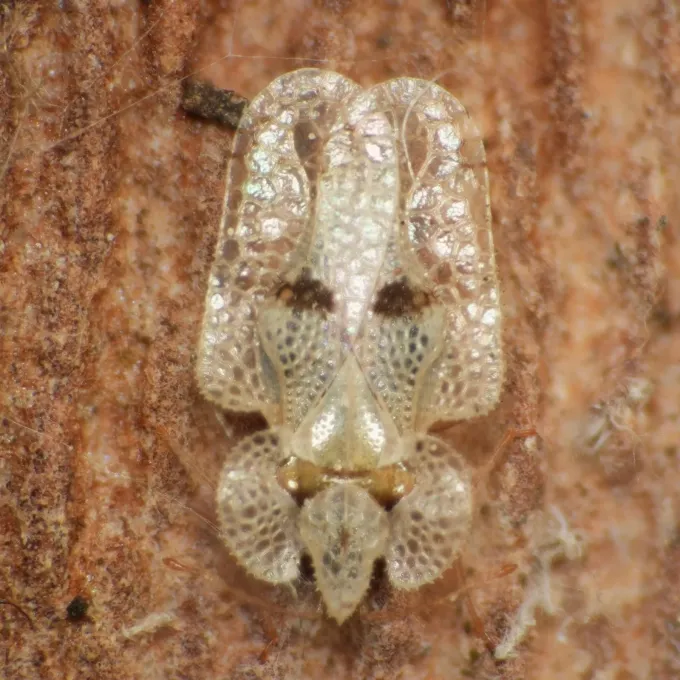
Lace bugs (family Tingidae, order Hemiptera) are small true bugs that typically measure between 2 to 5 millimeters in length.
They are named for the intricate, net-like or lace-like appearance of their wings and pronotum, which are covered in a network of small, raised cells.
Adult lace bugs have a flattened, oval-shaped body and often possess translucent or transparent wings that make them difficult to spot on foliage.
The immature stages, known as nymphs, often appear spiny or hairy and vary in color, progressing through several molts before reaching adulthood.
A hand lens is a vital tool for agronomists to identify these pests, as they predominantly congregate on the undersides of leaves.
What it damages
Lace bugs are polyphagous pests, capable of infesting a wide range of woody ornamental, forest, and fruit-bearing trees, including oaks, sycamores, pears, and rhododendrons.
A particularly notorious species is the oak lace bug (Corythucha arcuata), which causes significant damage to foliage in both urban and rural environments.
Both adults and nymphs feed by piercing the leaf epidermis with their mouthparts and sucking out the chlorophyll-rich cell contents.
This feeding activity destroys the photosynthetic capacity of the leaf, leading to diminished plant vigor and reduced overall aesthetic or crop value.
Severe infestations can result in premature leaf drop, which leaves trees more susceptible to environmental stressors and winter injury.
When it appears
Adult lace bugs overwinter in protected locations, such as deep bark crevices, under layers of leaf litter, or within debris accumulated near the host plant.
As spring temperatures rise, the adults emerge from their dormant state, often coinciding with the early stages of bud break on host trees.
Depending on the climatic conditions and the availability of suitable host plants, lace bugs can complete two to three generations throughout a single growing season.
Populations tend to reach their peak density during the warm, dry months of mid-summer, when the environmental conditions are optimal for their rapid reproduction.
As autumn arrives and temperatures decline, the bugs gradually seek out their wintering sites to enter diapause and survive the cold season.
Signs of infestation
The first indicator of a lace bug infestation is the development of a stippled or mottled appearance on the upper surface of the leaf.
These spots are initially light yellow or white, occurring as the chlorophyll is removed from the leaf tissue by the feeding insects.
On the underside of the leaves, one can typically find colonies of lace bugs, their dark, sticky excrement, and the shed exoskeletons left behind by molting nymphs.
In cases of heavy infestation, the entire leaf may become chlorotic, turn brown, and curl, eventually drying out and falling off the tree prematurely.
- Stippled or mottled leaf discoloration.
- Black, varnish-like excrement on the leaf undersides.
- Premature leaf yellowing and browning.
- Reduced plant vigor and annual growth.
Control measures
Effective management of lace bugs relies on a combination of good cultural practices and timely chemical or biological interventions.
Sanitation measures, such as removing and destroying fallen leaves in the autumn, can significantly reduce the number of overwintering adults.
When chemical control is necessary, apply registered insecticides, ensuring thorough coverage of the underside of the leaves to contact the pests directly.
Systemic insecticides can be particularly effective, as they are absorbed by the plant and provide protection against future feeding attempts.
Encouraging natural predators, such as lacewings and lady beetles, can help maintain lace bug populations below damaging levels in diverse landscapes.
Taxonomy
- Latin name
- Corythucha
- Order
- Hemiptera (bugs, aphids, leafhoppers)
- Family
- Tingidae
- EPPO code
- CRTHSP
Discussion
No discussions yet — be the first.