
Berberis looper
Coryphista meadii
Description
How to identify
The Berberis looper (Coryphista meadii) belongs to the family Geometridae. The adult moth has a wingspan of approximately 30–35 mm, with coloration varying from light grey to dark brown, featuring intricate wavy lines that provide excellent camouflage against bark.
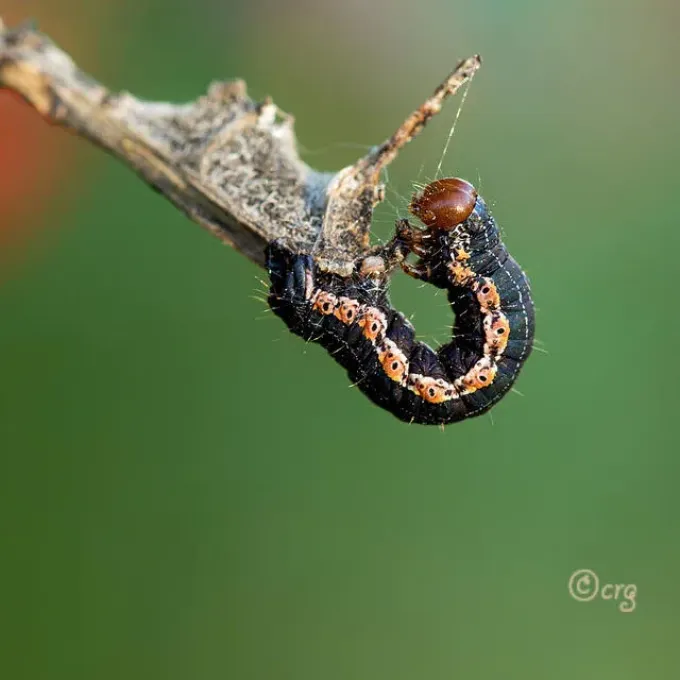
The larvae, known as loopers due to their distinct movement, are highly adaptive. Their coloration often matches the host plant's foliage, ranging from pale green to brownish-grey, which helps them evade predators effectively.
The life cycle encompasses complete metamorphosis, including egg, larva, pupa, and adult stages. Depending on the climate, multiple generations may occur within a single growing season, allowing populations to surge rapidly.
Pupation typically occurs in the soil beneath the host plant or within leaf litter. This subterranean or detritus-based overwintering strategy makes the species resilient to temperature fluctuations and ensures an early emergence in the spring.
As a specialist feeder, the moth is highly synchronized with the growth cycles of its host, making understanding its phenology critical for effective monitoring and intervention.
What it damages
The primary host for Coryphista meadii is the genus Berberis. Larvae preferentially feed on the foliage, targeting both young developing leaves and mature leaves, which significantly impacts the host's vitality.
During heavy infestations, the larvae can cause total defoliation, leaving only the primary leaf veins intact. This severe damage disrupts photosynthesis, leading to stunted shoot growth and reduced plant vigor.
The loss of foliage during the active growing season forces the plant to divert energy reserves into producing new leaves, which can exhaust the plant and leave it susceptible to winter stress.
In landscape gardening, where barberry is valued for its decorative form and colorful foliage, even moderate damage is unacceptable and leads to a total loss of ornamental value.
Secondary infections, including fungal pathogens like powdery mildew, are more likely to thrive on weakened tissues, exacerbating the damage caused by the larvae themselves.
Signs of infestation
The most visible signs of an infestation are ragged or scalloped leaf edges, progressing to skeletonized foliage as the larvae grow larger and increase their consumption rate.
Frass, the dark granular excrement left by the larvae, is often found scattered on lower leaves or accumulated at the base of the shrub, serving as a clear indicator of pest presence.
The larvae themselves often exhibit a resting pose, anchoring their prolegs to a twig while extending the rest of their body at an angle, making them look like small, inconspicuous branches.
Evidence of silken webbing, used by the larvae to bind leaves together for protection or as a safe feeding chamber, is a definitive sign of active colonization.
Early morning or night observation with a flashlight often reveals the larvae, as they are primarily nocturnal or crepuscular feeders, hiding deep within the dense foliage during daylight hours.
Control measures
Effective management of the Berberis looper involves an integrated pest management (IPM) strategy that combines physical, biological, and chemical methods to minimize damage.
Mechanical control, such as hand-picking larvae or pruning heavily infested branches, is effective for small gardens. Removing leaf litter and tilling the soil around the base in late autumn can destroy overwintering pupae.
Biological control using Bacillus thuringiensis (Bt) is a highly recommended approach, as it specifically targets the larvae while remaining safe for beneficial insects and local wildlife.
Chemical control should be reserved for severe outbreaks, utilizing contact or systemic insecticides. Application should be timed to hit young larval stages when they are most vulnerable and before they cause extensive damage.
- Monitor bushes regularly from early spring to late summer.
- Maintain plant health with proper irrigation and fertilization.
- Use pheromone or light traps to detect adult moth activity early.
- Encourage local bird populations, which are natural predators of moth larvae.
Taxonomy
- Latin name
- Coryphista meadii
- Order
- Lepidoptera (butterflies)
- Family
- Geometridae
- EPPO code
- CORSME
Discussion
No discussions yet — be the first.