
Cordylomera spinicornis
Cordylomera spinicornis
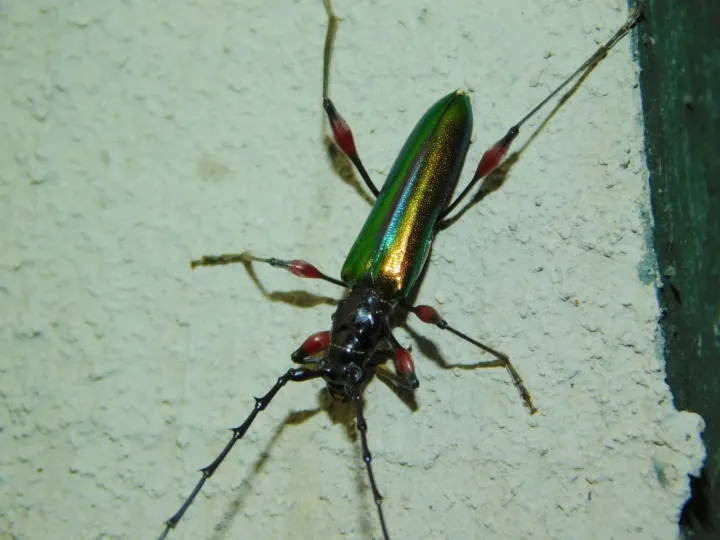
Description
How to identify
Cordylomera spinicornis is a species of longhorn beetle (Cerambycidae) known as a significant technical pest affecting various woody plants in tropical regions, particularly in Africa.
The adult beetles are typically 15 to 25 mm long, with a body color ranging from reddish-brown to a metallic luster. They possess elongated, filiform antennae, which are a hallmark of the family Cerambycidae.
A distinctive feature of this species, as suggested by its Latin name, is the presence of noticeable spines on the antennal segments, which are particularly pronounced in male specimens.
The larvae are typical longhorn beetle grubs: cream-colored, fleshy, legless, and possessing hard, dark head capsules equipped with strong mandibles adapted for boring into solid timber.
Classified under the order Coleoptera, these insects are highly specialized in exploiting woody tissues, making them a major concern for both forestry and plantation management.
What it damages
The primary economic impact of Cordylomera spinicornis occurs when larvae bore tunnels through the bark and sapwood of host trees, most notably affecting cocoa plantations.
By feeding on the cambium layer, the larvae disrupt the tree's vascular system, hindering the transport of water and nutrients, which often leads to the decline or death of the tree.
Infested trees are frequently predisposed to secondary infections by fungi and bacteria, which can accelerate the structural deterioration and eventual failure of the trunk or branches.
Beyond live trees, the beetle causes severe damage to harvested timber, creating internal galleries that ruin the structural integrity and market value of the wood.
Widespread infestations can lead to significant crop loss and reduced agricultural yield, making this species a subject of rigorous phytosanitary surveillance.
When it appears
The life cycle of this beetle is highly synchronized with the tropical climate, particularly with the onset and duration of the rainy season.
Adult emergence typically peaks during the wet season, coinciding with the period when host plants are most physiologically active and their bark is more susceptible to female oviposition.
Larvae remain active throughout the year, protected within the wood, where they undergo development that can last several months depending on ambient temperature and nutrient availability.
Adults are largely nocturnal, emerging at night to mate and lay eggs, which makes visual detection of the active beetle stage difficult for field scouts.
Climate factors such as humidity levels play a critical role in the rate of larval development and the overall success of the species' dispersal across new territories.
Signs of infestation
The most visible indicator of infestation is the presence of frass (a mixture of wood dust and excrement) being pushed out of small holes in the bark, indicating larval feeding galleries.
Deteriorating tree health, characterized by yellowing leaves, premature leaf drop, or the dieback of specific canopy branches, often signals a deeper systemic problem caused by larval boring.
Upon closer inspection, one may find adult emergence holes, which are typically round and correspond to the size of the beetle's body as it leaves the tree.
In cases where the tree attempts to defend itself, resin or gum exudates may appear on the trunk, though this is rarely sufficient to eliminate the deep-seated larvae.
Removal of the bark in infested areas reveals elaborate, winding tunnels that show the trajectory of the larva as it consumed the cambium and underlying xylem.
Control measures
Effective management begins with rigorous sanitary practices, including the identification, removal, and destruction of heavily infested trees to prevent the spread to healthy stock.
Maintaining optimal agricultural health, including proper irrigation and soil nutrition, is essential to ensure trees possess the vitality to resist or recover from minor attacks.
Systemic insecticides may be used during the peak flight periods of adults to reduce the breeding population, although this provides limited protection against larvae already established inside the trunk.
Phytosanitary protocols require the thermal treatment or fumigation of timber intended for export to ensure no live larvae are transported across international borders.
- Implementation of pheromone traps for population monitoring.
- Sanitation pruning to eliminate infested branches.
- Encouragement of natural predators, such as parasitic wasps, in the ecosystem.
- Protective coating of trunks with repellent or insecticidal barriers.
Taxonomy
- Latin name
- Cordylomera spinicornis
- Order
- Coleoptera (beetles)
- Family
- Cerambycidae
- EPPO code
- CRDMSN
Discussion
No discussions yet — be the first.