
Blue wildebeest
Connochaetes
Description
How to identify
The blue wildebeest (Connochaetes) belongs to the order Artiodactyla and the family Bovidae. These large antelopes are well-known for their massive, seasonal migrations across the African savanna landscape.
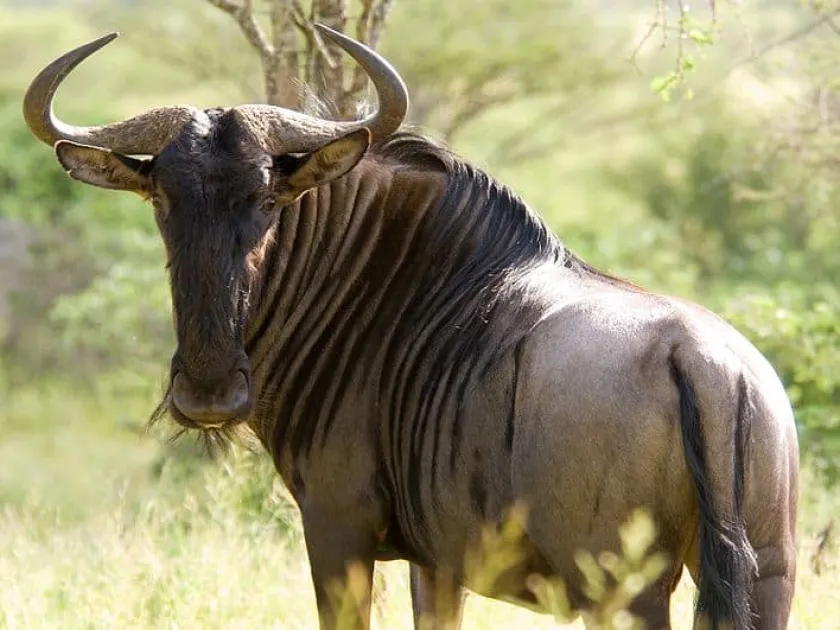
Physically, the wildebeest is characterized by its bulky forequarters, broad muzzle, and curved horns. Weighing up to 250 kg, their physical presence exerts significant pressure on any vegetation they encounter during their travels.
They are social animals that live in large herds. This social structure allows them to cover vast distances, which inevitably brings them into conflict with areas cultivated for human agricultural use.
Their biological lifecycle is tied to rainfall patterns, which dictate their migration routes. This predictability is a key factor in understanding their potential impact on nearby farming operations.
In an agricultural context, they are often viewed as pests due to their destructive foraging behavior and the sheer scale of the herds that pass through or graze near farm boundaries.
What it damages
Wildebeest cause significant damage to grain crops and improved pastures. Large herds can trample entire fields of wheat, barley, or maize, rendering the harvest impossible to salvage.
Beyond feeding, the animals cause substantial soil compaction due to their weight. This compaction disrupts the soil structure, hindering root development and reducing the overall productivity of the land.
The destruction of vegetation cover leads to soil exposure, which significantly increases the risk of wind and water erosion on vulnerable farmlands. This can have long-term consequences for soil quality.
Furthermore, herds act as vectors for invasive weed seeds and potential pathogens. As they move across diverse landscapes, they facilitate the introduction of unwanted botanical species into commercial fields.
Competition for forage is another major issue. In areas adjacent to grazing lands, wildebeest compete with livestock, often leading to overgrazing and the depletion of essential feed resources for farm animals.
When it appears
The movement of wildebeest is strictly governed by the seasons. The transition between the wet and dry seasons triggers their migration, as they search for water and nutrient-rich grazing grounds.
The greatest threat to crops occurs during the growing season. When crops are young and tender, they are highly attractive to passing herds, leading to severe localized damage in a matter of days.
Because these migrations are generally predictable, farmers can anticipate periods of high risk. Proper monitoring allows for proactive measures to be taken before the herds reach the proximity of the farm.
The calving season also influences their spatial distribution. During this time, herds concentrate in specific areas to protect their young, intensifying the grazing pressure on those locations.
Regular agronomic assessment of pastures and surrounding lands is vital to track herd movements, enabling better preparation and the potential implementation of defensive strategies to protect crops.
Signs of infestation
The most obvious sign of a wildebeest presence is the complete clearing of vegetation in specific areas. The crops will appear trampled and largely consumed, leaving behind bare soil.
Distinctive hoof prints are clear indicators of their passage. These prints are often found in high density, confirming that a large group has traversed the area recently.
Established paths or trails through a field are another sign. Wildebeest often follow the same migratory routes, creating visible tracks that show where they have entered and exited the cultivation zone.
Damage to plants typically involves the entire stalk being eaten or pulled out from the roots. Unlike insect damage, which affects leaves, wildebeest damage is destructive to the whole plant structure.
Other signs include the presence of dung piles on the field, which can alter soil nutrient profiles and serve as a vector for unwanted seeds or parasites that affect agricultural efficiency.
Control measures
The most effective method for protection is the installation of physical barriers, such as high-tensile fences or electric fencing. This prevents access to sensitive areas and protects young crops.
Acoustic and visual deterrents can provide temporary relief. However, these require constant variation to remain effective, as the animals may eventually habituate to consistent stimuli.
Strategic land management, including the use of buffer zones, can help divert migrating herds away from commercial crops. Providing alternative water sources away from fields can also reduce the incentive to enter them.
Collaborating with local wildlife management agencies is crucial for managing migratory paths. By working together, farmers can ensure that corridors are left open for the herds while minimizing crop damage.
- Installation of electric fencing.
- Creation of buffer strips.
- Use of acoustic deterrent systems.
- Strategic timing of crop planting.
Taxonomy
- Latin name
- Connochaetes
- Family
- Bovidae
- EPPO code
- CONNSP
Discussion
No discussions yet — be the first.