
Orange moth
Colotois pennaria
Description
How to identify
The orange moth (Colotois pennaria) is a species of moth in the family Geometridae, widely distributed across temperate regions and known for its distinct autumnal flight.
The wingspan of the adult moth ranges from 35 to 45 mm, with forewings that are typically orange-brown, featuring two dark transverse lines and a distinct discal spot.
Adult moths are nocturnal and are attracted to light, which makes them easy to detect during monitoring in the late autumn months when they are most active.
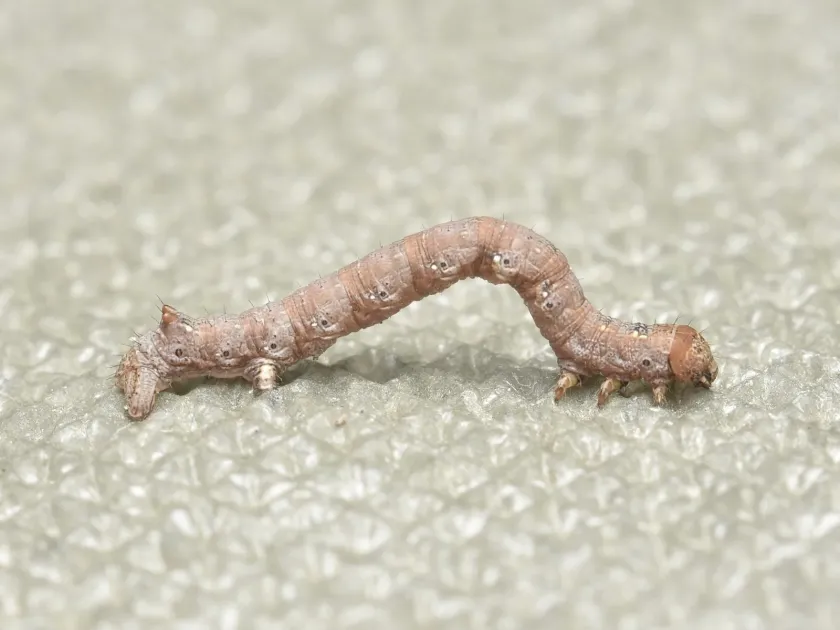
The larvae, known as loopers, have a body structure that requires them to move by looping their midsection, a classic trait of the Geometridae family.
The caterpillars camouflage perfectly with twigs, often displaying variable colors from green to brown to match the bark or foliage of their host trees.
What it damages
The orange moth is a polyphagous pest, meaning its larvae feed on a wide variety of deciduous tree species, causing significant damage to both forest and garden environments.
Primary agricultural hosts include fruit trees such as apple, pear, plum, and cherry, where severe defoliation can lead to a drastic reduction in fruit production.
In addition to orchard crops, the species is frequently found on oak, beech, lime, and birch trees, making it a concern for forestry and urban landscaping management.
Young larvae initially attack budding leaves, while mature caterpillars can consume entire leaves, leaving only veins and causing heavy stress to the tree's vascular system.
Trees subjected to multiple seasons of defoliation by these caterpillars show reduced vitality, impaired fruit development, and increased susceptibility to fungal diseases.
When it appears
The life cycle of the orange moth is unique because the adults emerge and fly during the autumn, specifically from September through October.
After mating, females lay their eggs in clusters on the branches and bark of host trees, where the eggs remain dormant throughout the winter period.
Larval hatching occurs in the spring, typically synchronized with the opening of tree buds, providing immediate access to nutritious young vegetation.
The caterpillar stage lasts through late spring and early summer, after which the insects drop to the ground to pupate in the soil or leaf litter for the summer.
The cycle is completed as they emerge as adults in the following autumn, effectively overwintering in the egg stage to survive adverse cold conditions.
Signs of infestation
The first signs of an infestation are small, irregular holes in the opening leaves of trees during the spring, indicating the presence of young larvae.
As the caterpillars grow, they cause extensive defoliation, often visible as skeletonized leaves or ragged edges on the foliage of host trees.
During a heavy infestation, you may observe the larvae themselves by shaking branches or searching for them as they rest motionless, mimicking small twigs.
Frass (larval droppings) can often be found accumulating on lower leaves or around the base of the tree, serving as a clear indicator of feeding activity.
In severe cases, the entire canopy of the tree may appear thin or sparse due to the rapid consumption of foliage by large populations of the caterpillars.
Control measures
Integrated pest management (IPM) for this species includes spring applications of targeted insecticides at the first sign of larval hatching to minimize foliage loss.
Cultural control measures involve cleaning up leaf litter and tilling the soil around the base of trees to disturb or kill the pupae resting in the ground.
Encouraging natural predators such as insectivorous birds and parasitic wasps can significantly help in keeping the moth population below the damage threshold.
Biological treatments using bacterial agents are effective against young larvae and are safer for the environment and beneficial insects compared to broad-spectrum pesticides.
- Monitor adult flight using light traps in autumn.
- Manual removal of egg clusters during winter pruning.
- Use of sticky bands on trunks to prevent larvae from climbing.
Taxonomy
- Latin name
- Colotois pennaria
- Order
- Lepidoptera (butterflies)
- Family
- Geometridae
- EPPO code
- COOTPE
Discussion
No discussions yet — be the first.