
Collops vittatus
Collops vittatus
Description
How to identify
Collops vittatus, commonly known as a type of checkered beetle, belongs to the family Melyridae in the order Coleoptera.
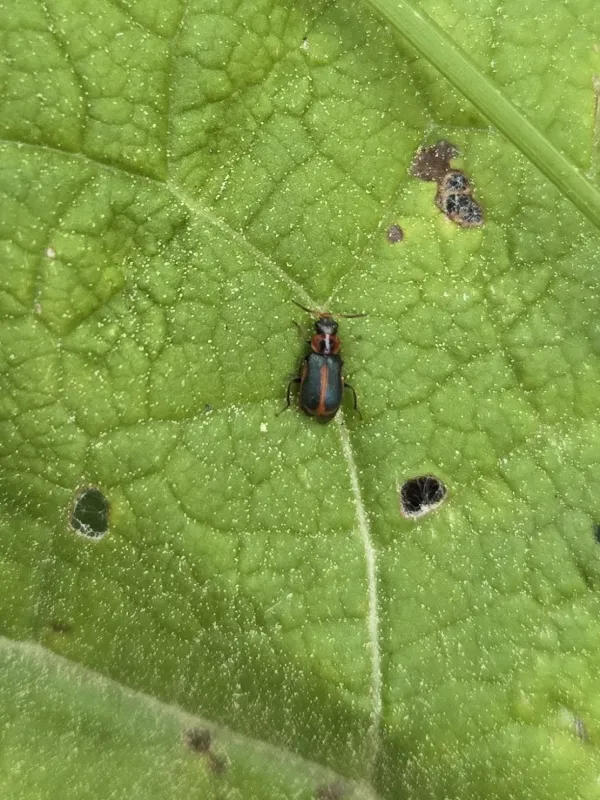
Adult beetles are relatively small, typically measuring between 5 and 6 mm in length, and possess a distinctive metallic appearance.
Their bodies are usually patterned with bright red or orange stripes on a darker, often metallic-blue or green background, which makes them easy to identify.
The larvae are slender and often live in the soil or within decaying vegetation, where they remain relatively inconspicuous throughout their developmental stages.
While often seen as beneficial in some ecological contexts, Collops vittatus can occasionally reach population densities that pose a threat to specific crops.
What it damages
The primary damage is caused by adult beetles feeding on the pollen and the reproductive tissues of various agricultural plants, including cereal crops.
By consuming the pollen, these beetles interfere with the pollination process, often leading to poor kernel set and significantly reduced yields.
They are particularly attracted to blooming crops, where they can cause visible physical destruction to the delicate floral parts of the plants.
In addition to direct feeding damage, they can act as accidental vectors for fungal spores, potentially worsening the phytosanitary status of the field.
The severity of the impact depends heavily on the crop stage; damage is most critical during the flowering and pollination periods of wheat and other grains.
When it appears
The lifecycle of Collops vittatus is closely synchronized with the growing season of crops and prevailing weather conditions during the summer months.
Adults are typically most active during the warmest parts of the day when they are searching for food sources such as flowering grasses and crops.
They overwinter in sheltered locations, often buried in the soil or tucked away in dense crop residues and stubble from the previous season.
Emergence generally coincides with the warming of the soil in late spring, signaling the start of their active feeding and reproductive cycle.
Depending on the region, there may be one or more generations per year, with the most active population peaks occurring mid-summer during crop flowering.
Signs of infestation
Identification in the field is usually achieved through visual monitoring of crop heads, particularly during the early morning hours.
Signs of infestation include the physical presence of beetles on the flowering spikes and evident damage to the anthers and floral organs.
- Beetles visible on the heads of grain crops.
- Missing or damaged florets within the wheat spikes.
- Lower grain yield due to interrupted pollination success.
Sweep netting is a highly effective way to estimate the population density of Collops vittatus in a given field.
Discolored or prematurely dried portions of the crop head can also be indicative of feeding pressure from these beetles during the critical pollination phase.
Control measures
Cultural control practices, such as proper crop residue management and deep tillage, are essential to destroy overwintering sites.
Crop rotation helps to break the pest's cycle and prevents them from establishing large, stable populations in fields intended for susceptible crops.
Chemical control should be implemented judiciously and only when the beetle population exceeds the established economic injury level for the crop.
Biological control methods, such as preserving natural enemies and beneficial predators in the field, are highly recommended to keep populations in check.
Regular monitoring using colored sticky traps or systematic field scouting allows for timely intervention before the pest causes substantial economic losses.
Taxonomy
- Latin name
- Collops vittatus
- Order
- Coleoptera (beetles)
- Family
- Melyridae
- EPPO code
- CLLPVI
Discussion
No discussions yet — be the first.