
Four-spotted soft-wing beetle
Collops quadrimaculatus
Description
How to identify
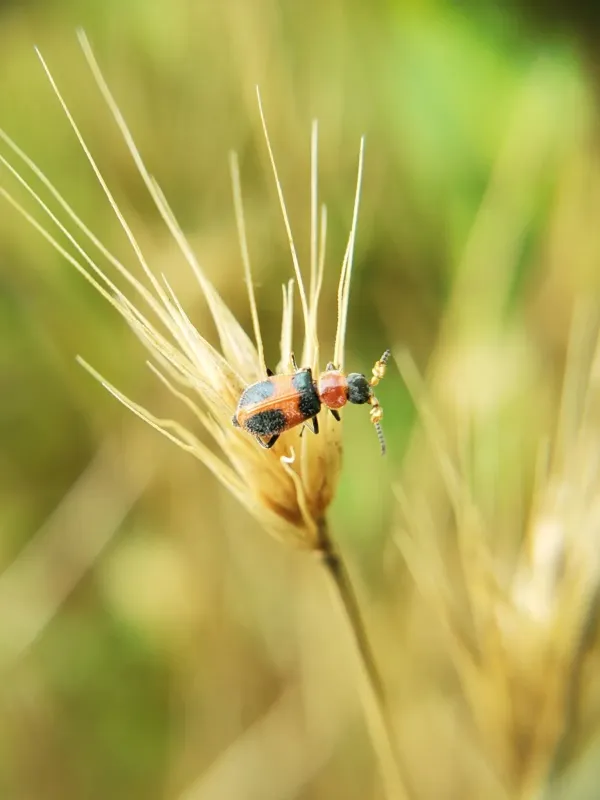
The Four-spotted soft-wing beetle (Collops quadrimaculatus) belongs to the order Coleoptera and the family Melyridae. This small beetle is easily identified by its distinctive patterned elytra.
The adult beetle features four clear spots on its wing covers, which explains its common name. The insect's body is elongated with soft, flexible outer wings, typical for the Melyridae family.
These beetles are highly active, allowing them to move quickly between plants to forage. Adults are frequently found on flowering plants, where they feed primarily on pollen and small insects.
Larvae lead a concealed life, typically residing in the soil or within plant debris. They possess a specialized mouthpart structure suitable for consuming organic matter or small soil organisms.
The life cycle involves complete metamorphosis: egg, larva, pupa, and adult. Depending on regional climate conditions, the species may complete one or two generations per year.
What it damages
This pest primarily affects grain crops and some legumes. Adults cause damage by feeding on the generative organs of plants during the flowering phase.
The primary damage is caused by the adults eating anthers and flower petals. This behavior interferes with the pollination process, significantly reducing grain set and overall yield.
Severe infestations during mass outbreaks can lead to substantial agricultural losses. The beetle's high density in fields can result in significant economic damage to the harvest.
Beyond direct feeding, these beetles may mechanically transport plant pathogens on their bodies, increasing the risk of fungal or bacterial infections at the site of damage.
Economic impact varies based on crop health; vigorous plants can often withstand minor damage, while stressed or weakened crops suffer more severely from the infestation.
When it appears
Adult activity begins when stable spring temperatures arrive. Their peak activity corresponds precisely with the flowering period of the target agricultural crops.
During hot weather, beetles are most active during the cooler morning and evening hours. They move actively across fields in search of floral resources.
Adults overwinter in the soil or under leaf litter, allowing them to survive cold winters and remain protected until the following spring season.
Spring awakening is triggered by soil warming, which prompts beetles to emerge and resume feeding. Monitoring should begin early in the season.
The activity window is closely linked to the phenological stages of the host plants, which serve as their main source of nutrition.
Signs of infestation
The primary sign of infestation is damaged flower heads that appear eaten or ragged. Careful inspection usually reveals the presence of beetles on the plants.
Uneven crop development and increased empty-grain counts in ears are common indicators. This is a direct consequence of flower tissue destruction during grain formation.
Visible excrement on leaves and stems is another sign of high insect activity. Often, secondary infections appear where the plant tissue has been compromised.
- Damaged anthers and stamens.
- Reduced grain weight per ear.
- Presence of spotted beetles on inflorescences.
- Mold or fungal growth on damaged plant parts.
Once mass populations are observed, fields must be assessed to determine the need for chemical or biological intervention.
Control measures
Effective management requires consistent field monitoring and the use of insecticides once the economic threshold of damage is reached.
Agronomic practices, such as post-harvest soil cultivation, help destroy overwintering sites for larvae and adults. Rotating crops is an essential preventative measure.
When applying insecticides, it is crucial to avoid periods when pollinators are active, such as bees, to minimize negative environmental impacts.
Systemic insecticides are generally the most effective way to control beetle populations during the period of peak feeding on the ears.
Biological control, including the encouragement of natural predators, can help maintain beetle populations at levels below the economic threshold without heavy chemical reliance.
Taxonomy
- Latin name
- Collops quadrimaculatus
- Order
- Coleoptera (beetles)
- Family
- Melyridae
- EPPO code
- CLLPQU
Discussion
No discussions yet — be the first.