
Collops hirtellus
Collops hirtellus
Description
How to identify
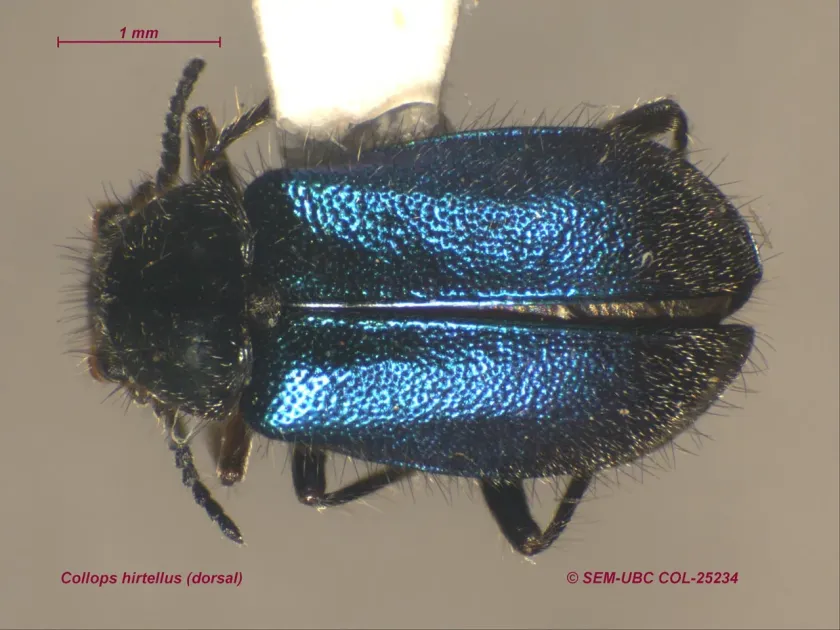
Collops hirtellus is a beetle species belonging to the family Melyridae, order Coleoptera. Adult beetles are typically 4–6 mm long and feature a distinct, hairy appearance that characterizes the genus.
The coloration of these beetles ranges from dark blue to black, often exhibiting a metallic luster. The pronotum and head are usually covered with dense, short hairs, and their elytra may feature specific patterns.
The larvae are elongated, segmented, and possess well-developed thoracic legs. They primarily inhabit the soil surface or organic debris, making them difficult to spot during routine scouting.
These insects are highly mobile, preferring open areas with abundant flowering plants. While some Melyridae are predators, Collops hirtellus is primarily known for its pollen-feeding behavior.
Correct identification is crucial as the Melyridae family includes beneficial predators. Observing their feeding behavior on floral structures helps confirm their status as pests in specific agricultural settings.
What it damages
The primary damage is caused by adult beetles, which feed on the pollen and tender reproductive parts of flowers. Under high infestation levels, they can destroy entire blossoms.
They host on a wide variety of flowering plants, including many ornamental species and several crops within the Asteraceae and Brassicaceae families, where they target delicate floral tissues.
Damage often manifests in localized patches but can quickly spread across fields during favorable weather conditions, significantly reducing the crop's reproductive potential.
Feeding on pollen disrupts the pollination process, leading to poor fruit set, flower abortion, and premature wilting of blossoms.
Furthermore, the physical wounds created by feeding provide entry points for secondary fungal and bacterial pathogens, which further damage the plant and lower overall quality.
When it appears
Adult activity typically begins in late spring or early summer, coinciding with the peak flowering phase of host plants. The timing is strongly correlated with warmer temperatures.
The lifecycle follows complete metamorphosis: egg, larva, pupa, and adult. The insect typically overwinters in the larval stage, residing in the upper soil layers or beneath plant debris.
The peak of damage occurs during hot, dry periods when beetles actively seek moisture and nutrients within floral tissues to sustain their activity.
The emergence of adults is usually staggered, necessitating continuous field monitoring throughout the entire duration of the blooming period.
The species generally completes one generation per year, though multiple partial generations may occur in regions with exceptionally long growing seasons.
Signs of infestation
The most reliable sign of an infestation is the visual presence of adult beetles within the flowers, which quickly drop or fly away when the plant is disturbed.
Physical damage appears as ragged edges on petals, hollowed-out anthers, or small feeding holes in unopened buds, making the flowers look tattered and prematurely aged.
Heavily infested blossoms often exhibit necrosis, turning brown or dark shortly after the beetles begin feeding, as the tissue loses structural integrity.
A high rate of bud drop or a complete absence of developing fruit despite favorable environmental conditions is a strong indicator of significant pest pressure.
The use of yellow sticky traps is an effective way to detect early arrivals and monitor the population density of the beetles within the crop area.
Control measures
Cultural control practices, such as deep autumn plowing, are highly effective as they disrupt the overwintering sites of the larvae and increase their mortality rates.
Maintaining proper crop rotation and controlling weeds around field edges can significantly reduce the availability of early-season food sources for the beetles.
Chemical control should be applied judiciously, especially during the flowering stage, to minimize the negative impact on essential pollinators such as honeybees.
When populations exceed the economic threshold, targeted insecticide applications are recommended, ideally choosing products that have minimal residual effects on beneficial insects.
- Utilizing biological control agents, such as entomopathogenic fungi.
- Consistent scouting using monitoring traps to track population trends.
- Manual removal and destruction of infested flower heads in small-scale gardens.
Taxonomy
- Latin name
- Collops hirtellus
- Order
- Coleoptera (beetles)
- Family
- Melyridae
- EPPO code
- CLLPHI
Discussion
No discussions yet — be the first.