
Birch case-bearer
Coleophora serratella
Description
How to identify
The birch case-bearer (Coleophora serratella) is a species of moth in the family Coleophoridae. The adult moth is a small insect with a wingspan of approximately 10–12 mm, characterized by narrow, fringed wings.
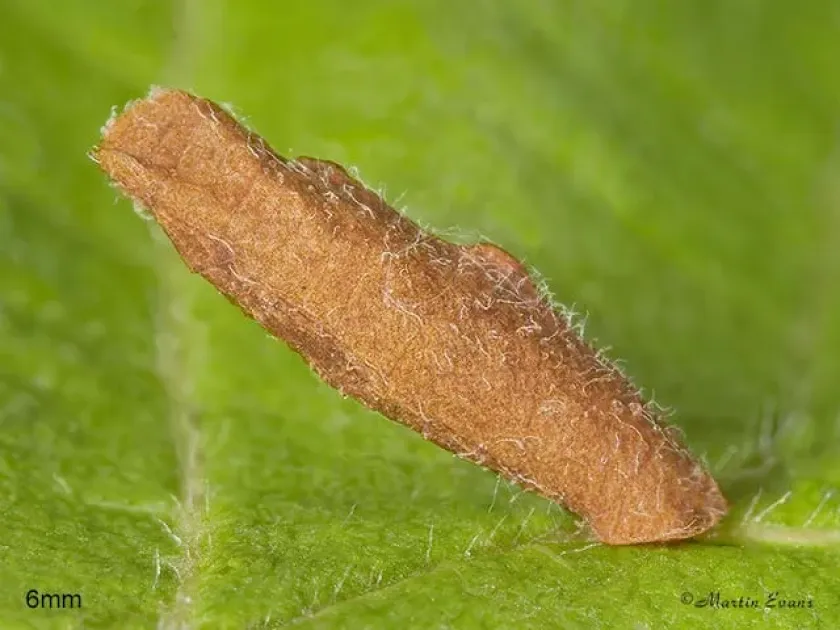
The most distinctive stage of this insect is the larva, which spends its life inside a portable protective case. This case is constructed from leaf fragments and silk, providing essential protection from predators and environmental factors.
The larvae range from yellow to brown, with a dark head capsule. The case is typically curved and cylindrical, serving as a reliable diagnostic feature for identifying the species in its natural habitat.
The life cycle includes the egg, larva, pupa, and adult stages. Generally, the species undergoes one generation per year, though development can vary slightly depending on the local climate and temperature conditions.
The larvae overwinter in their cases, firmly attached to branches or tree trunks. This behavior ensures survival through harsh winter conditions, allowing them to resume feeding immediately in the spring.
What it damages
The primary host is the birch tree, but the larvae can also feed on other deciduous trees, including alder, hornbeam, and occasionally fruit trees, especially if they are situated in proximity to infested birch stands.
The damage is caused exclusively by the larvae, which feed on the leaf parenchyma. They act as miners, eating the interior tissue of the leaf while leaving the epidermis intact, which creates characteristic blotch-like mines.
Heavy infestations lead to premature yellowing and leaf fall. This defoliation stresses the tree, reducing its aesthetic value and physiological vigor, which is particularly concerning in ornamental or nursery settings.
Young trees are especially vulnerable to damage; severe defoliation disrupts photosynthesis, which stunts annual shoot growth and reduces the tree's overall resistance to diseases and other environmental stressors.
In cases of high pest density, the majority of the foliage may be destroyed, resulting in significant crown thinning and providing conditions for secondary attacks by wood-boring insects.
When it appears
Adult moths are active during the summer, typically from June to July. During this time, they mate and lay eggs on the surface of the leaves of host trees.
Larvae hatch within one to two weeks, immediately beginning to feed by boring into the leaf tissue. Shortly after starting to feed, they construct their first mobile cases from leaf material.
The most intense feeding activity occurs in early spring, coinciding with bud burst. The larvae emerge from their wintering sites and feed aggressively on the expanding young leaves.
Throughout the summer, the larvae continue to feed, enlarging their cases as they grow. They may move across the crown of the tree several times to find fresh foliage for their nutritional requirements.
Pupation occurs inside the case, usually attached to a leaf or bark, towards the late spring or early summer, effectively completing the annual development cycle of the moth.
Signs of infestation
The first sign of infestation is the appearance of small, circular holes in the leaves. These "windows" are formed when the larva consumes the interior leaf tissue, leaving only a thin, translucent layer of the leaf surface.
The presence of small, brown, cylindrical cases attached to the underside of leaves or petioles is the most reliable sign of an active infestation.
Premature curling and wilting of the leaves, particularly in the upper canopy, often indicate a high concentration of larvae feeding on the foliage.
During winter, small, dried cases can be found attached to the bark of the branches, resembling small debris or knots on the surface of the tree.
- Small transparent spots or "windows" on the leaf surface.
- Presence of tiny droppings inside the leaf mines or near the cases.
- Clustered cases observed on the stems or trunks of birch trees during winter dormancy.
Control measures
Preventive measures include good silvicultural practices, as healthy and vigorous trees are naturally more resilient to infestations by the birch case-bearer.
In smaller landscapes or gardens, manual collection and destruction of fallen leaves in autumn can significantly reduce the overwintering population of the pest.
Biological insecticides, specifically those containing Bacillus thuringiensis, are effective and safe for managing young larvae in the spring before they become too large.
Chemical control is generally reserved for severe outbreaks. Systemic insecticides are most effective when applied at the time of bud burst, targeting the larvae as they emerge from their wintering spots.
Timing is critical: the treatment should be applied before the larvae complete the construction of their protective cases, as these cases significantly shield them from contact insecticides.
Taxonomy
- Latin name
- Coleophora serratella
- Order
- Lepidoptera (butterflies)
- Family
- Coleophoridae
- EPPO code
- COLESE
Discussion
No discussions yet — be the first.