
Plum case-bearer
Coleophora pruniella
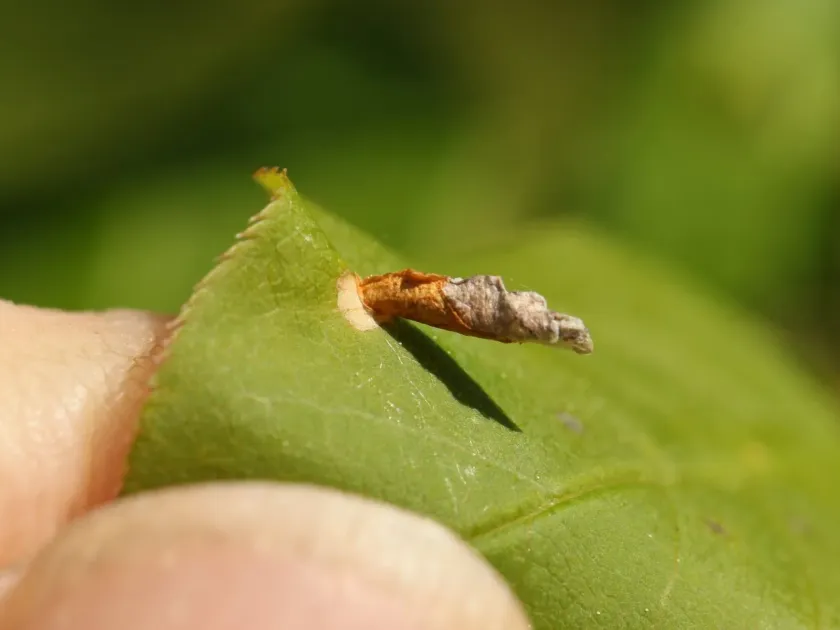
Description
How to identify
The plum case-bearer (Coleophora pruniella) is a species of moth in the family Coleophoridae. It is a known pest in orchards, recognizable by the unique behavior of its larvae during their developmental stages.
The larvae construct small, portable cases made of silk and plant tissue, which they carry around throughout their lives. This case serves as a protective shield against predators and environmental stressors.
Adult moths are small, with narrow, fringed wings that have a light grey to brownish coloration, typical of the Coleophoridae family. They are generally active during the night.
The life cycle involves overwintering as larvae in their cases attached to the bark or branches of host trees. In the spring, they emerge to feed on buds and newly developed foliage.
After completing their development, the larvae pupate in their cases, and adult moths emerge later to mate and lay eggs on the leaves of host plants.
What it damages
This moth primarily affects fruit trees of the Rosaceae family, including plums, cherries, apples, pears, and apricots, causing significant economic loss in fruit production.
Early spring feeding is particularly destructive, as the larvae consume the interior of developing buds, which prevents the buds from blooming and destroys potential fruit sets.
As the season progresses, the larvae move to the leaves. They feed by boring into the leaf tissue, creating mines that appear as pale, translucent patches or "windows" on the surface.
Heavy infestations can lead to substantial leaf loss, which reduces the tree's photosynthetic capacity, weakening the tree and making it more susceptible to diseases.
The cumulative effect of damaged buds and defoliation negatively impacts overall fruit yield and the tree's vigor for the following growing season.
Signs of infestation
The most distinctive sign of infestation is the presence of small, case-like structures attached to branches, leaves, or bark, which often resemble debris or dried plant parts.
Visible damage to the leaves includes irregular, translucent spots where the inner tissue has been eaten, leaving only the thin epidermis of the leaf intact.
Unopened or withered buds in early spring are often a primary indicator that larvae have been feeding on the internal structures of the budding plant.
Tiny dark droppings may sometimes be observed near the larval feeding sites, further confirming the presence of active case-bearers on the tree.
In cases of severe damage, trees may exhibit premature yellowing of leaves and reduced branch growth, indicating a high density of the pest within the orchard.
Control measures
Management of the plum case-bearer requires an integrated approach, combining cultural practices, mechanical interventions, and appropriate chemical treatments.
Cleaning tree trunks of loose, dead bark during the winter or early spring helps remove overwintering sites, significantly reducing the pest population for the coming season.
Chemical control should be timed to coincide with the period of larval activity, particularly during the green tip stage of the buds or immediately post-bloom.
- Application of systemic insecticides that provide long-lasting control of larvae inside the leaf tissue.
- Use of biological pesticides such as those derived from Bacillus thuringiensis to target larvae safely.
- Regular pruning of heavily infested branches to reduce local pest density and promote better tree health.
Implementing pheromone traps for monitoring is essential for determining the timing of adult flights and optimizing the application of control measures.
Taxonomy
- Latin name
- Coleophora pruniella
- Order
- Lepidoptera (butterflies)
- Family
- Coleophoridae
- EPPO code
- COLEPR
Discussion
No discussions yet — be the first.