
Coleophora multipulvella
Coleophora multipulvella
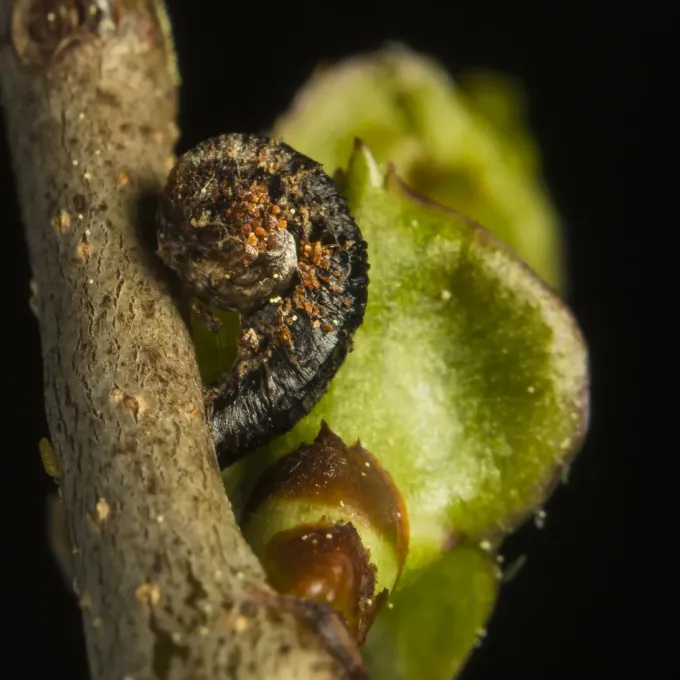
Description
How to identify
Coleophora multipulvella is a moth species belonging to the family Coleophoridae. These insects are commonly known as casebearer moths due to the unique behavior of their larvae, which construct protective portable cases from leaf fragments or silk.
Adult moths are characterized by narrow, fringed wings and a camouflaged appearance that helps them blend into plant stems and bark. Because of their small size and nocturnal habits, they are often overlooked in the field.
The life cycle involves four distinct stages: egg, larva, pupa, and adult. The larval stage is the longest and the most damaging, as it is during this phase that the insect feeds extensively on host plants.
The construction of the case is a sophisticated biological adaptation, allowing the larva to protect itself from environmental stress and natural predators while maintaining its food supply.
Taxonomically, they are identified by specific features of their genitalia and wing venation, requiring professional entomological examination for accurate species verification.
What it damages
The species primarily feeds on plants within the Amaranthaceae family, particularly wild weeds like orache and other related species that often inhabit field margins.
Larvae cause damage by leaf mining, where they consume the inner parenchyma tissue while leaving the outer epidermal layers intact. This process interrupts the photosynthetic efficiency of the plant.
In cases of high infestation, significant portions of the foliage can become necrotic, leading to leaf drop and reduced plant vigor across the affected area.
While often considered a minor pest on cultivated crops, their role as a weed-feeder makes them a complex factor in weed management strategies.
The hidden nature of the damage makes it difficult to detect early, often resulting in widespread leaf tissue death before the infestation is formally noticed.
When it appears
The seasonal activity begins in early spring when larvae emerge from hibernation to feed on the tender young leaves of host plants.
Development cycles are tightly synced with the local temperature, and the moth may complete one or more generations per year depending on the climate zone.
Pupation typically occurs during the mid-summer period, after which the adult moths emerge to mate and lay eggs for the subsequent generation.
Autumn is the time for the younger larval instars to prepare for winter, often anchoring themselves securely on twigs or stems to survive the cold months.
Monitoring for adult flight activity using pheromone traps can help agronomists predict when the larvae will be most active and vulnerable to control measures.
Signs of infestation
The most prominent sign of infestation is the presence of pale, translucent leaf mines that eventually turn brown and wither away.
The visible presence of the tiny, cigar-shaped cases attached to the leaf surface is a definitive indicator of the pest's presence in the field.
Plants affected by a high population of casebearers show signs of dehydration and chlorosis, even if water supply is sufficient, due to reduced leaf surface area.
Small, circular exit holes in the leaves are also commonly seen once the larvae have completed their development or moved to a different feeding site.
Fine silk trails and fecal pellets trapped inside the leaf mines or on the outside of the cases are distinct markers for diagnosing an active colony.
Control measures
Integrated pest management strategies focus on sanitation, specifically the removal of wild host plants like orache that serve as reservoirs for the pest population.
Deep plowing or mechanical tillage post-harvest helps destroy the overwintering larvae and pupae that remain on debris in the soil.
When chemical intervention is required, systemic insecticides are the most effective because they can penetrate the leaf tissue and reach the larva inside its case.
Promoting natural biological control agents, such as parasitic wasps that target Coleophora species, is essential for maintaining a healthy agroecosystem.
- Sanitation of field borders
- Tillage to eliminate overwintering sites
- Targeted use of systemic insecticides
- Pheromone monitoring for timing
- Encouragement of natural parasitoids
Taxonomy
- Latin name
- Coleophora multipulvella
- Order
- Lepidoptera (butterflies)
- Family
- Coleophoridae
- EPPO code
- COLEMA
Discussion
No discussions yet — be the first.