
Elm case-bearer
Coleophora limosipennella
Description
How to identify
The elm case-bearer (Coleophora limosipennella) is a species of moth belonging to the family Coleophoridae. The adult moth is small, with a wingspan of approximately 10–12 mm, and features narrow, fringed wings that are typically a light brownish or ochre color.
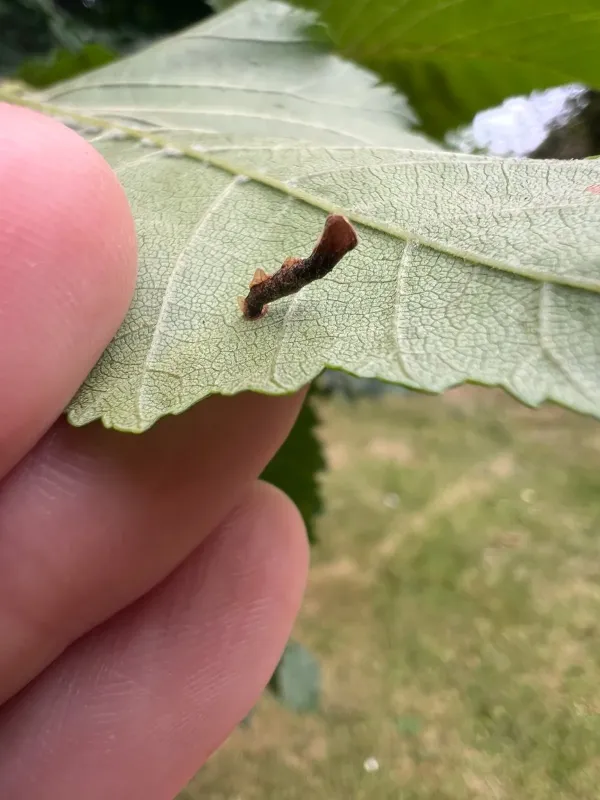
The most distinctive stage of this insect is the larva, which constructs a portable case out of leaf tissue and silk. This case serves as a protective shell, and the larva remains within it throughout its entire developmental period.
Adults are primarily nocturnal, making them difficult to observe during the day. They spend daylight hours resting on the undersides of leaves, blending in with the foliage to avoid predation by birds and other insects.
The life cycle involves complete metamorphosis, including egg, larva, pupa, and adult stages. The insect typically overwinters as a young larva, finding shelter in the crevices of bark or near dormant buds on host trees.
Identification is best achieved by examining the specific shape and construction material of the larval cases. Since many coleophorids look similar as adults, professional identification often relies on the morphology of the larval feeding marks and the cases themselves.
What it damages
The primary hosts for this moth are elm trees (genus Ulmus), particularly the smooth-leaved and wych elms. In cases of high population density, larvae may occasionally feed on birch or other deciduous trees.
Larvae feed on the leaf parenchyma from the underside of the leaf, leaving the upper epidermis intact. This feeding pattern creates characteristic small, translucent patches or "windows" on the leaf surface, which eventually turn brown and necrotic.
Severe infestations can lead to significant foliage loss, impairing the tree's ability to photosynthesize. This results in weakened tree health, premature leaf drop, and a drastic reduction in the aesthetic value of urban or garden plantings.
Young trees, such as saplings in nurseries, are most susceptible to damage. Repeated annual defoliation by this pest can stunt growth, cause dieback of smaller twigs, and stress the tree, making it more vulnerable to secondary diseases.
The cumulative damage over several years can be detrimental, especially when combined with other environmental stressors like drought or poor soil conditions, potentially leading to the decline and death of the host tree.
When it appears
Adult moths typically emerge and are active in early summer, mainly during June and July. During this time, they mate and lay eggs, which are usually placed singly along the veins on the underside of host leaves.
Larvae hatch from the eggs about two weeks later. They immediately begin feeding and constructing their characteristic cases, which they continue to enlarge as they grow and consume more leaf tissue throughout the summer.
The feeding period continues through the autumn. As temperatures drop, the larvae begin to migrate to overwintering sites, such as twigs and branch bifurcations, where they stay dormant through the winter months.
Spring activity begins as the buds start to swell. The larvae emerge from their overwintering sites to feed on the tender young leaves and buds, often causing the buds to fail to open properly or to develop malformed leaves.
The life cycle is univoltine, meaning there is only one generation per year. The timing of the spring emergence is closely linked to the local climate, which determines how early the larvae begin their damaging feeding phase.
Signs of infestation
The presence of the elm case-bearer is most easily detected by the small, cone-shaped cases attached to the underside of the leaves. These cases look like tiny protrusions or sticks projecting perpendicularly from the leaf surface.
Leaf damage appears as numerous small, whitish, or light brown translucent spots where the larva has mined the internal leaf tissue. These "windows" are often surrounded by a light-colored margin.
Heavy infestations cause leaves to wither, curl, and turn yellow or brown prematurely. In extreme cases, the entire tree may appear thin or burned, signaling severe stress to the overall health of the foliage.
Early spring observations might reveal buds that fail to expand or show signs of having been hollowed out. This is a subtle but clear indicator of larvae that have successfully survived the winter and begun feeding on the new growth.
Tiny piles of granular frass (excrement) on the leaves or webbing residues are also common signs. When observed under low light, the silhouette of the larval cases against the leaf surface is often the most definitive evidence of an infestation.
Control measures
Effective control strategies focus on the application of systemic or contact insecticides during the larval activity windows, specifically in early summer or just as larvae emerge from overwintering in the spring.
Biological control can be implemented by fostering populations of natural predators, such as parasitic wasps and birds, which can naturally regulate the number of larvae and moths in the ecosystem.
Cultural management includes the removal and destruction of fallen leaves in autumn. While some larvae overwinter on branches, eliminating leaf litter can reduce the overall population pressure in a landscape.
Monitoring with pheromone traps is an excellent method for detecting the onset of moth flight. This data allows for the precise timing of treatments, which improves efficacy and reduces the unnecessary use of chemical pesticides.
Maintaining tree vigor through proper irrigation and fertilization is a critical long-term strategy. Healthy trees are significantly better at tolerating feeding damage and recovering from seasonal pest outbreaks than stressed ones.
Taxonomy
- Latin name
- Coleophora limosipennella
- Order
- Lepidoptera (butterflies)
- Family
- Coleophoridae
- EPPO code
- COLELI
Discussion
No discussions yet — be the first.