
Laticorn casebearer
Coleophora laticornella
Description
How to identify
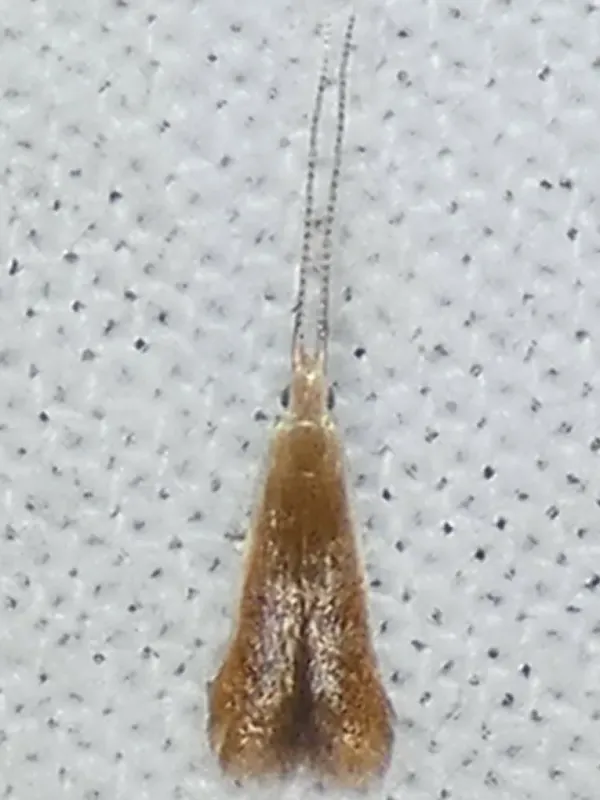
The Laticorn casebearer (Coleophora laticornella) is a small moth species belonging to the family Coleophoridae. It is recognized primarily by the unique portable cases constructed by its larvae during their development.
Adult moths are tiny with narrow, fringed wings, which is a characteristic feature of microlepidoptera. Due to their small size and cryptic habits, they are rarely observed in the field by orchardists.
The biological cycle consists of complete metamorphosis: egg, larva, pupa, and adult. The most distinctive stage is the larva, which spends most of its life protected inside a silk-based case decorated with plant material.
Taxonomically, this species is identified through careful analysis of the genitalia. Because many Coleophora species look visually similar, exact identification often requires expert entomological examination.
These moths are typically nocturnal and are attracted to light, though this behavior is not always reliable for monitoring due to the presence of other similar-looking species.
What it damages
The Laticorn casebearer primarily targets various fruit trees, especially those in the Rosaceae family such as apple, pear, and cherry. The larvae feed on the leaf tissue by mining the interior.
Feeding damage results in light-colored patches or windows on the leaves, where the leaf epidermis remains intact while the green mesophyll is consumed. This disrupts the plant's ability to photosynthesize effectively.
In cases of high infestation, the foliage may drop prematurely, causing physiological stress to the trees. This can negatively impact fruit yield and the development of future fruit buds.
Young orchards and nursery stock are at the highest risk. Severe feeding damage can lead to stunted growth and deformities in new shoots, significantly lowering the commercial quality of the plants.
The persistent presence of these larvae throughout the growing season can make them a difficult pest to manage in commercial apple production, as they remain protected by their cases.
When it appears
The life cycle is closely linked to the phenology of the host plant. The overwintered larvae emerge in early spring, coinciding with the bud burst phase, to begin their feeding period.
The larval activity is most intense during late spring, particularly in May and June. During this time, they move across the foliage, enlarging their cases as they grow in size.
The flight period for the adult moths typically occurs in mid-summer. Following mating, females lay eggs on the undersides of leaves to ensure the next generation's survival.
By late summer, the new generation of larvae prepares for hibernation. They seek shelter in bark crevices or branch forks, creating durable cases to survive the winter months.
This species is univoltine, meaning it has only one generation per year, which is a critical piece of information for planning the timing of pest control interventions.
Signs of infestation
Visible signs of infestation include the characteristic window-like damage on leaves. These translucent patches are clear indicators that larvae are feeding on the leaf interior.
The presence of portable cases attached to leaves or bark is the most definitive sign of this pest. These cases often look like small, curved twigs or debris, making them easy to overlook.
Leaves may wither and curl prematurely as a result of heavy mining activity. In severe cases, large portions of the canopy may appear discolored or sparse.
Silken threads left behind by larvae moving from one feeding site to another can sometimes be spotted on the branches or leaf stalks.
Discarded cases on the ground or stuck to the trunk during the off-season provide evidence that a population of the pest is established in the orchard environment.
Control measures
Integrated pest management strategies are necessary to control the Laticorn casebearer. Cultural practices, such as pruning and removing heavily infested branches, help reduce the population size.
Scrubbing the trunk bark in winter or early spring can dislodge and destroy overwintering larvae, significantly reducing the pressure in the upcoming growing season.
Biological control using formulations of Bacillus thuringiensis can be effective during the larval feeding stages, as it targets the larvae while they are active on the foliage.
Chemical insecticides should be used selectively and timed precisely to coincide with the larval emergence phase. Always follow local regulations regarding pesticide use in fruit orchards.
- Regular monitoring during the spring to identify the timing of larval emergence.
- Encouraging natural predators and parasitoids that prey on the larvae.
- Maintaining proper orchard hygiene by collecting and burning fallen leaves that may contain larvae or pupae.
Taxonomy
- Latin name
- Coleophora laticornella
- Order
- Lepidoptera (butterflies)
- Family
- Coleophoridae
- EPPO code
- COLECA
Discussion
No discussions yet — be the first.