
Cherry case-bearer
Coleophora hemerobiella
Description
How to identify
The cherry case-bearer (Coleophora hemerobiella) is a small moth belonging to the family Coleophoridae within the order Lepidoptera. Adult moths have a wingspan of approximately 12–14 mm and possess narrow, elongated wings with a distinct fringe.
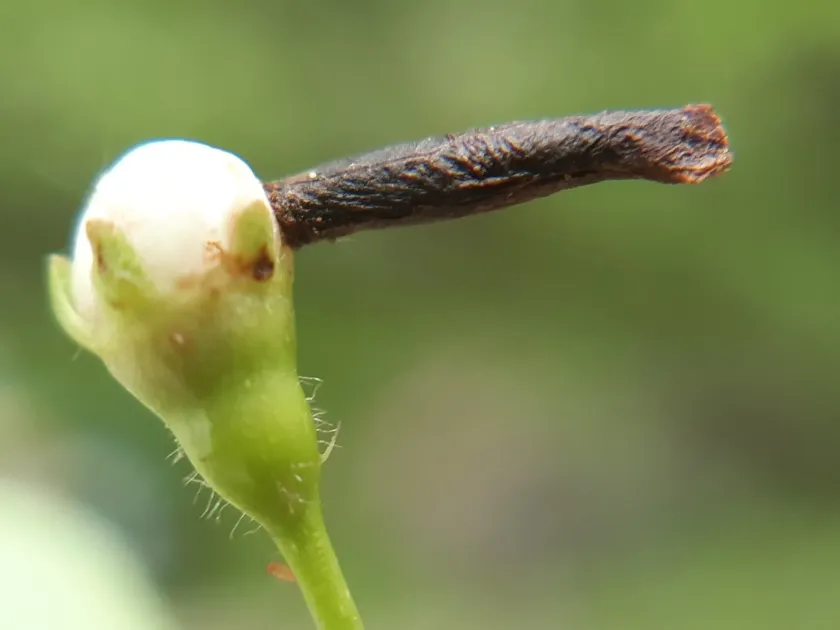
The most distinctive feature of this species is the larvae's habit of constructing portable cases from silk and leaf tissue. These cases serve as a protective cover for the caterpillar throughout its development.
Larvae typically reach about 7 mm in length and have a yellowish-brown appearance with a darker head capsule, making them inconspicuous when attached to bark.
Adults are nocturnal and tend to remain inactive on the underside of leaves or bark during daylight hours, making them difficult to detect by visual inspection.
The species completes one generation per year, making it a univoltine pest adapted to the seasonal rhythms of temperate orchards.
What it damages
This pest affects a wide range of pome and stone fruit trees, including apple, pear, cherry, plum, and ornamental hawthorn species.
Larvae feed by mining the tissue between the leaf surfaces, creating circular or oval-shaped spots that turn light brown and eventually die, leaving small holes.
Severe infestations can lead to a significant reduction in leaf area, which weakens the tree's vigor and reduces the photosynthetic capacity required for fruit production.
In the spring, larvae directly target opening buds, causing them to fail to develop properly, which can lead to direct yield losses by destroying fruit buds.
Chronic damage often results in stunted growth and premature leaf drop, making the trees more susceptible to secondary diseases and environmental stress.
When it appears
Larvae overwinter in the second or third larval stage inside their protective cases, which are securely attached to small twigs or the bark near buds.
As temperatures rise in the spring, the larvae detach and move to the developing buds to resume feeding, which coincides with the early growing season.
Pupation occurs in June, followed by the flight period of the adult moths, which usually spans the early to mid-summer months.
After mating, females lay eggs on the undersides of leaves, and young larvae emerge after approximately two weeks to begin feeding and constructing their first cases.
By late autumn, the larvae migrate toward the woody parts of the tree to anchor themselves for the winter, completing their annual cycle.
Signs of infestation
The most reliable sign of a case-bearer presence is the observation of small, cigar-like cases attached to branches during the dormant winter season.
Leaf damage appears as numerous small "windows" or holes where the epidermis has been eaten away, giving the foliage a perforated or skeletonized look.
Damaged buds in the spring may show signs of entry holes and fail to open, or they may produce distorted, necrotic growth that dries up quickly.
In high-density populations, the accumulation of larval cases on twigs and leaves becomes visibly obvious upon closer inspection of the canopy.
Early symptoms also include chlorosis or yellowing of foliage in the areas where extensive mining by larvae has occurred.
Control measures
Mechanical control is effective during the dormant season, as thinning the canopy and pruning off heavily infested twigs can significantly reduce the overwintering population.
Biological control methods involve supporting natural enemies, such as parasitic wasps, which can naturally regulate case-bearer populations in sustainable orchards.
Chemical control should be timed to coincide with the period when larvae are emerging from their winter quarters and begin feeding on new growth.
Application of systemic insecticides at the bud-burst stage is generally the most effective way to protect the crop from significant damage.
- Monitor for case-bearer presence during winter pruning.
- Apply insecticides during the early leaf-development stage.
- Remove and destroy infested plant material to reduce pest pressure.
Taxonomy
- Latin name
- Coleophora hemerobiella
- Order
- Lepidoptera (butterflies)
- Family
- Coleophoridae
- EPPO code
- COLEHE
Discussion
No discussions yet — be the first.