
Cochlicella conoidea
Cochlicella conoidea
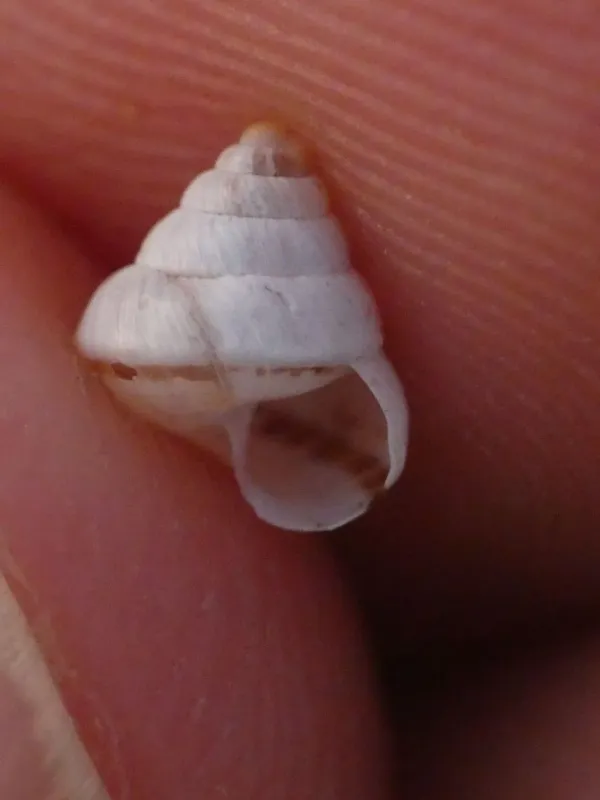
Description
How to identify
Cochlicella conoidea is a land snail belonging to the Cochlicellidae family. The adult has a characteristic conical shell, typically measuring 10–12 mm in height, with a cream or light-brown base color often adorned with darker stripes or spots.
Systematically, this species is classified within the order Stylommatophora. A key biological adaptation is its ability to withstand prolonged dry periods by estivating; snails attach themselves to stalks, fences, or other vertical surfaces, making them difficult to detect.
The shell is robust and helps the snail retain moisture during high temperatures. The body is generally greyish-beige and well-adapted for movement across various substrates, including dry soil and dense plant cover.
Originating from the Mediterranean region, this species is gradually expanding its territory. While it may resemble other conical snails, the specific shape of the shell aperture is a definitive identification marker for agricultural professionals.
Detection is best performed by inspecting the lower parts of plant stems during the early morning or evening. During the heat of the day, snails retreat into soil crevices or under plant debris, remaining mostly inactive to avoid desiccation.
What it damages
This pest affects a wide range of agricultural crops, including cereals, legumes, oilseed rape, and various vegetable varieties. Snails feed on leaf tissue, young shoots, and seedlings, creating irregular, ragged feeding marks.
The most severe damage occurs at the seedling stage, where the destruction of the growing point can cause complete plant death. During the maturation phase, snails climb onto ears and grain heads, contaminating the yield with mucus and feces, which reduces grain quality.
Besides direct tissue consumption, these molluscs promote the spread of fungal and bacterial diseases. The wounds caused by the snail's radula serve as entry points for various phytopathogens, leading to secondary infections.
The extent of damage is directly proportional to the population density. Under outbreak conditions, Cochlicella conoidea can devastate entire field sections, resulting in significant economic losses and reduced harvest volumes.
Beyond crop damage, the presence of shells in harvested grain causes logistical issues during mechanical harvesting. This necessitates additional cleaning and processing costs to ensure the grain meets market standards for storage.
When it appears
Mollusc activity is highly dependent on humidity and temperature. Peaks occur during spring rainfalls and in the autumn, when cooler temperatures and increased atmospheric humidity provide optimal conditions for movement and feeding.
Summer months, typically characterized by high temperatures and drought, are spent in a state of estivation. During this time, snails attach to weeds or crops and enter a dormant phase, waiting for favorable environmental changes.
The life cycle involves egg-laying in moist soil near the base of host plants. The young develop through several stages, reaching sexual maturity by the next season, which allows the population to sustain itself throughout the year.
Climate shifts and irregular weather patterns can alter the timing of peak activity. Significant rainfall following a long dry spell often triggers a massive emergence of snails from their hiding spots, posing an immediate threat to young crops.
Field monitoring should commence immediately after germination, as young plants are the most vulnerable. Regular observations allow farmers to detect rising activity levels before the population reaches an uncontrollable threshold.
Signs of infestation
The primary indicators of an infestation are characteristic feeding patterns, including jagged leaf margins and holes in the foliage. Silver, shiny trails of dried mucus left on the soil or plant surfaces serve as clear evidence of snail presence.
Inspecting the underside of leaves and the base of stalks often reveals young individuals or egg clutches. In dry weather, look for snails attached to the upper parts of plant stems or hidden within the dense vegetation.
Contamination of grain heads or flower spikes with snail excrement is a major warning sign, especially near harvest time. This aesthetic degradation often accompanies a decrease in overall grain quality and potential mold development.
Stunted plant growth, yellowing, or wilting in the absence of obvious disease should prompt an investigation into mollusc activity. Night inspections with a flashlight are highly effective for confirming the presence of active snails.
Finding a high number of empty shells in the soil is also a indicator of a large historical population in the area. This provides sufficient justification to initiate preventive pest management measures for the upcoming season.
Control measures
Agrotechnical strategies include deep tillage, which destroys egg clutches and exposes snails to solar radiation, leading to dehydration. Keeping field margins free of weeds significantly limits their refuge areas during dry months.
Crop rotation and proper field sanitation help reduce the mollusc population over time. By removing vegetative residues, farmers limit the available food sources and protection for the snails throughout the year.
When populations exceed economic thresholds, molluscicides are the most effective solution. Baits based on metaldehyde or iron phosphate are commonly used, as they attract the snails and provide rapid, targeted control across the field.
Biological control involves supporting natural predators such as carabid beetles, birds, and small mammals. Some farmers use entomopathogenic nematodes, which act as parasites and significantly decrease the survival rates of snail populations.
Strict phytosanitary control of farm machinery moving between fields is essential to prevent the passive spread of snails and their eggs. A combined management strategy is the most reliable way to minimize losses and ensure sustainable crop health.
Taxonomy
- Latin name
- Cochlicella conoidea
- Order
- Molluscs
- Family
- Hygromiidae
- EPPO code
- COCECO
Discussion
No discussions yet — be the first.