
Cochlicella barbara
Cochlicella barbara
Description
How to identify
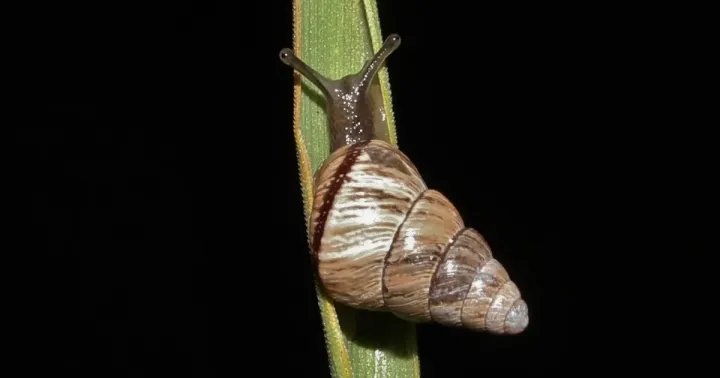
Cochlicella barbara is a species of air-breathing land snail in the family Geomitridae. Adult specimens possess a conical, elongated shell, typically measuring 10–15 mm in height and 5–8 mm in width.
The shell color ranges from whitish to cream, often featuring distinctive brown spots or interrupted spiral bands. The shell surface is smooth with subtle growth lines visible under close inspection.
The snail's soft body is usually light gray or yellowish. This pest exhibits a high level of adaptation, often forming large clusters on plant stems during dry periods to conserve moisture.
Systematically, it belongs to the order Stylommatophora. A key behavioral trait is their tendency to climb high up on vegetation to escape the heat from the soil surface.
Its distribution is closely linked to anthropogenically disturbed landscapes, where it utilizes abundant weed cover for shelter and nocturnal feeding.
What it damages
Cochlicella barbara poses a significant threat to a wide range of agricultural crops, including cereals (wheat, barley), legumes, and various vegetable varieties.
These snails graze on vegetative parts, damaging leaves and shoots, which reduces the total photosynthetic area and weakens the overall plant structure.
Invasion of rapeseed and other oilseed crops is particularly dangerous, as the snails may consume young buds and flowers, directly causing potential yield losses.
In cereal crops, they frequently congregate on the ears, complicating harvesting procedures and contaminating the grain harvest with their mucus and fecal matter, reducing market value.
- Defoliation of seedlings and young leaves
- Stunted growth and plant vigor reduction
- Contamination of produce with mucus
- Facilitation of fungal infections
When it appears
The activity of this pest is directly dependent on environmental humidity. Mass emergence is typically observed during seasons with frequent rainfall or high atmospheric moisture.
In regions with a Mediterranean climate, peak activity occurs during the autumn and winter months, extending into early spring when soil temperatures favor reproduction.
During the summer months, as drought sets in, the snails enter an estivation phase, attaching themselves to dry stems or fences to minimize water loss.
Reproduction occurs in the soil, where eggs are deposited. Populations recover rapidly after dormant periods if weather conditions turn favorable for juvenile development.
Monitoring population density is crucial during seed germination and flowering phases, as crops are most susceptible to damage at these physiological stages.
Signs of infestation
One of the most obvious signs of Cochlicella barbara presence is the visual observation of the snails themselves clinging to crop stems, often in large numbers.
Leaves often display irregular holes with smooth margins, which are the characteristic result of their radula, a scraping mouthpart used for feeding.
Dried, glistening mucus trails can be found on the soil surface or the lower sections of plants, which remain visible even after they have dried out.
Mass infestations often lead to the yellowing and wilting of specific field patches, appearing as distinct "hotspots" of pest activity.
The accumulation of empty, bleached shells on the soil surface is a strong indicator of high population density within the agricultural ecosystem.
Control measures
Effective management of Cochlicella barbara relies on an integrated strategy combining agrotechnical practices and chemical interventions.
Regular mechanical soil cultivation, such as discing or plowing, helps destroy egg-laying sites and eliminates shelter, significantly reducing population numbers.
Aggressive weed management along field borders and near irrigation channels is vital, as these areas often serve as permanent reservoirs for the pest.
When economic damage thresholds are exceeded, the application of molluscicides, specifically baits based on metaldehyde or iron phosphate, is recommended.
Chemical control measures should be applied in the evening or early morning hours, when the snails are most active and emerge to feed on the surface.
Taxonomy
- Latin name
- Cochlicella barbara
- Order
- Molluscs
- Family
- Hygromiidae
- EPPO code
- COCEVE
Discussion
No discussions yet — be the first.