
Hawfinch
Coccothraustes coccothraustes
Description
How to identify
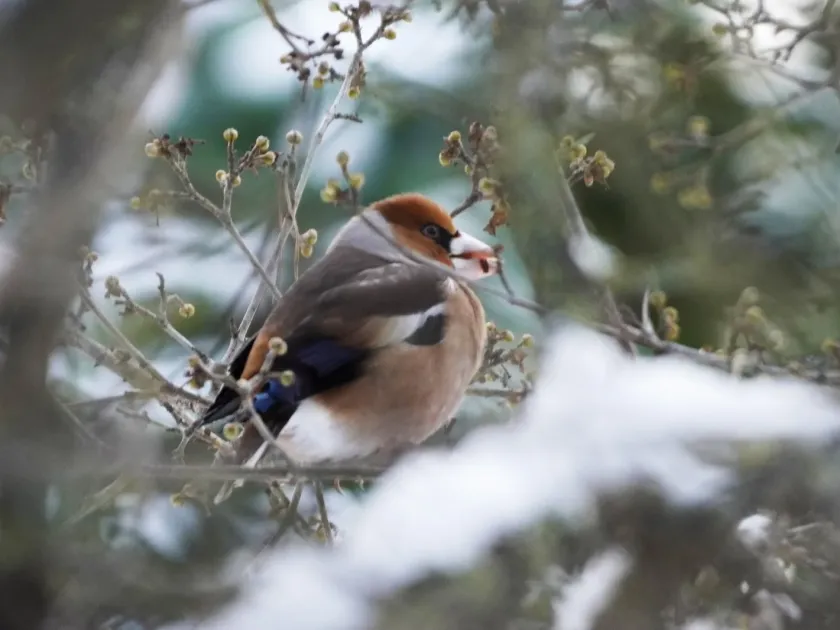
The Hawfinch (Coccothraustes coccothraustes) is a robust member of the finch family, Fringillidae, known for its massive, powerful beak and distinct appearance. It is arguably the most formidable small bird in the forest canopy.
The bird is characterized by a large, triangular, steel-blue beak that is highly specialized for cracking extremely hard seeds and fruit pits. Its plumage features a mix of chestnut, brown, and grey, with a striking white patch on the wings visible during flight.
Hawfinches are naturally shy and elusive, preferring the upper canopy of old-growth trees. Their cryptic coloration allows them to blend in with bark and foliage, making them difficult to spot until significant damage is already done.
While historically associated with mature woodlands, the hawfinch often ventures into orchards. Their strong, muscular jaw allows them to exert immense pressure, capable of cracking the hard endocarp of stone fruits like cherries and plums.
They are generally sedentary or nomadic birds. In winter, they congregate in flocks to search for food, which brings them into closer proximity with domestic gardens and commercial fruit production sites.
What it damages
The primary agricultural damage caused by hawfinches is the destruction of fruit tree buds in early spring. These birds specifically target both vegetative and flower buds, stripping branches clean of potential blossoms.
Stone fruits are the most vulnerable to these attacks. Cherry, plum, apricot, and almond trees suffer most frequently, as the birds utilize their beaks to shear off the bud scales and consume the developing plant tissue inside.
During the summer harvest, hawfinches shift their focus to the fruit itself. They are notorious for slicing through the fleshy part of the fruit to reach the kernel inside the pit, rendering the produce unmarketable.
The damage is often localized but severe. A single flock can decimate a specific tree or section of an orchard in a very short time, which can significantly affect the overall yield for the season.
Furthermore, the physical damage inflicted on the twigs and bark during feeding provides entry points for wood-rotting fungi and other pathogens, which can weaken the tree structure over the long term.
When it appears
The peak period of damage occurs in late winter and early spring, specifically when trees start to show signs of bud swelling. During this time, hawfinches are driven by the need for high-energy food before the breeding season.
Late March and April are the most critical months. If food sources in their native woodland habitat are scarce, their dependence on orchard buds increases exponentially, leading to raids on susceptible plantations.
In the summer, activity returns as the fruit ripens. Hawfinches frequent orchards in June and July, specifically to feed on the pits of early-ripening cherries and other stone fruits.
Winter months are when flocks are most active and nomadic. While they primarily feed on wild tree seeds during this time, they may strip trees of their dormant buds if other natural supplies are exhausted.
The intensity of the damage varies annually based on the abundance of wild food sources. Years with poor natural mast production in forests typically see higher rates of hawfinch damage in orchards.
Signs of infestation
The most telltale sign of a hawfinch infestation is the presence of numerous fruit pits scattered beneath the tree, each one cleanly split into two precise halves.
Visually, the trees will show missing buds or bare twigs. The removal sites look like sharp, clean nicks, which differ significantly from the frayed damage caused by insects or small mammals.
In cases of fruit damage, you will find fallen cherries or plums with the pit cleanly removed or mangled, while the flesh of the fruit might be partially intact but damaged by the bird's beak during extraction.
An absence of blossoms on specific parts of a tree canopy, while neighboring trees remain untouched, is a strong indicator of localized bird activity.
Hearing their metallic, high-pitched "zick" calls within the canopy can alert the observant gardener to their presence, as the birds move quickly and quietly among the branches.
Control measures
Control strategies for hawfinches focus on deterrence rather than eradication, as these birds are protected in many jurisdictions and play a role in the broader ecosystem.
- Physical barriers, such as fine-mesh netting, are the most effective way to protect ripening fruit from bird damage in smaller orchards.
- Acoustic deterrents that broadcast distress calls or natural predator sounds can create a hostile environment and discourage birds from settling in the area.
- Reflective materials, such as shiny ribbons or old CDs, can be hung in trees to create unpredictable light flashes that startle and drive away birds.
- The use of lifelike hawk or falcon silhouettes acts as a temporary deterrent, though these must be moved periodically to prevent the birds from habituating to them.
Regular orchard hygiene and pruning help maintain healthy trees that can better recover from bud loss. Providing alternative food sources away from the orchard can also help redirect the birds' foraging activity.
Taxonomy
- Latin name
- Coccothraustes coccothraustes
- Family
- Fringillidae
- EPPO code
- COKKCO
Discussion
No discussions yet — be the first.