
Hawfinch
Coccothraustes
Description
How to identify
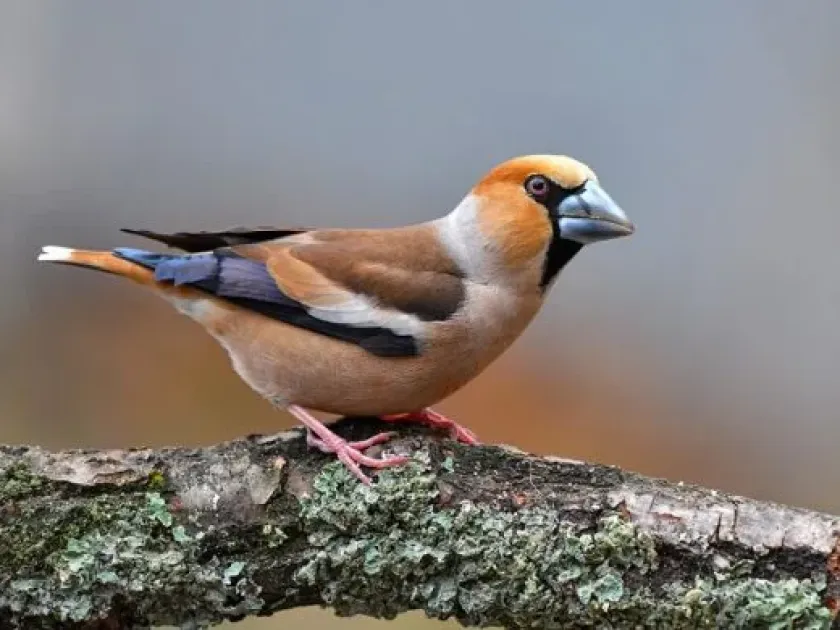
The Hawfinch (Coccothraustes coccothraustes) is a distinctive, robust bird belonging to the finch family (Fringillidae). It is immediately recognizable by its massive, powerful bill, which is specially adapted for cracking hard fruit stones and seeds.
Its plumage is a mix of brown, black, and white, with males showing more vibrant colors, especially on the head and neck. Despite their striking appearance, they are shy and often remain hidden high within the canopy of trees.
The bird's flight is swift and undulating, but they are rarely seen out in the open, preferring the protection of dense foliage. Their shy nature often masks their presence in an orchard until significant damage has already occurred.
During the breeding season, pairs build nests high in trees, and their increased nutritional needs during chick rearing lead to more frequent visits to gardens and orchards in search of easily accessible high-energy food.
The Hawfinch is considered a specialized feeder, and its ability to process hard materials distinguishes it from smaller garden birds that typically only feed on soft fruit flesh or insects.
What it damages
In early spring, the primary damage caused by the Hawfinch involves the consumption of fruit buds. This is particularly harmful to stone fruit trees, including cherries, plums, and apricots, as the loss of buds leads to a direct reduction in yields.
During the summer months, as fruits ripen, the Hawfinch turns its attention to the fruit itself. They pierce the skin and flesh to reach the stone, often discarding the ruined fruit on the ground, which facilitates the spread of fungal diseases.
Damage to fruit buds in early spring can result in stunted growth and the overall weakening of the tree structure. Repeated yearly attacks can significantly reduce the commercial longevity and health of an orchard.
Beyond stone fruits, Hawfinches can also cause damage to apple buds if natural forest food sources are scarce. This makes them a potential threat to diverse fruit-growing operations.
The species also feeds on seeds of various forest trees, which can interfere with the natural regeneration of windbreaks and buffer zones surrounding agricultural lands, impacting the overall orchard ecosystem.
When it appears
Early spring represents the highest risk period, specifically the stage between winter dormancy and the opening of flower buds. During this time, the Hawfinch's search for food often leads them directly to fruit orchards.
The second major period of activity coincides with the ripening of early stone fruits, such as sweet cherries. This phase is critical as the birds actively target maturing fruit, causing rapid losses within a few days.
Winter months see the birds forming small flocks and wandering in search of food. They may frequent orchards that still hold leftover fruits or seeds, often going unnoticed until the spring migration activity begins.
Activity levels can increase significantly in late summer when fledglings join the flocks, leading to larger groups moving together and causing more widespread damage in orchards.
Monitoring the orchard during the pre-blossom and pre-harvest phases is essential for timely deployment of deterrents and protection measures.
Signs of infestation
The presence of shredded bud scales and fragments of cracked fruit stones beneath the trees is a clear indicator that Hawfinches have been foraging in the area.
Visible damage to fruit typically consists of a clean, deep hole or a split in the flesh reaching the stone. This damage is distinctly different from the grazing patterns caused by insects or smaller birds.
Auditory signs include the sharp, metallic-sounding call of the birds as they communicate within the flock. Often, they can be spotted perched high in the branches, remaining relatively motionless while they feed.
In the spring, bare or damaged branches in sections of the orchard where pests are not usually found often indicate avian damage, particularly when accompanied by bud loss.
The observation of small, heavy-billed flocks visiting the orchard periphery is a primary warning sign that requires immediate action to protect the crop.
Control measures
Visual deterrents, such as raptor decoys or holographic reflective tapes, can be effective in small-scale orchards to discourage the birds from landing in the trees.
Acoustic deterrents that broadcast predator calls are highly effective for large orchards, provided the sounds are rotated frequently to prevent the birds from habituating to the noise.
Exclusion netting remains the gold standard for protecting stone fruit crops. While labor-intensive, it provides a physical barrier that is the only guaranteed way to prevent loss in high-value fruit production.
Integrated orchard management, such as removing leftover fruit after harvest and maintaining buffer strips with non-crop seeds, can help divert the birds' attention away from the primary fruit trees.
- Installation of bird-safe exclusion netting.
- Deployment of dynamic visual deterrents like spinning reflectors.
- Use of automated sound systems mimicking predator calls.
- Timely pruning and orchard sanitation practices.
Taxonomy
- Latin name
- Coccothraustes
- Family
- Fringillidae
- EPPO code
- COKKSP
Discussion
No discussions yet — be the first.