
Cingilia
Cingilia
Description
How to identify
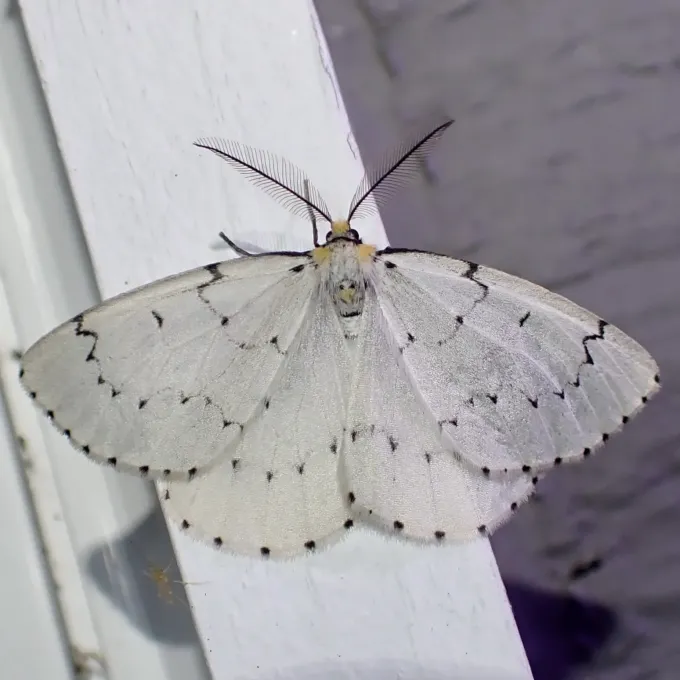
Cingilia catenaria, commonly referred to as the chain-dotted geometer, belongs to the family Geometridae. The adult moth typically has a wingspan ranging from 30 to 40 millimeters, characterized by a delicate, translucent appearance.
The wings exhibit a distinct pattern, often featuring a row of dark spots or a chain-like line along the outer margins, which gives the species its common name. The caterpillars are typical of geometer moths, possessing a slender body and specific proleg arrangement.
Taxonomically, this species is classified within the order Lepidoptera. It undergoes complete metamorphosis, which includes the stages of egg, larva (caterpillar), pupa, and adult, with the larval stage being the primary focus for agricultural monitoring.
Adult moths are generally nocturnal and are known to be attracted to artificial light sources. This behavior is frequently utilized by agronomists to monitor population density during the late summer and early autumn periods.
Identification in the field involves looking for the characteristic looping motion of the caterpillars, which is typical for all geometrids, and recognizing the adult moth's pale, semi-transparent wing structure.
What it damages
The Cingilia caterpillar is a known polyphagous pest, meaning it can feed on a diverse range of plant species. While it often favors native trees, it can cause significant damage in orchard and nursery settings when conditions are favorable.
Damage is caused exclusively by the larvae, which consume leaf tissue. They often start at the leaf margins, creating irregular patterns before moving toward skeletonization, where only the vascular tissue remains.
Severe infestations lead to massive defoliation of host plants. This loss of foliage limits the plant's ability to photosynthesize, which in turn reduces growth rates and weakens the plant's overall health and vigor.
When the foliage is significantly depleted, the plant may experience premature leaf drop, making it more susceptible to drought stress and secondary opportunistic infections from various pathogens.
In ornamental and nursery environments, the visual damage caused by these caterpillars can result in significant economic loss, even if the plant itself is not killed by the defoliation process.
When it appears
The life cycle of the Cingilia moth is tied to the local climate, with adult flights typically occurring from late summer through early autumn. Mating and oviposition occur during this window, ensuring the species survives the winter.
Overwintering occurs in the egg stage. These eggs are usually deposited on bark or foliage litter, remaining dormant until the return of warmer weather in the spring, which aligns with the flushing of host plants.
Caterpillars emerge in the spring, coinciding with the growth of new leaves. They feed actively throughout the late spring and early summer, targeting the most succulent plant tissues available during the early growing season.
Pupation takes place in mid-to-late summer. The larvae construct loose cocoons, often within folded leaves or silken webbing, where they undergo transformation into the adult moth form.
Environmental factors such as temperature and spring humidity are crucial for the successful hatching of eggs and the survival rates of the early-instar larvae during the most critical growth phase.
Signs of infestation
The most reliable sign of a Cingilia infestation is the presence of eaten leaf edges or holes in the leaf surface. As the larvae grow, the amount of material consumed increases dramatically.
Frass (caterpillar excrement) found on the leaves or the soil surface beneath the infested plant is a clear indication that larvae are actively feeding nearby. This sign is helpful for pinpointing the location of the pest.
Observation of the adult moths near host plants during late summer provides a warning sign for the potential emergence of larvae in the following spring season.
Presence of light, silken webbing on leaves or twigs where larvae are resting or molting can also indicate their presence, as these structures are used to anchor the insects against environmental disturbances.
Careful inspection of the underside of leaves and bark crevices during the dormant season can sometimes reveal overwintering egg clusters, allowing for preventative measures before the spring hatch.
Control measures
Cultural control is a primary management strategy. This involves keeping the surrounding area free of weeds that might serve as alternative host plants or refugia for the larvae during their development.
Biological control options include the use of selective biopesticides, such as those derived from Bacillus thuringiensis, which are highly effective against young larvae while posing minimal risk to beneficial insect populations.
When populations reach an economic threshold, the application of targeted insecticides may be necessary. It is crucial to time these applications to coincide with the most vulnerable larval stages.
Encouraging natural predators, including predatory wasps, spiders, and birds, can help maintain population levels below the damage threshold, supporting a more sustainable integrated pest management approach.
Monitoring populations using light traps provides valuable data to determine if and when control measures are required, thereby avoiding unnecessary chemical interventions and protecting the ecosystem.
Taxonomy
- Latin name
- Cingilia
- Order
- Lepidoptera (butterflies)
- Family
- Geometridae
- EPPO code
- CINGSP
Discussion
No discussions yet — be the first.