
Cidaria
Cidaria
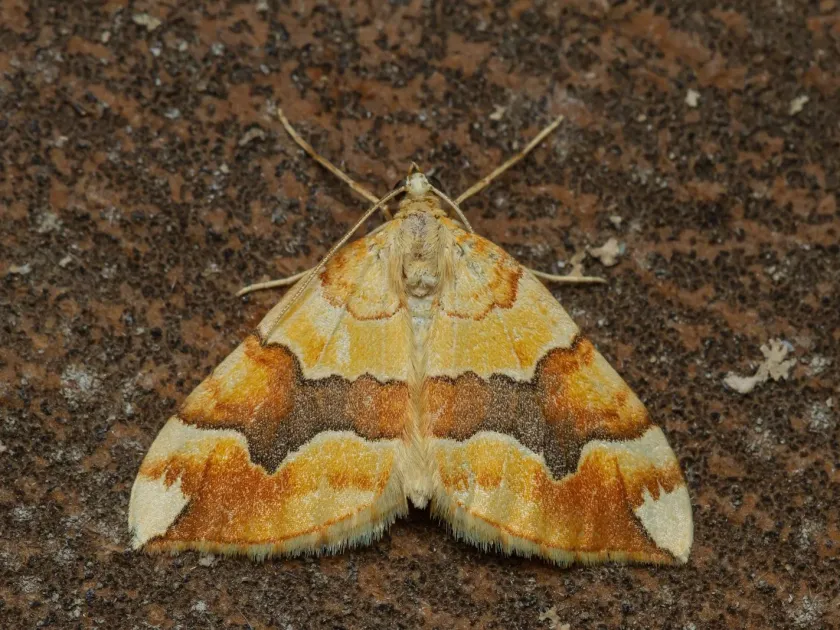
Description
How to identify
Cidaria is a genus of moths belonging to the family Geometridae. Adult individuals are small moths often characterized by cryptic coloration, which allows them to blend perfectly with tree bark or foliage.
Cidaria caterpillars have the typical body structure of geometer larvae, featuring a limited number of abdominal legs. This forces them to move in a distinctive "looping" manner, by arching their bodies, which is why the family is commonly known as loopers or inchworms.
The larvae usually possess camouflage coloring, ranging from green to brown, rendering them nearly invisible on the stems and leaves of their host plants. The caterpillar's head is well-developed and equipped with strong mandibles for chewing plant tissue.
The insect's life cycle includes four stages: egg, larva (caterpillar), pupa, and imago. Depending on the specific species within the Cidaria genus, they typically overwinter as pupae in the soil or as larvae in plant debris.
Precise species identification often requires professional examination of morphological genitalia traits, as many members of the genus appear very similar to the untrained eye.
What it damages
The primary damage is caused by the caterpillars, which feed on the leaves of various trees, shrubs, and herbaceous plants. In agricultural ecosystems, they can damage fruit trees, berry bushes, and forestry crops.
During mass outbreaks, Cidaria can significantly defoliate plants, leading to a weakening of photosynthesis and the plant's overall metabolism. This is particularly critical during the peak growing season and fruit formation.
Leaf damage typically starts from the edges or the center, depending on the larval stage. Young larvae often eat only the leaf parenchyma, leaving the veins intact, which creates a skeletonized appearance.
Older larvae are capable of destroying entire leaves, including the larger veins, which leads to premature leaf fall, loss of commercial quality of fruit produce, and reduced green mass growth.
The damage also serves as an entry point for fungal and bacterial pathogens, which may cause secondary plant diseases that further degrade the plant's health.
When it appears
Adult flight usually occurs during the spring and summer. Depending on the climatic zone, the peak activity of adult moths typically falls in May or June, when mass egg-laying on host plants takes place.
Larvae appear a few weeks after egg-laying. Their active feeding period coincides with the hottest months, when insect metabolism is accelerated and they consume significant amounts of plant material.
By late summer or early autumn, the caterpillars cease feeding and pupate. The pupal stage serves as a preparatory phase for wintering, ensuring the species' survival under adverse conditions.
The number of generations per year depends on regional temperatures; in warmer latitudes, two or more generations can develop per season, increasing the risk of severe crop damage.
Monitoring is conducted using light traps, which attract adult moths at night, allowing agronomists to plan timely control measures effectively.
Signs of infestation
The first sign of infestation is the presence of characteristic excrement, appearing as small granules on the leaves directly beneath the caterpillar feeding sites.
Visual inspection of the underside of leaves allows for the detection of the caterpillars themselves, which remain motionless when disturbed, imitating a twig or leaf petiole, making them hard to spot.
Jagged, irregular leaf edges or numerous holes in the leaf blades are strong indicators of leaf-eating pests, such as Cidaria larvae.
Leaf rolling or the presence of fine silk webbing, used by larvae to pull leaf edges together for protection, is another vital diagnostic sign.
In cases of high infestation, visible defoliation of shoots is observed, which is easy to spot during garden inspections as the canopy loses density and color.
Control measures
The biological method of control includes using biopesticides based on Bacillus thuringiensis, which are effective against young larvae while remaining safe for beneficial insects.
The use of systemic and contact insecticides is justified when the economic threshold of damage is reached and the population density threatens significant crop losses.
Agrotechnical measures involve deep autumn tilling of the soil around the base of trees, which helps destroy overwintering pupae in the ground by disturbing their cocoons.
Hand-picking and destroying the caterpillars are effective for small gardens or domestic plots where chemical applications are either undesirable or not economically feasible.
Attracting natural enemies, such as birds, predatory beetles, and parasitic wasps, helps keep looper populations in check, emphasizing the importance of maintaining garden biodiversity.
Taxonomy
- Latin name
- Cidaria
- Order
- Lepidoptera (butterflies)
- Family
- Geometridae
- EPPO code
- CIDASP
Discussion
No discussions yet — be the first.