
Cicadivetta tibialis
Cicadivetta tibialis
Description
How to identify
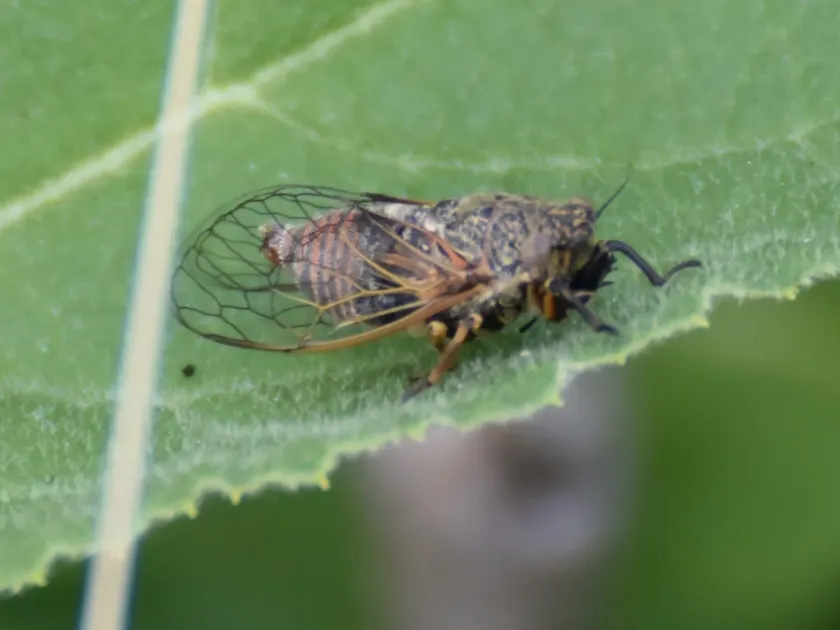
Cicadivetta tibialis is a species of cicada belonging to the Cicadidae family within the order Hemiptera. Adult specimens are robust, typically measuring between 15 and 20 mm in length, featuring a dark body with distinctive yellowish or reddish markings on the thorax and abdomen.
Their wings are transparent with prominent venation, held roof-like over the body when at rest. The head is broad, characterized by large, lateral compound eyes. Males are equipped with specialized sound-producing organs called tymbals, used for acoustic signaling during the breeding season.
The immature stage, or nymph, is entirely subterranean, living in the soil and feeding on plant root sap. Nymphs possess powerful, specialized forelegs designed for digging, allowing them to remain underground for several years before emerging as adults.
These insects prefer warm, sunny environments, commonly inhabiting orchards, vineyards, and forest edges. The adult stage is relatively short, focusing primarily on reproduction and dispersal, with activity peaking during the hottest summer months.
Distinguishing this species involves examining the morphology of the tibiae, which provides the species name. While they are not predators, their behavior during oviposition (egg-laying) makes them a significant concern for orchard management and nursery production.
What it damages
The primary damage is caused by females during the egg-laying process. Using a serrated, sharp ovipositor, the female creates deep incisions in the bark of young shoots to deposit eggs into the vascular tissues.
Common hosts include fruit trees such as apple, pear, peach, and various woody shrubs. These mechanical wounds compromise the structural integrity of the branch, often leading to wilting, dieback, or breakage, especially under the weight of ripening fruit.
These bark incisions serve as entry points for various pathogens, including fungi and bacteria, which can cause cankers and secondary necrosis. Such infections weaken the tree, impede nutrient transport, and reduce overall orchard productivity.
Nymphal feeding on roots in the soil can further stress the plants. In cases of high population density, young saplings may suffer from stunted growth, reduced vigor, and increased susceptibility to environmental stressors like drought.
Economic losses are most significant in young orchards and nurseries, where repeated scarring of the bark can kill primary shoots and branches. This damage is often irreversible and necessitates corrective pruning or, in severe cases, the removal of the tree.
When it appears
The adult emergence typically occurs during the mid-to-late summer months, spanning from June through August. This period is marked by the distinct, rhythmic singing of males, which serves to attract mates and define the active breeding season.
Oviposition activities continue throughout the summer, with females systematically targeting healthy, succulent growth. The eggs remain within the host plant tissue for a period before hatching, depending on temperature and species specifics.
The life cycle of the nymphs is notably long, often lasting several years as they develop in the soil. The emergence of the final instar nymph from the ground is a coordinated event that usually coincides with favorable seasonal climatic conditions.
Upon leaving the soil, the nymphs climb nearby vertical surfaces, such as tree trunks or fence posts, to undergo their final molt. This process leaves behind empty exoskeletons, or exuviae, which serve as a clear sign of their presence in the environment.
The density of cicada populations is often cyclical, influenced by favorable weather patterns during their prolonged development. Mild winters and warm springs generally support higher survival rates for the soil-dwelling nymphs.
Signs of infestation
The most reliable sign of infestation is the presence of characteristic scarring on the bark, appearing as a row of small, slit-like incisions. These marks often look as if they were made by a needle or a fine-toothed saw.
Empty nymphal skins, or exuviae, attached to tree trunks or low vegetation are a definitive indicator that a generation of cicadas has emerged. These brown, shell-like remnants are frequently found in clusters after a mass emergence.
Auditory evidence, specifically the loud, buzzing, or clicking songs of males in the canopy, helps identify the presence of the pest during the daytime. The sound intensity increases during the hottest hours, often revealing the location of the colony.
Wilting of terminal shoots without obvious signs of pests or disease is another symptom. If the bark is inspected closely, the damage from the egg-laying process is usually found at the base of the withered portion.
General lack of tree vigor in the absence of other obvious causes can indicate root damage caused by nymphal feeding. Monitoring the soil base for emergence holes can help confirm the infestation level.
Control measures
Mechanical control is the most effective approach. Pruning and destroying heavily infested branches before the eggs hatch prevents the next generation from emerging and establishing itself on the trees.
Chemical control can be implemented using registered insecticides during the peak flight period of adult cicadas. However, treatments must be carefully timed and managed to avoid harming beneficial pollinator species.
Biological control methods involve promoting natural predators, such as birds, small mammals, and predatory insects, which can help regulate population levels naturally when habitats are well-maintained.
Cultural practices, including maintaining healthy, well-irrigated trees, can help the host plant withstand the stress of minor infestations. Regular soil cultivation around the base of trees can disrupt the development of nymphs.
- Sanitary pruning of infested twigs.
- Using fine-mesh netting to protect young, vulnerable saplings.
- Managing weed cover to limit suitable egg-laying sites.
- Targeted insecticide applications during adult activity.
Taxonomy
- Latin name
- Cicadivetta tibialis
- Order
- Hemiptera (bugs, aphids, leafhoppers)
- Family
- Cicadidae
- EPPO code
- CCDVTI
Discussion
No discussions yet — be the first.