
Cicadivetta cicadas
Cicadivetta
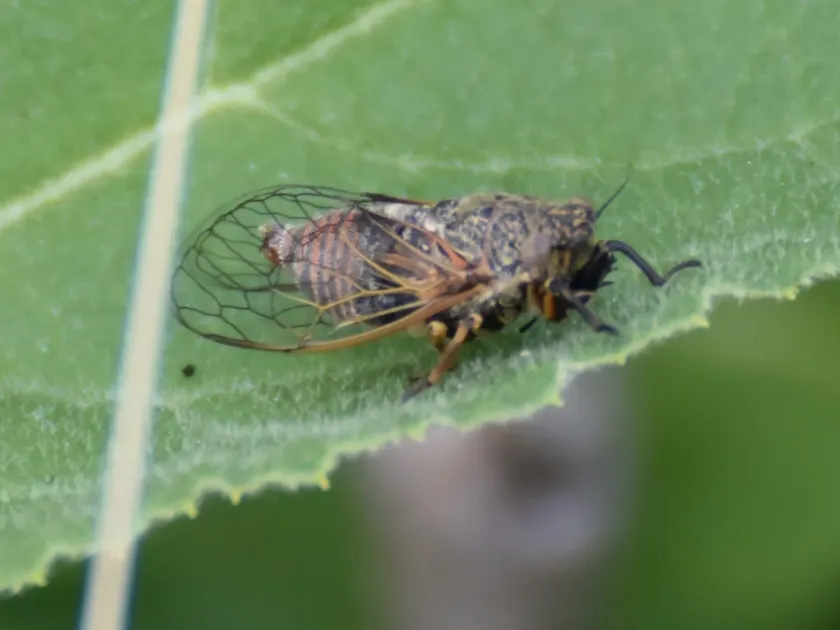
Description
How to identify
The genus Cicadivetta belongs to the family Cicadidae, order Hemiptera. These insects are characterized by their sturdy build and specialized tymbal organs used for producing loud, species-specific acoustic signals.
Adults are medium-sized with clear, veined wings that are folded roof-like over the body. Their coloration is typically cryptic, blending in with tree bark or stems to avoid predation.
The nymphs are subterranean, living in the soil for several years. They are morphologically adapted for digging, possessing robust front legs used to navigate through soil layers to feed on root systems.
Systematically, identification of the species within the Cicadivetta genus relies on specific structures of the male genitalia and wing venation patterns.
Understanding their taxonomy is essential for farmers and agronomists to distinguish them from other harmless cicada species present in the region.
What it damages
Nymphs cause damage by piercing roots and extracting phloem sap, which deprives the plant of essential nutrients and stunts its overall growth and vigor.
Adults contribute to damage by feeding on young shoots and leaves. These feeding punctures cause localized tissue injury and can lead to the wilting of foliage.
The economic impact is particularly significant in vineyards and orchards, where large infestations can lead to decreased fruit quality and weakened plant vitality.
Wounds caused by egg-laying behavior (oviposition) in woody stems often serve as entry points for secondary pathogens, including fungi and bacteria.
Prolonged feeding by nymphs can lead to the gradual decline of perennial plants, making them more susceptible to environmental stress and other pests.
When it appears
Adult activity typically peaks during the warm summer months, coinciding with the period of high temperatures necessary for their mating and reproductive behavior.
The emergence of adults is often synchronized with the phenological stage of host plants, ensuring that conditions are optimal for the next generation.
Nymphal activity is year-round in the soil, although it fluctuates based on soil temperature and moisture levels, which directly affect their feeding rates.
Because their life cycle spans multiple years, the population pressure in a specific orchard or field tends to remain relatively stable over time.
Monitoring for the start of the acoustic season is a reliable way to predict the presence of adults in the vicinity of agricultural land.
Signs of infestation
The most prominent sign of infestation is the loud, rhythmic chirping or buzzing of males, which is clearly audible during sunny daylight hours.
Look for scars or longitudinal slits on young twigs, which are created by females when they insert eggs into the plant tissue.
Wilting or yellowing of leaves that cannot be attributed to drought or nutrient deficiency may indicate significant root feeding by the nymphs.
Excavation of soil near the base of affected trees often reveals the presence of nymphs or their specialized digging tunnels.
The presence of honeydew-like secretions on foliage, combined with increased ant activity, is often a sign of sucking insects feeding on the plant.
Control measures
Cultural control, such as regular soil cultivation and harrowing, is effective in disrupting the nymphs' soil habitat and reducing their survival rates.
The application of systemic insecticides can protect plants during periods of high adult activity, preventing damage to new growth and egg-laying.
Proper plant nutrition and irrigation help trees and vines recover from root feeding, mitigating the long-term impact on productivity.
Biological control strategies, including the preservation of natural habitats for birds and predatory insects, can help maintain population levels below economic thresholds.
- Regular monitoring of adult acoustic signals.
- Sanitary pruning of infested plant parts.
- Maintaining soil health to promote rapid root recovery.
Taxonomy
- Latin name
- Cicadivetta
- Order
- Hemiptera (bugs, aphids, leafhoppers)
- Family
- Cicadidae
- EPPO code
- CCDVSP
Discussion
No discussions yet — be the first.