
Ciampa arietaria
Ciampa arietaria
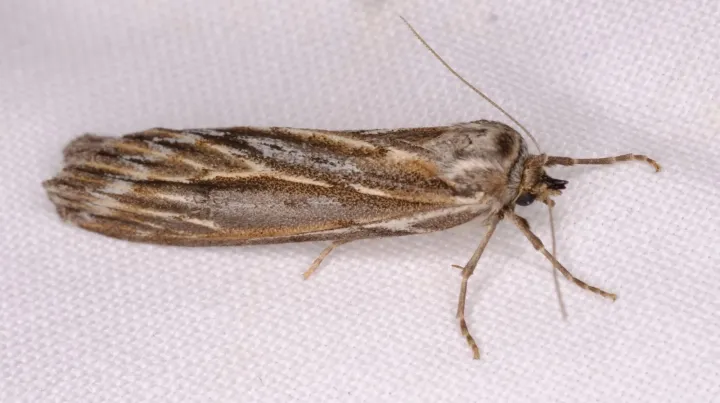
Description
How to identify
Ciampa arietaria belongs to the order Lepidoptera and the family Geometridae. This insect poses a significant threat to various agricultural and ornamental crops during its larval stage.
The adult insect is a small moth with a cryptic coloration that allows it to effectively camouflage against tree bark or dry grass during the day.
The larvae possess the typical structure of looper caterpillars, featuring distinctive prolegs that enable them to move with a characteristic "looping" motion.
Caterpillar bodies are often colored in protective tones, ranging from grayish-green to brown, making them difficult to detect against vegetation.
The life cycle includes egg, larva (caterpillar), pupa, and imago stages, with the larval stage being the most destructive for agricultural ecosystems.
What it damages
This pest primarily attacks fruit trees and several species of shrubs commonly found in orchards and home gardens.
The most significant damage is caused to young leaves, buds, and inflorescences during the active growing season in spring and early summer.
In cases of mass outbreaks, the caterpillars can skeletonize leaf blades, leaving only the major veins, which impairs the plant's photosynthesis.
Severe infestation often leads to premature leaf drop, reduced winter hardiness, and a noticeable decline in seasonal crop yields.
Additionally, early spring damage to buds can prevent the plant from developing generative organs, resulting in total loss of fruit production.
Signs of infestation
The first visual sign of infestation is the presence of holes of various shapes and sizes on the surface of the leaves.
Frass (caterpillar excrement) found on the leaves below feeding sites serves as a key indicator of their presence.
The presence of fine silk, which some caterpillars use to fasten leaf edges together for shelter, also suggests the activity of this pest.
During evening hours or early morning, one may spot the caterpillars themselves, often assuming a stretched, rigid pose to mimic dry twigs.
Widespread wilting or deformation of terminal shoots can also serve as an indirect indicator of high insect activity.
Control measures
Management of this pest involves both agrotechnical practices and chemical control measures to maintain population levels.
Regular monitoring of plantings throughout the growing season is recommended for the timely detection of infestation hotspots.
When caterpillar populations reach high levels, applications of systemic or contact insecticides registered for specific crops are effective.
Biological control agents, particularly those based on bacterial strains, can effectively target larvae without harming beneficial pollinators.
Autumn cultivation of soil around tree bases and bark cleaning helps eliminate pupae that overwinter in the soil or under bark crevices.
Taxonomy
- Latin name
- Ciampa arietaria
- Order
- Lepidoptera (butterflies)
- Family
- Geometridae
- EPPO code
- CIAMAR
Discussion
No discussions yet — be the first.