
Chlosyne lacinia
Chlosyne lacinia
Description
How to identify
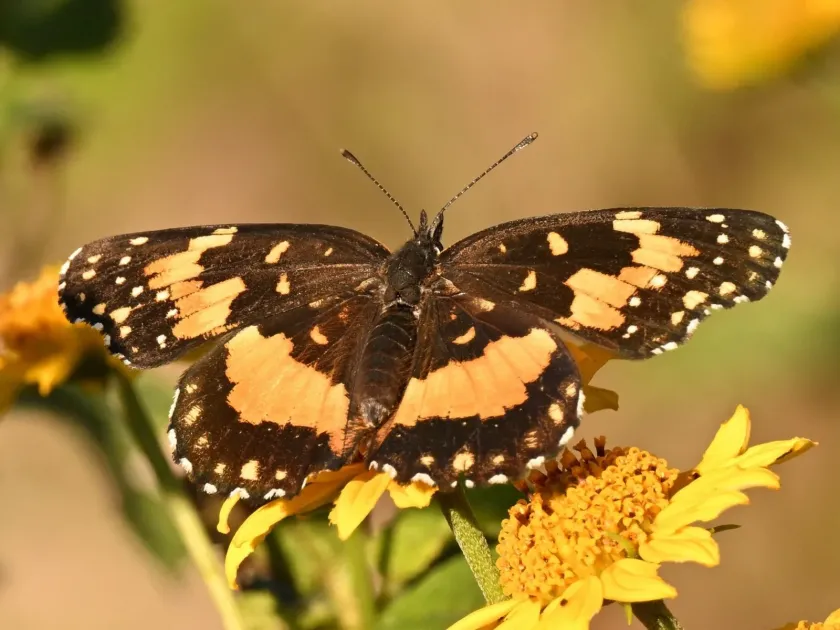
Chlosyne lacinia, commonly known as the border patch butterfly, is a species belonging to the Nymphalidae family. Adult butterflies typically have a wingspan of 4 to 5 cm and feature a distinctive pattern of black, orange, and white patches, which vary significantly across different geographical subspecies.
The larval stage, or caterpillars, are easily recognizable by their spiny appearance. They undergo several molts, changing colors from pale green to dark brown or black with yellowish stripes, which serves as a warning coloration to potential predators in their natural environment.
The pupae of this species are usually light-colored with dark spots, providing effective camouflage when attached to plant stems or the undersides of leaves. This stage is critical for farmers to monitor as it indicates the transition between generations.
Chlosyne lacinia thrives in warm, temperate, and tropical climates, where it can complete multiple generations within a single growing season. This high reproductive rate allows populations to expand rapidly when environmental conditions are optimal.
Adults are diurnal and are frequently observed visiting flowers, which aids in their identification. Understanding the phenology and reproductive habits of this species is essential for effective farm-level management and population tracking.
What it damages
The primary agricultural threat posed by Chlosyne lacinia is to sunflower crops. Larvae feed aggressively on foliage, which can lead to significant photosynthetic loss and potential yield reduction if the infestation is not managed properly.
The species is also known to infest various Asteraceae weeds, including ragweed. These weeds act as vital host plants, allowing the pest to sustain itself throughout the early season before migrating to commercial sunflower fields nearby.
Damage symptoms usually start with localized skeletonization of leaves, where only the larger veins remain. As the larvae grow, their consumption rate increases significantly, leading to extensive defoliation in severe cases.
Defoliation in the early stages of plant development can severely stunt growth and compromise the plant's ability to produce high-quality seeds. Stressed plants are also more susceptible to opportunistic pathogens, further complicating crop health.
In addition to direct feeding, the physical presence of caterpillar waste can degrade the aesthetic and structural quality of the foliage. While usually manageable, mass outbreaks require immediate intervention to prevent economic loss.
Signs of infestation
Early warning signs include the presence of colonial feeding patterns on the undersides of leaves. Young caterpillars aggregate in groups, creating distinct patches of skeletonized leaf tissue that are easy to spot during regular field scouting.
The accumulation of frass (caterpillar excrement) on leaves directly below feeding sites is a major diagnostic indicator. If such signs are observed, a more thorough inspection of the canopy is recommended.
Webbing created by larvae to protect themselves from environmental stress and predators is a clear sign of an established colony. These webbed clusters often contain multiple larvae, which can quickly spread to adjacent leaves.
Curled leaves or small, irregular holes in the top canopy layers are indicative of more mature caterpillars. Checking the terminal shoots and newly formed leaves is essential for accurate population assessment.
The detection of pupae on stems or the undersides of lower leaves is a sign that the current generation is completing its cycle. This timing is critical for planning the next steps in pest management programs.
Control measures
Effective management begins with robust weed control practices. Eliminating host weeds like ragweed from field margins drastically reduces the reservoir of the pest and prevents early-season colonization of sunflower crops.
Biological control using microbial insecticides, such as Bacillus thuringiensis (Bt), is a highly effective and environmentally friendly strategy. These products specifically target larvae while sparing beneficial insects and natural enemies.
Chemical control should be implemented only when the pest population exceeds established economic thresholds. Utilizing selective insecticides ensures that populations of natural predators and parasitoids are preserved to aid in long-term control.
Maintaining ecological corridors and promoting biodiversity within or near the fields encourages the presence of natural predators, which can keep Chlosyne lacinia numbers below economically damaging levels.
Regular field monitoring and data collection on pest density are key to Integrated Pest Management (IPM). Making data-driven decisions helps farmers apply treatments only when necessary, improving both sustainability and profit margins.
Taxonomy
- Latin name
- Chlosyne lacinia
- Order
- Lepidoptera (butterflies)
- Family
- Nymphalidae
- EPPO code
- CHLYLA
Discussion
No discussions yet — be the first.