
Chlorostrymon
Chlorostrymon
Description
How to identify
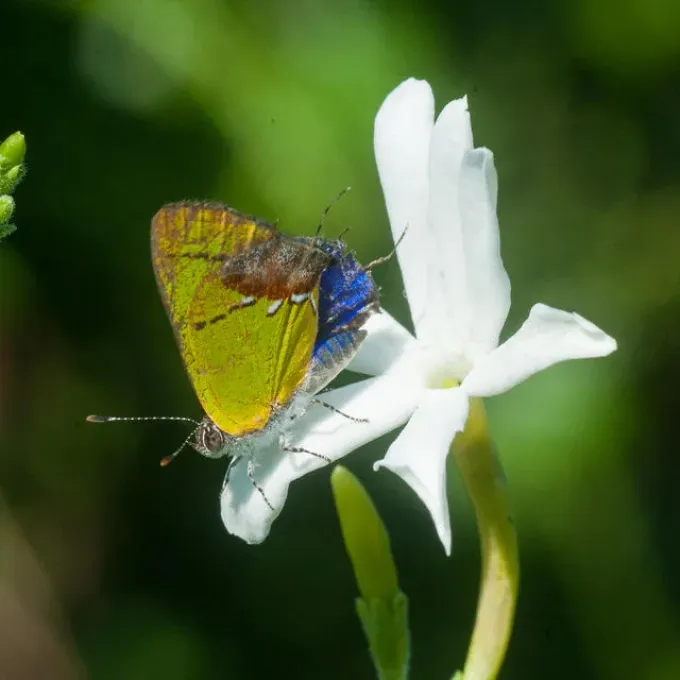
Chlorostrymon is a genus of butterflies within the family Lycaenidae. Adult insects are often recognized by their metallic or greenish wing coloration, providing camouflage against foliage.
The morphology follows typical lepidopteran features, with wings adapted for rapid and agile flight, which is characteristic of many hairstreak butterflies.
Larvae of this genus have evolved a specific form that mimics plant structures, such as developing buds, effectively hiding them from predators.
Eggs are typically deposited singly on the surface of host plants, making them difficult to locate during routine inspections of agricultural crops.
Identifying species within the genus involves examining the wing pattern on the ventral side, which is unique and varies across different geographic regions.
What it damages
The primary hosts for Chlorostrymon larvae include various species of legumes and several types of decorative ornamental plants found in gardens.
The larvae are specialized to feed on the reproductive parts of plants, including buds, flowers, and developing ovaries, which directly impacts fruit yield.
In cases of heavy infestation, larvae may bore into the interior of the plant tissues, leading to stunted growth and providing entry points for pathogens.
The loss of buds and blossoms prevents the formation of seeds or fruits, causing significant economic damage in commercial flower or bean production.
Repeated feeding cycles during the growing season can severely stress the host plant, reducing its overall vigor and resistance to diseases.
When it appears
Insect activity begins with the rise in temperatures during spring, signaling the end of diapause for overwintering individuals.
Adult flight periods correlate closely with the peak flowering times of host plants, as nectar is essential for the butterfly's energy needs.
Developmental cycles are synchronized with plant phenology, ensuring that larvae emerge when the most nutritious food sources are available.
Population densities typically peak during mid-summer when warm and stable weather facilitates rapid reproduction and larval growth.
As autumn approaches, activity tapers off, although isolated larvae may remain active until the onset of consistently cold weather patterns.
Signs of infestation
Initial signs of infestation include small, irregular holes in flower buds, often accompanied by frass or larval excrement near the damage sites.
Premature drop of buds or young pods is a clear indicator that larvae have been feeding inside the developing fruit tissues.
Visible wilting of terminal growth or flower clusters without obvious disease symptoms often points to internal feeding by larvae.
Visual confirmation of the pests usually involves carefully opening damaged buds or searching the undersides of leaves near flower clusters.
- Holes in flower buds and blossoms.
- Premature fruit or bud drop.
- Presence of larval frass on leaves.
Control measures
Regular field scouting during the budding and flowering stages is the most critical step for early detection and population management.
Biological control agents, such as Bacillus thuringiensis, can be used to manage larval populations without harming beneficial insect species.
Chemical intervention should be reserved for cases where economic injury thresholds are exceeded, utilizing selective insecticides whenever possible.
Cultural practices, including the removal of wild host plants and weeds, help disrupt the pest's life cycle and reduce its reproductive success.
Rotating different modes of action for insecticides is vital to prevent the development of pesticide resistance in the pest population.
Taxonomy
- Latin name
- Chlorostrymon
- Order
- Lepidoptera (butterflies)
- Family
- Lycaenidae
- EPPO code
- CHSTSP
Discussion
No discussions yet — be the first.