
Chlorophorus ruricola
Chlorophorus ruricola
Description
How to identify
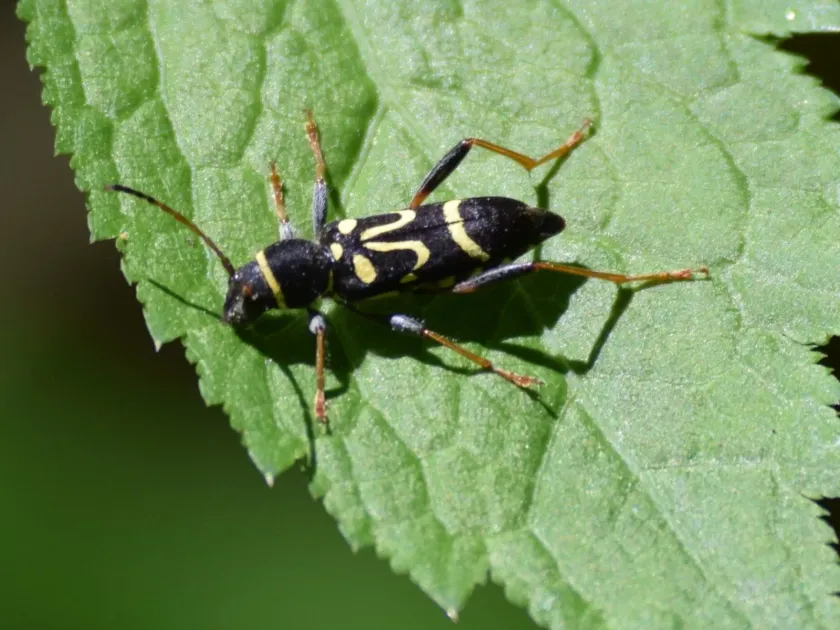
Chlorophorus ruricola is a species of beetle belonging to the Cerambycidae family, commonly known as longhorn beetles. The adult beetle is characterized by a slender body, measuring approximately 10 to 15 mm, with distinct yellow or whitish cross-bands on its black elytra.
The antennae of this species are of moderate length, a feature that helps taxonomists and gardeners differentiate it from other members of the subfamily Cerambycinae. Its legs are adapted for agility on the bark of host trees.
The larva is typical for wood-boring beetles: it is legless, cream-colored, and possesses a robust, sclerotized head designed for tunneling through dense wood tissues. The larval stage is responsible for the internal structural damage to trees.
Adults are typically active during daylight hours, especially in sunny weather. They are frequently observed visiting flowering plants to consume nectar and pollen, which is an important aspect of their biological requirements before egg-laying.
The life cycle duration can vary from one to two years based on environmental factors and the nutritional quality of the wood. Pupation takes place within a specialized chamber carved out by the mature larva deep inside the tree trunk.
What it damages
Chlorophorus ruricola is a significant pest of various broadleaf trees, showing a strong preference for stressed or weakened fruit trees such as apple, pear, and plum. Occasionally, it also attacks healthy trees when population densities are high.
The larvae bore deep, complex galleries into the sapwood and heartwood, which physically destroys the plant's vascular tissue. This damage interrupts the flow of water and nutrients, leading to progressive limb dieback.
Trees infested with these beetles often show signs of reduced vigor, smaller leaves, and premature fruit drop. In cases of chronic infestation, the structural integrity of the tree is severely compromised, making it prone to breakage.
The entry and exit holes made by the beetles serve as focal points for secondary pests, including bark beetles, as well as fungal and bacterial pathogens. These infections further accelerate the decline of the host tree.
- Interruption of xylem and phloem transport.
- Reduced annual growth rates.
- Increased susceptibility to wind damage.
- Formation of internal decay zones.
Signs of infestation
The most reliable sign of an active infestation is the presence of small, round or oval emergence holes on the bark surface. These holes are often surrounded by 'frass'—a mixture of wood shavings and larval excrement.
Dead or wilting branches in the upper canopy during the growing season often indicate that larvae are feeding within the wood below that specific section. This localized wilting is a classic symptom of xylem damage.
During the mating season, adult beetles can be seen active on the bark of host trees. Their presence, combined with the discovery of fresh bore dust at the base of the tree, provides clear evidence of a current infestation cycle.
Peeling back small sections of loose or discolored bark can reveal the tunnels constructed by the larvae. These galleries are often tightly packed with wood dust, indicating the path taken by the growing larva.
Faint gnawing sounds can sometimes be heard during periods of calm weather, particularly during the larval stage. While difficult to detect, these sounds are a definitive sign of active wood-boring activity inside the trunk.
Control measures
Good orchard management is the most effective defense. Maintaining tree health through proper fertilization, irrigation, and pruning makes trees less attractive to female beetles seeking suitable sites for egg-laying.
Sanitary pruning of all dead, dying, or heavily infested wood is mandatory. All removed materials must be destroyed by burning or chipping to eliminate larvae before they complete their development and emerge as adults.
Applying white latex paint or lime wash to the trunks in early spring can discourage females from laying eggs on the bark. Adding specific insecticides to the wash can provide a contact barrier against emerging adults.
For localized infestations, systemic insecticides can be injected directly into the borer holes. After treatment, sealing the hole with grafting wax or tree putty is essential to prevent re-entry or secondary infections.
Encouraging natural predators, such as woodpeckers and various parasitoid wasps, is a viable biological control strategy. These predators naturally reduce the beetle population, keeping the orchard ecosystem in balance.
Taxonomy
- Latin name
- Chlorophorus ruricola
- Order
- Coleoptera (beetles)
- Family
- Cerambycidae
- EPPO code
- CHLHRU
Discussion
No discussions yet — be the first.