
Chlorophorus diadema
Chlorophorus diadema
Description
How to identify
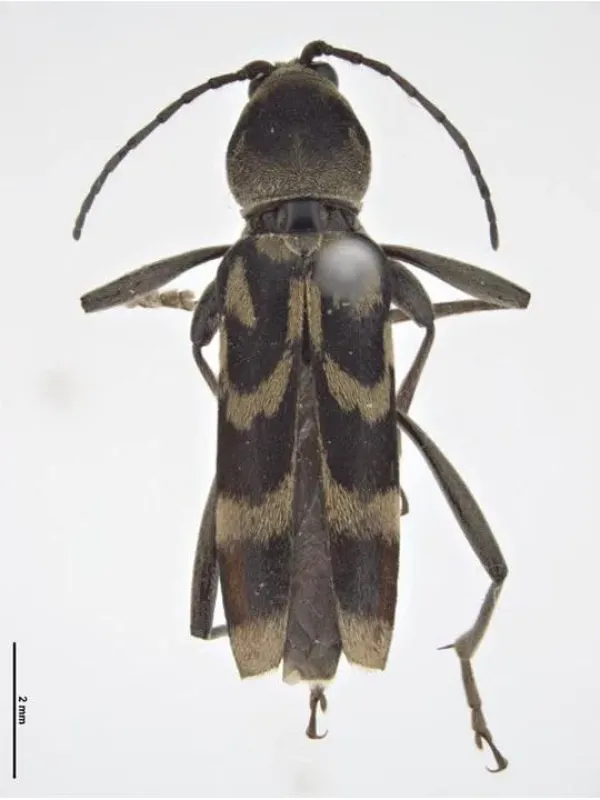
Chlorophorus diadema is a beetle belonging to the Cerambycidae family, commonly known as longhorn beetles. The adult stage measures between 10 and 18 mm in length, featuring an elongated body with a distinctive pattern of yellowish or white bands on a dark background across its elytra.
The head and pronotum are densely covered with fine hairs, giving the beetle a speckled appearance. Unlike some other longhorn beetle species that possess exceptionally long antennae, Chlorophorus diadema exhibits antennae of moderate length.
The larvae are cream-colored and characterized by a well-developed head capsule and powerful mandibles, which are evolved specifically for boring through and digesting wood tissue.
Adults are active during the day and are commonly found on flowering plants, where they feed on nectar and pollen, making the flowering season the best time for visual observation.
The biological cycle is strictly linked to trees in a weakened state, as females seek out cracks or damaged bark to deposit their eggs, ensuring the larvae have immediate access to nutrients.
What it damages
The damage is caused by the larvae, which act as wood-borers. They excavate extensive galleries under the bark and deep into the sapwood, which severely disrupts the vascular system and sap flow of the host tree.
These pests primarily infest stone and pome fruit crops. The most susceptible targets are trees already suffering from environmental stress, diseases, or poor maintenance practices.
Continuous larval feeding leads to the dieback of branches and, in cases of severe infestation, the eventual death of the entire tree as its structural integrity and vitality are compromised.
The tunnels created by the larvae provide an entry point for various secondary pathogens, including fungi and bacteria, which cause wood rot and further deteriorate the tree's health.
Economic damage manifests as a significant reduction in fruit yield, loss of tree vigor, and the potential necessity to remove entire orchard blocks if the infestation becomes widespread.
Signs of infestation
One of the earliest signs of infestation is the appearance of small, circular or oval exit holes on the bark surface, marking where adult beetles have emerged.
During the larval stage, the presence of "frass" (a mixture of wood dust and excrement) in bark crevices or at the base of the tree is a clear indicator that wood-boring activity is occurring.
Unexplained wilting of branches, despite adequate water and nutrient supply, often suggests that the vascular system of the branch has been damaged by larval tunneling.
Inspection of damaged bark areas reveals winding galleries filled with tightly packed larval excrement, confirming the presence of the pest within the wood tissue.
Cracks in the bark can lead to localized necrosis, which may further peel away, exposing the deeper damage done by the larvae to the underlying wood structure.
Control measures
The most effective strategy is proactive orchard management, which includes strict sanitary pruning to remove and destroy any infested wood before the beetles emerge.
Maintaining high tree vitality through balanced fertilization and proper irrigation helps the tree's natural defense systems resist colonization by these borers.
Applying white paint to the main trunks can discourage beetles from laying eggs, while sealing wounds with proper horticultural paste protects against further infestation.
Chemical control with contact insecticides can be applied during the peak flight season of the adults, though timing must be precise to effectively reduce the reproductive population.
- Immediate disposal of dead or infested wood.
- Regular inspection for exit holes and frass.
- Maintaining optimal horticultural practices to improve tree resistance.
Taxonomy
- Latin name
- Chlorophorus diadema
- Order
- Coleoptera (beetles)
- Family
- Cerambycidae
- EPPO code
- CHLHDI
Discussion
No discussions yet — be the first.