
Chloroclystis approximata
Chloroclystis approximata
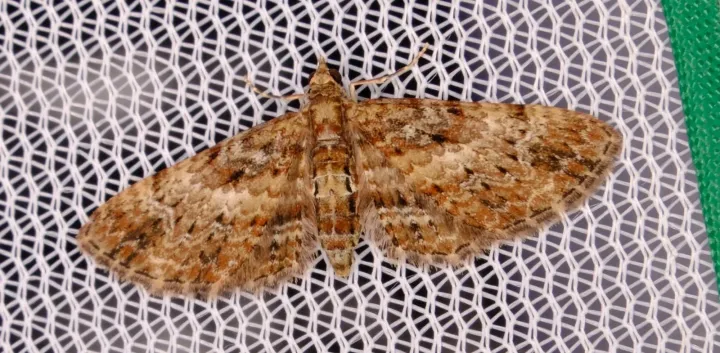
Description
How to identify
Chloroclystis approximata is a member of the Geometridae family, order Lepidoptera. It is a small moth known for its nocturnal behavior.
The larvae, commonly known as loopers, display a characteristic movement pattern, which is typical for the inchworm group.
Their coloration is highly adaptive, allowing the larvae to blend seamlessly with the leaves and twigs of their host plants.
Adult moths possess wings with intricate, wave-like patterns, providing camouflage against the bark of trees during the day.
As specialized phytophagous insects, they have evolved to sync their life cycles with the phenology of specific Rosaceae plants.
What it damages
These pests primarily target apple trees, pear trees, and other ornamental bushes within the Rosaceae family.
The larvae feed on buds, tender foliage, and fruitlets, directly interfering with the plant's reproductive and growth processes.
Feeding damage reduces the photosynthetic area of the plant, which often leads to poor fruit development and weakened tree vigor.
Massive infestations can result in total destruction of blossoms, causing significant economic losses for commercial fruit producers.
The wounds created by larval feeding sites facilitate the entry of secondary diseases such as fungal infections and bacteria.
When it appears
The emergence of adult moths typically occurs in late spring, coinciding with the opening of new buds.
The most active damage period for the larvae is during the flowering phase and the early fruit-setting stage of the host trees.
They overwinter in the pupal stage, usually hidden within the crevices of tree bark or in the soil near the base of the plant.
Their development is heavily influenced by temperature, with warmer springs leading to faster maturation and potential population spikes.
Monitoring the flight periods is essential for timing chemical or biological applications to ensure maximum effectiveness.
Signs of infestation
One of the earliest signs is the appearance of irregularly eaten edges on young leaves in the upper parts of the canopy.
The presence of fine silken threads between leaves indicates the activity of larvae, which use silk to protect their feeding sites.
Premature fruit drop is a common indicator that larvae have been feeding on the developing fruitlets during the early season.
Small holes in flower buds and the presence of granular frass on the leaves are clear signals of an active infestation.
Noticeable stunting or deformation of new shoots is often observed following prolonged periods of larval feeding.
Control measures
Early spring insecticide applications during the green tip stage are highly effective in reducing the overwintering generation.
Good orchard sanitation, including the removal of old, loose bark and debris, reduces the number of suitable pupation sites.
Biological control using beneficial insects, such as parasitic wasps or predators, is a sustainable way to manage population numbers.
For organic management, Bacillus thuringiensis-based products can be applied when larvae are in their early growth stages.
- Use pheromone traps for pest monitoring.
- Hand-pick larvae from small, young trees.
- Apply horticultural oils to target overwintering eggs.
Taxonomy
- Latin name
- Chloroclystis approximata
- Order
- Lepidoptera (butterflies)
- Family
- Geometridae
- EPPO code
- CHLCAP
Discussion
No discussions yet — be the first.