
Chloroclystis
Chloroclystis
Description
How to identify
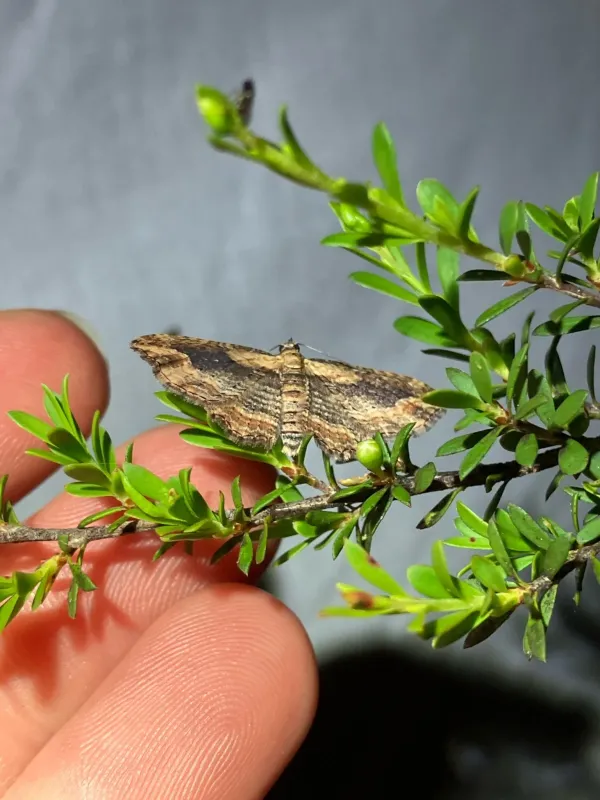
Chloroclystis is a genus of moths belonging to the family Geometridae (looper moths) within the order Lepidoptera. These are typically small, nocturnal moths with excellent camouflage.
The wingspan of adult moths usually ranges from 15 to 25 mm. Their wing patterns consist of various wavy lines in shades of green, gray, or brown, helping them blend into tree bark.
The larvae, known as loopers, possess a distinct body shape and move by drawing their hind legs toward their thoracic legs, creating a characteristic arching movement.
Their coloration is highly adapted to their environment, usually appearing bright green or yellowish, which makes them very difficult to spot on buds or leaves.
The pupae generally overwinter in the soil or within sheltered plant debris, waiting for appropriate spring temperatures to emerge as adults.
What it damages
This pest primarily threatens fruit crops, such as apples, pears, plums, and cherries, by targeting the reproductive parts of the plants.
Larvae consume the interior of flower buds, effectively hollowing them out and preventing the development of fruit, leading to significant yield loss.
By feeding on blossoms, the larvae can destroy multiple buds in a short time, which disrupts the natural pollination and fruit-setting process.
Beyond orchards, some species can infest ornamental shrubs and various wild Rosaceae plants that serve as host reservoirs.
Severe infestations weaken the tree's health and lead to the premature drop of damaged buds and flowers that would otherwise produce fruit.
When it appears
The activity of adult moths typically occurs during the spring and summer months, depending on the local climate and temperature conditions.
The life cycle often includes one or two generations per year, depending on how favorable the growing season is for their development.
The most critical window for damage is during the "pink bud" stage and throughout the blooming period, when larvae are actively feeding on flower tissues.
Once feeding is completed, the larvae descend to the soil to pupate, entering a resting phase where they remain until the next developmental cycle.
While some late-season activity may occur under mild autumn conditions, the majority of the population enters dormancy to survive the winter.
Signs of infestation
The primary symptom of an infestation is the presence of small entry holes in flower buds, through which larvae have burrowed to feed.
Affected buds often appear wilted, deformed, or fail to open, eventually drying up and dropping off the branches prematurely.
Larvae may use silk webbing to bind several buds together, creating a protective enclosure while they feed on the internal parts of the flowers.
A high density of hollowed-out flower stalks during the flowering season is a clear indicator of a significant pest population in the area.
Traces of frass, appearing as tiny dark pellets, can often be found on the foliage near the damaged buds, serving as a secondary diagnostic sign.
Control measures
Chemical control involves the application of insecticides targeted at the stages from bud burst through the pink bud phase to protect the blossoms.
Cultivation practices, such as tilling the soil under the tree canopy in the autumn, can help destroy overwintering pupae and reduce future numbers.
Light traps can be utilized to monitor and reduce the population of adult moths by disrupting their mating and egg-laying cycles.
Biological control options, including Bacillus thuringiensis-based products, are effective against early-instar larvae while being safer for beneficial insects.
Regular scouting of the orchard is essential to identify infestations early, allowing for timely interventions before damage becomes widespread.
Taxonomy
- Latin name
- Chloroclystis
- Order
- Lepidoptera (butterflies)
- Family
- Geometridae
- EPPO code
- CHLCSP
Discussion
No discussions yet — be the first.