
Green longhorn beetle
Chloridolum thaliodes
Description
How to identify
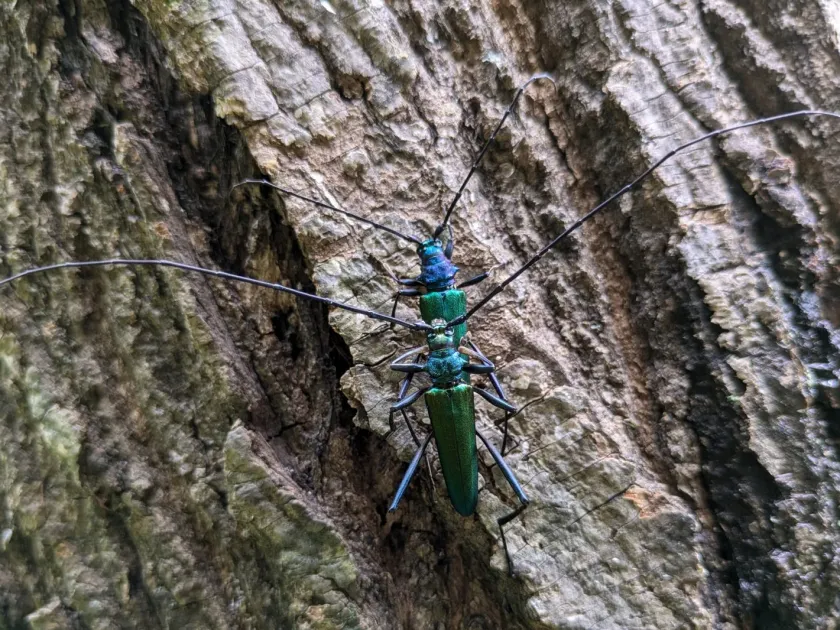
The Green longhorn beetle (Chloridolum thaliodes) is a member of the Cerambycidae family, known for its distinct metallic green or emerald coloration which serves as a form of camouflage.
Adult beetles are characterized by their elongated bodies and long, multi-segmented antennae that are often longer than the body itself, facilitating sensory perception in their environment.
The larvae are typical longhorn beetle grubs: cream-colored, legless, and equipped with strong mandibles capable of boring through dense wood tissues.
Pupation occurs within the host tree, where the larva constructs a secure chamber to undergo metamorphosis into the adult form before chewing its way out.
The species typically undergoes a life cycle ranging from one to two years, significantly influenced by environmental factors such as humidity and temperature.
What it damages
This pest primarily infests deciduous trees, showing a strong preference for members of the Rosaceae family, including various species of apples, pears, and plums.
Larvae are internal feeders, creating galleries beneath the bark and deep within the sapwood and heartwood, which compromises the tree's structural integrity.
By disrupting the vascular system, the beetle restricts the flow of water and nutrients, leading to branch dieback, leaf wilting, and overall tree decline.
Trees already weakened by environmental stress, disease, or mechanical wounds are most susceptible to attack, as these trees emit signals that attract the beetles.
Severe infestations can lead to long-term productivity losses and may eventually necessitate the removal of heavily impacted trees from the orchard.
Signs of infestation
Evidence of infestation is often first detected by the presence of frass (wood dust mixed with excrement) accumulating around the base of the trunk or on tree branches.
Small, typically oval-shaped exit holes on the bark surface are clear indicators that adult beetles have recently emerged from the wood.
Premature yellowing of leaves or the sudden death of individual branches during the growing season are common symptoms of internal gallery construction.
In some species, oozing sap or cracked bark can indicate that the tree is attempting to defend itself against invading larvae or that internal decay is occurring.
During the flight season, observing the presence of the adult metallic beetles on the bark is a direct sign that egg-laying activity is likely taking place.
Control measures
Sanitation is the cornerstone of control: promptly prune and destroy any dead or infested wood to prevent the completion of the beetle's life cycle.
Proper orchard maintenance, including balanced fertilization and irrigation, is essential to ensure trees are vigorous enough to resist initial pest colonization.
Chemical control involving systemic insecticides can be applied during the flight period to target adult beetles before they lay eggs on the bark.
Encouraging natural predators, such as woodpeckers and various parasitic wasps, can significantly reduce beetle populations without the need for intensive chemical applications.
Regular monitoring of tree health and immediate treatment of mechanical injuries with protective sealants help minimize the attractiveness of the site to searching females.
Taxonomy
- Latin name
- Chloridolum thaliodes
- Order
- Coleoptera (beetles)
- Family
- Cerambycidae
- EPPO code
- AROMJA
Discussion
No discussions yet — be the first.