
Lattice Heath
Chiasmia clathrata
Description
How to identify
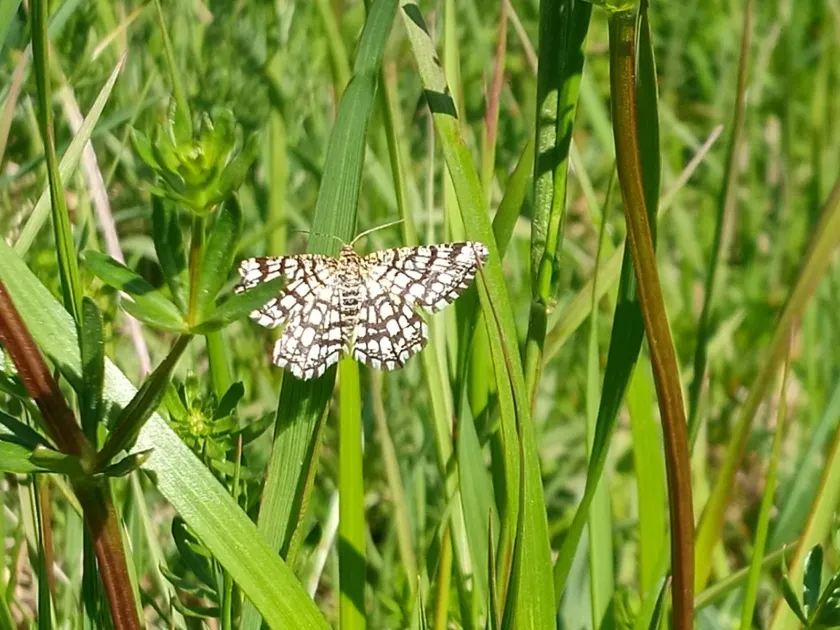
The Lattice Heath (Chiasmia clathrata) is a member of the Geometridae family, order Lepidoptera. This small moth is easily recognized by its distinctive lattice-like pattern of dark intersecting lines on a pale yellow or brownish wing background.
The adult moth has a wingspan of approximately 25–30 mm. Its coloration is highly variable, providing excellent camouflage against the vegetation and dry stalks where it rests during the day. Unlike many other geometrid moths, the Lattice Heath is active during daylight hours.
The caterpillars exhibit typical geometrid behavior, moving with a distinct looping gait due to the presence of only two pairs of abdominal prolegs. Their bodies are usually a greenish shade, often with longitudinal light stripes, which helps them blend seamlessly with host plants.
The pupal stage is dark brown and shiny. Pupation typically occurs within the soil or deep inside plant debris, which provides a reliable shelter for the insect to successfully overwinter and survive extreme temperatures.
The eggs are small, oval-shaped, and are typically deposited by females on the underside of host plant leaves, either individually or in small batches. Development is relatively rapid depending on local climate conditions.
What it damages
The primary hosts for Lattice Heath caterpillars are legumes. These include clover (red and white), alfalfa, sainfoin, and various other perennial forage grasses commonly grown in agricultural settings.
If preferred host plants are scarce, the pest may spread to wild legumes, making it a widespread problem across pastures, meadows, and agricultural fields. Its ability to switch hosts enhances its survival rate.
The larval stage is responsible for the majority of the damage. Caterpillars feed aggressively on leaf tissue, starting from the edges or creating irregular holes, which eventually reduces the total photosynthetic area of the plant.
Mass infestations can result in total defoliation of the crops. This leads to significant losses in both green biomass yield and seed production, while also negatively affecting the overall nutritional quality of harvested hay.
Affected plants are significantly weakened, making them susceptible to secondary infections and unfavorable weather conditions. This stress can lead to poor winter survival and reduced growth rates in the following spring.
When it appears
The Lattice Heath typically completes two to three generations per year. The first wave of adults emerges in May and June, actively searching for host plants to lay eggs for the first generation of larvae.
The peak activity of larvae, which causes the most significant economic loss, occurs during early summer, often coinciding with the flowering phase of clover. This period requires constant monitoring of the fields.
A second generation of adults appears in late summer, usually in July or August. The subsequent larvae feed throughout the autumn, accumulating energy reserves to prepare for pupation and winter dormancy.
Temperature is the main driver of population growth. Hot and dry summer seasons often accelerate the life cycle, leading to faster reproduction rates and potentially causing explosive population outbreaks.
The insect overwinters as a pupa. This stage is remarkably resilient to harsh winter conditions because it is protected by the insulating layer of soil, allowing the population to persist from year to year.
Signs of infestation
The initial signs of an infestation are visible as irregular feeding damage on the leaves of legumes. This often looks like small holes or scalloped edges that can easily be overlooked in the early stages.
Adult caterpillars are masters of disguise. When disturbed, they remain motionless in a rigid, elongated posture, perfectly imitating a stem or a twig, making them very difficult for farmers to spot during routine inspections.
The presence of adult moths flying in the field during the day is a major indicator of potential upcoming damage. If large numbers of moths are spotted, egg-laying is likely already underway.
- Presence of black frass (excrement) on the leaves and soil surface beneath feeding sites.
- Leaves tied together with fine silk threads, created by the caterpillars as protective shelters.
- General yellowing and wilting of the lower plant canopy due to extensive foliage loss.
If visible patches of damaged vegetation appear in the field, the pest density has likely exceeded the economic threshold, and immediate control measures should be implemented to prevent further spread.
Control measures
Agricultural practices are the first line of defense. Proper crop rotation, avoiding consecutive years of legumes in the same field, and deep autumn plowing are effective methods to destroy pupae and reduce population levels.
Biological control involves the use of beneficial insects, such as Trichogramma wasps, which parasitize the pest's eggs. This method is highly recommended for eco-friendly farming and integrated pest management systems.
Chemical control is applied when the pest population crosses the economic injury threshold. Systemic or contact insecticides approved for use on forage crops should be applied, ensuring adherence to pre-harvest intervals.
Early mowing of forage legumes is a highly effective cultural control method. By removing the foliage, farmers effectively starve the larvae and physically remove a large portion of the population from the field.
Monitoring with the use of light traps is an excellent diagnostic tool. It allows for precise timing of chemical applications, ensuring that treatments are effective while minimizing the impact on non-target, beneficial insects.
Taxonomy
- Latin name
- Chiasmia clathrata
- Order
- Lepidoptera (butterflies)
- Family
- Geometridae
- EPPO code
- CHSMCL
Discussion
No discussions yet — be the first.