
Tamarisk moth
Chiasmia aestimaria
Description
How to identify
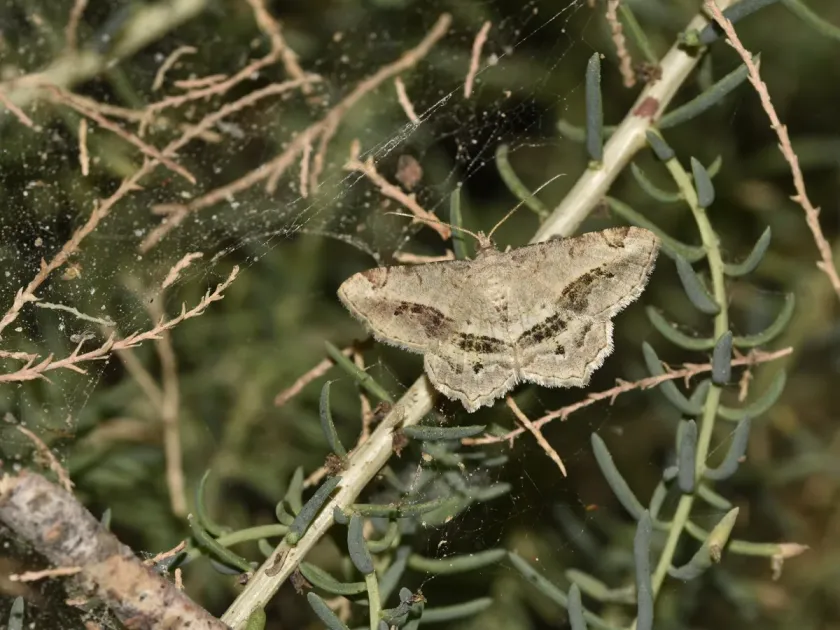
The Tamarisk moth (Chiasmia aestimaria) is a member of the Geometridae family. The adult moths are relatively small, with a wing span typically reaching about 20–25 mm, and display cryptic ochre-grey coloration.
The larvae are well-known for their camouflage, mimicking the color and shape of the host plant's thin branches, which makes them highly inconspicuous to predators and gardeners alike.
The pupae are generally dark brown and are found in the upper soil layers or among plant debris under the canopy of the infested Tamarix bushes.
These moths are primarily nocturnal, showing a strong attraction to artificial light sources, which is a common diagnostic method used by researchers to monitor their activity.
The life cycle encompasses complete metamorphosis, consisting of four distinct stages, and allows for multiple generations per year depending on environmental temperature.
What it damages
This species is a specialist feeder on plants within the Tamarix genus. The larvae consume the tender scales of the foliage and the soft tips of young branches.
Heavy infestations can result in significant defoliation, which severely impacts the plant's aesthetic appeal, particularly in landscape design and hedges.
The loss of photosynthetic tissue leads to a reduction in the overall vigor of the bush, potentially making it more susceptible to environmental stress like drought or salinity.
In nurseries and young plantings, the damage caused by these caterpillars can stunt growth, leading to long-term issues with the development and health of the trees.
Extended periods of infestation can leave the Tamarix looking skeletonized and sickly, significantly reducing its value as a decorative plant or windbreak.
When it appears
Adult moths emerge in early spring, synchronized with the onset of the Tamarix growing season and the development of new plant tissues.
The larval stage is most active throughout the warm summer months, feeding continuously to support rapid development through several instars.
Multiple generations follow one another throughout the season, with the population density often spiking during mid-summer and early autumn.
Overwintering occurs at the pupal stage, buried safely in the soil or protected by leaf litter, ensuring survival through harsh winter conditions.
Warmer climates tend to support a larger number of generations, increasing the risk of population explosions and subsequent damage to ornamental plantings.
Signs of infestation
The most reliable sign of an infestation is the presence of eaten foliage and truncated tips of young green branches.
Small dark frass (excrement pellets) accumulating on the lower branches or on the ground beneath the bush is a strong indicator of larval activity.
If you look closely during the day, you may spot caterpillars resting in a rigid, branch-like posture, often found on the underside of stems.
A general decline in the lushness of the foliage, combined with patches of yellowing or withered stems, often points towards an ongoing attack by the larvae.
Visual inspection during the night with a flashlight may reveal the presence of adult moths resting on the leaves or near the foliage.
Control measures
Chemical control involving systemic insecticides is the most effective way to eliminate large larval populations quickly, especially in commercial nurseries.
Biological control methods, such as utilizing Bacillus thuringiensis based sprays, are highly recommended for urban or home garden environments to minimize ecological impact.
Cultural practices include removing and destroying leaf litter under the bushes in late autumn to eliminate overwintering pupae from the immediate area.
Maintaining plant health through adequate irrigation and nutrient management helps the Tamarix tolerate minor feeding damage and recover more efficiently.
- Use sticky traps or light traps for monitoring.
- Apply insecticides during the early larval instars for maximum effect.
- Prune and dispose of heavily infested branch sections during the summer.
Taxonomy
- Latin name
- Chiasmia aestimaria
- Order
- Lepidoptera (butterflies)
- Family
- Geometridae
- EPPO code
- CHSMAE
Discussion
No discussions yet — be the first.