
Northern winter moth
Cheimatobia fagata
Description
How to identify
The northern winter moth (Cheimatobia fagata) is a member of the Geometridae family, known for its distinctive appearance and lifecycle compared to common garden pests.
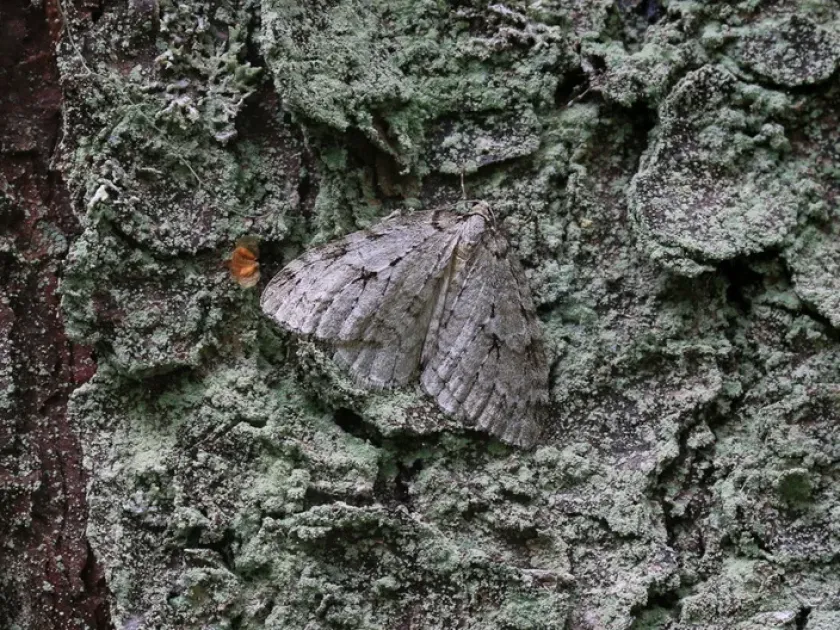
Adult moths feature yellowish-grey wings with darker, wavy bands, providing them with excellent camouflage against the bark of host trees during the autumn.
The larvae, or caterpillars, are known for their looping gait, a characteristic movement caused by the lack of mid-abdominal prolegs typical of other species.
These caterpillars exhibit a bright green coloration with subtle pale side stripes, making them blend in perfectly with fresh spring foliage.
A full-grown caterpillar can reach up to 30 mm in length and has a smooth, hairless body, which helps distinguish it from more bristly pests.
What it damages
The primary damage is caused by the voracious appetite of the larvae, which feed on buds, flowers, and young leaves of various deciduous trees.
Fruit trees such as apple, pear, and plum are particularly susceptible, as the caterpillars can consume developing reproductive structures, leading to crop loss.
Forest trees, including birch and beech, are frequently colonized, and mass outbreaks can result in significant defoliation of entire forest stands.
The loss of foliage in early spring forces trees to utilize energy reserves to produce a second set of leaves, which weakens the tree's health.
Chronic infestations over several seasons reduce the overall vigor of the host plant, making it more susceptible to pathogens and harsh winters.
When it appears
The life cycle of the northern winter moth is strictly synchronized with the phenology of the host trees' spring development.
Larval emergence occurs in early spring, precisely when leaf buds begin to swell and burst, providing the first essential food source for the larvae.
After reaching maturity in late May or early June, the caterpillars descend from the branches into the soil to pupate near the surface.
The pupal stage persists throughout the summer months, with the adult moths emerging in late autumn to mate and lay their eggs on the bark.
The species survives the winter in the egg stage, which remains glued to the bark and twigs until the temperatures rise the following spring.
Signs of infestation
Initial signs of an infestation include small, irregular holes or chewed margins on the surface of young, expanding leaves.
A hallmark behavior of these caterpillars is that they drop from branches on fine silk threads when disturbed, which can be observed by shaking the tree.
Heavy infestations are indicated by the presence of sparse crowns and foliage that has been partially skeletonized, leaving only the veins intact.
Fecal droppings found on the lower leaves or on the ground beneath the canopy serve as a clear indicator of active feeding in the upper branches.
Leaves that appear rolled or webbed together are often used by the caterpillars as a protected shelter during periods of high sun exposure.
Control measures
Cultural control involves tilling the soil under the tree canopy in the autumn to expose and destroy the pupae resting in the topsoil layer.
Applying sticky bands around tree trunks during the autumn acts as a physical barrier against female moths, which often lack the ability to fly.
Biological insecticides, such as products containing Bacillus thuringiensis, are highly effective for managing larvae while sparing beneficial insects.
- Monitor trees regularly during the early spring bud-burst phase for early detection.
- Use selective chemical insecticides only when the damage threshold is exceeded.
- Maintain tree health through proper pruning and watering to improve natural resistance to pests.
For best results, control measures should be timed to match the larval activity window, ensuring that treatments are applied before the caterpillars reach late instars.
Taxonomy
- Latin name
- Cheimatobia fagata
- Order
- Lepidoptera (butterflies)
- Family
- Geometridae
- EPPO code
- CHEIFA
Discussion
No discussions yet — be the first.