
Winter moth
Cheimatobia
Description
How to identify
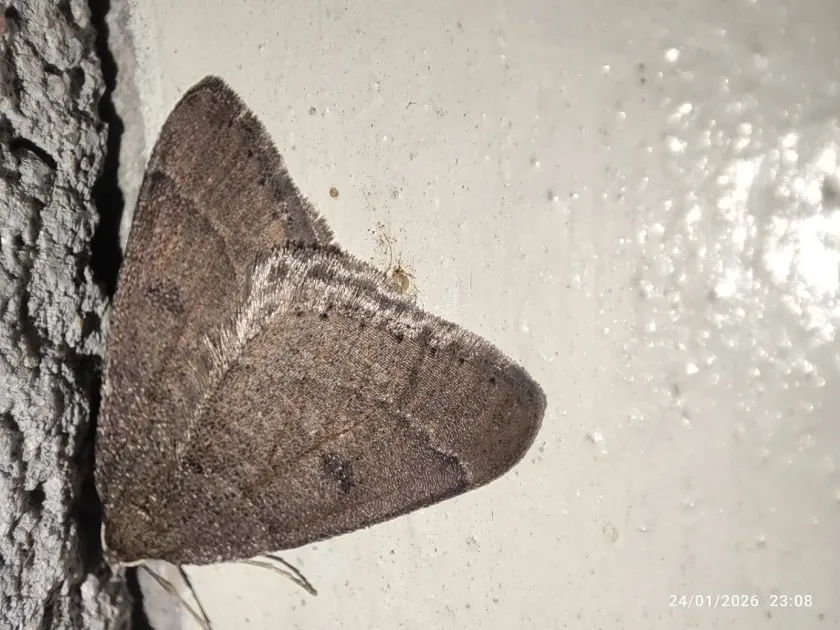
The winter moth (Operophtera brumata) is a member of the Geometridae family. This species is famous for the stark contrast between the winged males and the flightless, vestigial-winged females.
Male moths typically have a wingspan of 30–35 mm and exhibit a greyish-brown coloration with darker transverse bands on their wings. They are active fliers during the cool months of late autumn.
Females possess only small, non-functional wing stumps and must crawl up the trunks of trees to reach their breeding sites. This unique behavior makes them vulnerable to physical barriers placed on tree trunks.
The larvae, known as loopers due to their distinct walking style, are green with faint longitudinal lines. They grow up to 25 mm in length and have a dark head capsule, making them distinguishable from other garden caterpillars.
The winter moth overwinters in the egg stage. Eggs are laid in small clusters within bark crevices or near bud scales, remaining dormant until the spring bloom begins.
What it damages
This insect is a polyphagous pest, meaning it attacks a wide range of host plants. Preferred hosts include apple, pear, plum, cherry, and various deciduous forest trees such as oak and lime.
The primary damage occurs in early spring when larvae emerge synchronously with the opening of buds. They tunnel into the buds, destroying developing leaves and reproductive parts before they can expand.
Once foliage expands, the larvae feed extensively on leaves. In severe infestations, they can defoliate entire trees, significantly reducing the tree's photosynthetic capacity and stored energy reserves.
The larvae often use silk to web leaves together, creating shelters where they feed safely. They may also consume flowers and young fruit, causing them to wither and drop prematurely.
Repeated yearly defoliation weakens the host trees, making them more susceptible to drought, winter injury, and secondary infections or other pest attacks.
When it appears
Adult winter moths emerge from late autumn to early winter, typically from October through December. This is the period when mating occurs and females lay their eggs.
Eggs remain on the tree throughout the winter, protected by the bark. Hatching is triggered by rising spring temperatures, usually aligning with the 'green tip' stage of fruit tree development.
The larval feeding stage lasts approximately 4 to 6 weeks. During this time, they grow rapidly and pass through several instars before reaching maturity in late spring.
By late May or early June, the mature larvae drop to the ground on silk threads to pupate in the soil. They remain in the soil as pupae throughout the hot summer months.
This life cycle is finely tuned to the phenology of fruit trees, which is why monitoring the timing of spring emergence is critical for successful control.
Signs of infestation
The first sign of infestation in spring is the presence of buds with irregular, ragged edges or holes, often accompanied by frass (larval excrement) near the opening.
Webbed leaves are a diagnostic indicator. If you find two or more leaves tied together with silk, gently opening them will likely reveal a green looper caterpillar hiding inside.
Visible defoliation or holes in the leaves are common. During heavy outbreaks, the sound of falling frass can sometimes be heard in the canopy, and trees may look sparse early in the season.
Premature fruit drop or fruit with small, shallow pits indicates larval feeding. The larvae may also bore into blossoms, preventing them from developing into fruit.
In autumn, observant gardeners may spot small moths flying near light sources or see wingless females crawling up tree trunks in the evening.
Control measures
Sticky traps (grease bands) applied around the base of tree trunks in October are a highly effective mechanical method to prevent flightless females from climbing trees to lay eggs.
In spring, biological control using Bacillus thuringiensis or selective insecticides can be effective if applied as soon as the larvae emerge and before they cause extensive damage.
Cultivation of the soil under the canopy during the summer can disrupt the pupation process, reducing the number of moths that will emerge in the following season.
Encouraging natural predators such as birds and beneficial parasitic wasps can help keep winter moth populations in check without the need for intensive chemical applications.
- Prune and destroy severely infested branches where larval nests are concentrated.
- Monitor bud development closely to time pesticide applications accurately.
- Use pheromone traps to monitor adult moth activity in the fall.
- Keep orchard floors clean and minimize weed cover to discourage pupation sites.
Taxonomy
- Latin name
- Cheimatobia
- Order
- Lepidoptera (butterflies)
- Family
- Geometridae
- EPPO code
- CHEISP
Discussion
No discussions yet — be the first.