
Plague soldier beetle
Chauliognathus lugubris
Description
How to identify
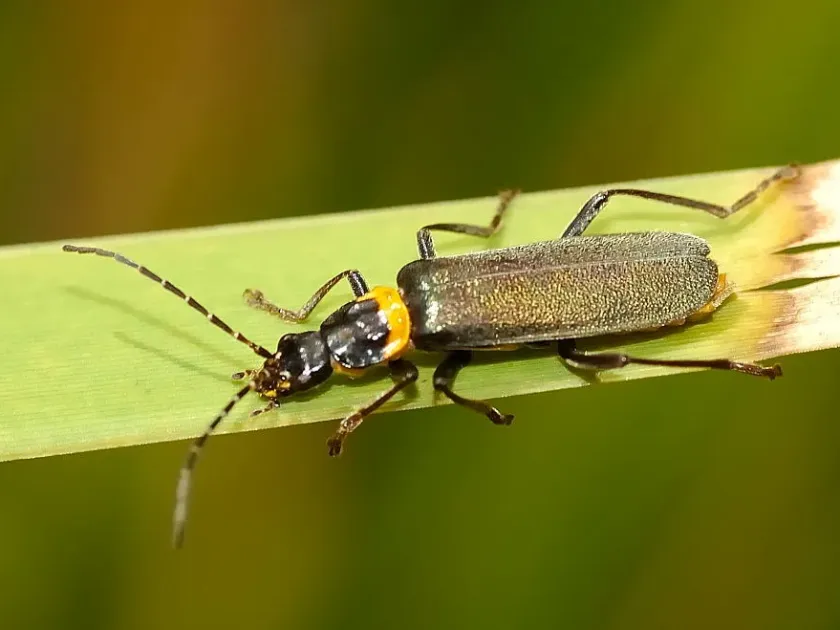
The plague soldier beetle (Chauliognathus lugubris) is a member of the Cantharidae family, order Coleoptera. Adult beetles typically reach 15–20 mm in length and have a soft-bodied appearance.
The coloration of these beetles features bold patterns of black and orange or yellow on the elytra and pronotum, making them easily distinguishable from other insects.
The larvae are dark-colored and hairy, spending the majority of their developmental cycle hidden in the soil or under leaf litter within their native habitats.
As an endemic Australian species, the plague soldier beetle exhibits distinct social habits, often congregating in large clusters on flowering plants during their peak activity.
Unlike many other beetles, their sclerotization is relatively weak, which is the primary reason for the common name of the family to which they belong.
What it damages
Adult beetles primarily cause damage by feeding on pollen and nectar, often consuming delicate flower petals and damaging developing fruit buds in the process.
They affect a wide range of host plants, including fruit-bearing trees, ornamental shrubs, and various field crops that rely on successful pollination.
The feeding activity leads to the premature dropping of flowers, which significantly reduces the yield potential of the infected crops.
Although larvae are generally scavengers in the soil, in cases of extreme population density, they have been known to feed on the root systems of young, tender seedlings.
The damage is most severe during high-population years when large swarms of these beetles visit blooming plants simultaneously.
When it appears
Adult activity begins in late spring and early summer, aligning perfectly with the peak flowering period of many agricultural and garden plants.
The life cycle is heavily influenced by seasonal temperature fluctuations and moisture levels, which act as triggers for the emergence of adults from the soil.
Following mating, females deposit eggs into the soil, where the subsequent larval stages develop throughout the warmer months before entering dormancy.
The presence of these beetles usually tapers off by mid-summer as the life cycle shifts from the adult stage back into the ground-dwelling larval stage.
Overwintering occurs in the larval stage, allowing the insect to survive cooler conditions buried safely beneath the surface of the soil.
Signs of infestation
The most visible sign of an infestation is the presence of large, dense clusters of bright-colored beetles covering the inflorescences of host plants.
Feeding damage can be identified by ragged or torn petal edges and damaged stamen structures, which often prevent successful pollination.
The accumulation of excrement on leaves and flower surfaces serves as a secondary indicator of sustained feeding activity by the beetle population.
Upon physical disturbance, the beetles react quickly, often dispersing in flight or falling to the ground, which is a key behavioral trait for field scouting.
Malformed or drying flower buds that fail to develop into mature fruits are common symptoms of an area heavily frequented by these pests.
Control measures
Mechanical control, such as shaking beetles off branches early in the morning when they are less active, can significantly reduce their immediate impact.
Light traps can be utilized during the evening hours to attract and trap adults, effectively lowering the overall population density in a targeted area.
Chemical intervention should be considered only when economic thresholds are exceeded, using selective insecticides to avoid harming essential pollinator species.
Proper soil management, including late-season cultivation or tilling, helps disturb the overwintering larvae, reducing the survival rate for the next season.
Encouraging biodiversity by maintaining habitats for natural predators, such as insectivorous birds and parasitic wasps, provides long-term biological suppression.
Taxonomy
- Latin name
- Chauliognathus lugubris
- Order
- Coleoptera (beetles)
- Family
- Cantharidae
- EPPO code
- CHAHLU
Discussion
No discussions yet — be the first.