
Charaxes
Charaxes
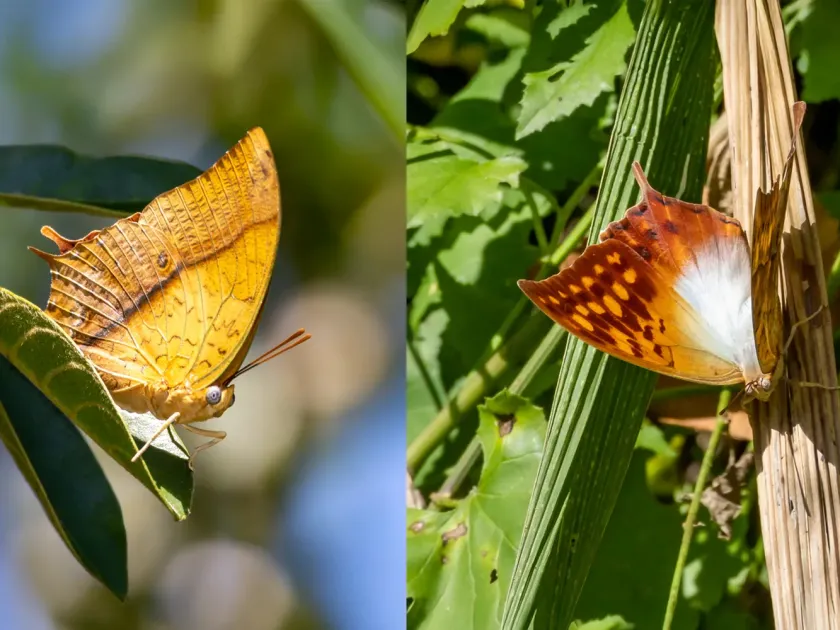
Description
How to identify
The genus Charaxes belongs to the Nymphalidae family of the order Lepidoptera. These are large, robust diurnal butterflies often called rajahs or barons due to their majestic appearance and vibrant wing coloration.
Adults are characterized by a sturdy body and broad wings, with the hindwings often featuring distinctive tails. They possess clubbed antennae and large, smooth eyes.
The larvae of Charaxes have a unique appearance: they are cylindrical, typically green, with two pairs of horn-like projections on their heads, resembling the head of a snail or a mythical creature.
Pupae of these species usually mimic a leaf in shape and color, providing excellent camouflage among the foliage of their host plants.
The biology of the species is closely linked to forest ecosystems, although some representatives can breed in gardens where their preferred tree species are present.
What it damages
The primary damage is caused by the caterpillars, which show high feeding activity on the leaf tissue of various trees and shrubs.
Fruit crops are frequently targeted, particularly those in the Rosaceae family, such as apple and pear trees.
Additionally, Charaxes larvae can infest various broad-leaved trees, including oaks and certain types of exotic garden ornamental plants.
In intensive gardening, mass reproduction of these pests can lead to a significant reduction in the photosynthetic surface area of the leaves.
Weakening of the tree due to defoliation increases the risk of secondary pests and diseases, which negatively impacts yield and winter hardiness.
When it appears
The development cycle of the species typically involves two or more generations per year, depending on the climate of the region.
Adult flight occurs in warmer months, from late spring to early autumn, during which mating and egg-laying on host plants take place.
Pests usually overwinter in the larval or pupal stage, hiding in dense foliage or within the cracks of tree bark.
Active feeding periods for larvae coincide with the peak vegetation stage of trees, when leaves are most succulent and nutrient-rich.
Monitoring adult populations using light traps or fermented fruit baits allows for the forecasting of larval emergence.
Signs of infestation
The first sign of infestation is characteristic windowing of the leaves, which eventually progresses to complete consumption of the leaf blade down to the veins.
The presence of larval frass on the leaves of the lower canopy is a reliable indicator of active pest feeding.
Specific horned caterpillars on the undersides of leaves or along the midrib are often visible during a detailed inspection of the canopy.
Stunted growth of young shoots and branch growth inhibition during heavy infestations are signs of a high population density of the pest.
Leaf rolling or webbing can also be a characteristic sign of larval activity at certain stages of their development.
Control measures
As a preventive measure, regular sanitary pruning of trees is recommended to remove potential overwintering sites for larvae and pupae.
The use of biological insecticides based on Bacillus thuringiensis is the most environmentally friendly and effective method for controlling early-stage larvae.
For small areas or valuable ornamental trees, manual collection of larvae during early morning or late evening hours is a viable option.
Chemical treatment with systemic insecticides is justified only if the population exceeds the economic threshold of damage.
Encouraging entomophagous predators, such as predatory bugs and parasitic wasps, helps to naturally keep the Charaxes population under control.
Taxonomy
- Latin name
- Charaxes
- Order
- Lepidoptera (butterflies)
- Family
- Nymphalidae
- EPPO code
- CHAXSP
Discussion
No discussions yet — be the first.