
Poplar leaf aphid
Chaitophorus tremulae
Description
How to identify
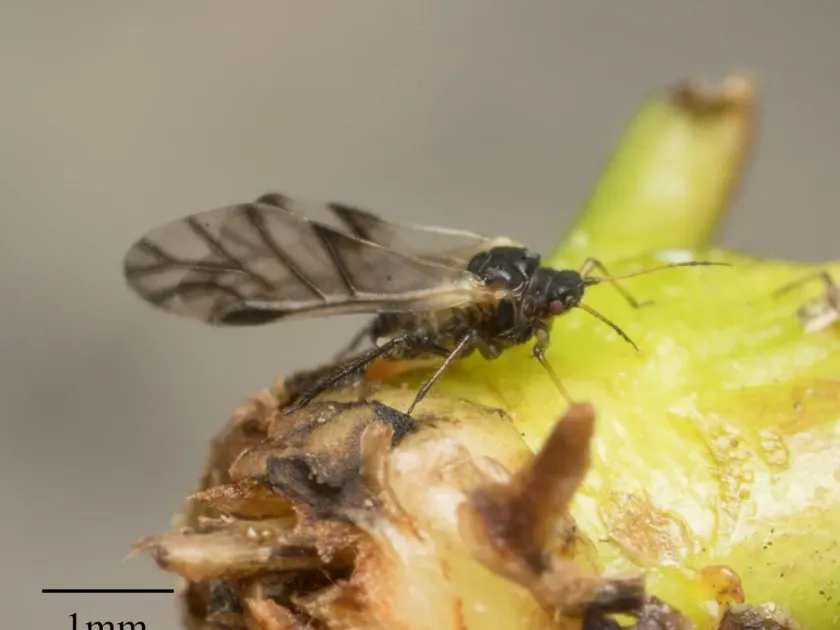
The poplar leaf aphid (scientific name Chaitophorus tremulae) is a small sap-sucking insect within the family Aphididae. Typically measuring 2–3 mm in length, these aphids have soft bodies ranging from light green to brownish in color.
They can exist in both winged (alate) and wingless (apterous) forms. Winged individuals are responsible for migration between trees during the growing season, while wingless individuals focus on rapid reproduction within the existing colony.
These aphids are generally found in colonies on the underside of leaves. They possess cornicles (siphunculi) on their abdomen, which are key taxonomic features used to distinguish them from other aphid species found on poplars.
The lifecycle is highly specialized to the genus Populus. They depend on host trees not only for nutrition but also as a substrate for egg-laying during the transition to winter.
Overwintering occurs in the egg stage. Eggs are laid by the sexual generation in late autumn, typically placed in bark crevices or near buds to withstand harsh winter temperatures.
What it damages
The primary hosts for this species include various poplar species, most notably the European aspen (Populus tremula). It affects nursery stock, ornamental trees, and forest stands alike.
By feeding on the phloem sap of young leaves and shoots, the aphids cause significant metabolic stress to the host tree. This feeding process results in stunted growth and leaf deformation.
High population densities can cause severe physiological stress, leading to premature leaf drop, which reduces the overall photosynthetic capacity of the tree during the peak growing season.
These aphids secrete honeydew, a sticky, sugar-rich substance. This honeydew serves as a growth medium for sooty mold fungi, which coat the leaf surface in black, further inhibiting the tree's ability to produce energy.
Weakened trees are often more susceptible to secondary infestations and pathogens, which can eventually lead to branch dieback and decreased timber quality in commercial poplar plantations.
When it appears
The annual cycle begins in spring when the eggs hatch as the buds start to swell. The newly emerged nymphs immediately begin feeding on the developing foliage.
Throughout the spring and summer, several generations are produced. The rate of reproduction is temperature-dependent, with warmer summer weather significantly accelerating the buildup of aphid numbers.
In late summer or autumn, as environmental cues change, the population shifts to producing sexual forms. These individuals mate, and the females lay the overwintering eggs.
Each generation develops rapidly, often reaching maturity in less than two weeks, allowing the population to reach high levels quickly under favorable conditions.
Winter dormancy is strictly maintained until the following spring, when increasing temperatures and bud development trigger the hatching process to begin the cycle anew.
Signs of infestation
Early signs of infestation include curling, crinkling, or yellowing of the leaves. Closer inspection of the underside of these affected leaves will reveal clusters of the aphids.
The presence of ants on the tree trunk is a strong indicator of aphid activity. Ants are frequently attracted to the honeydew produced by the aphids and will actively protect the colonies from predators.
A black, sooty coating on the leaves and stems is a hallmark sign of advanced aphid colonization, indicating the presence of secondary sooty mold growing on the honeydew deposits.
Sticky residue on the leaves or branches is another clear sign. This stickiness is caused by the accumulation of excreted honeydew that hasn't yet been colonized by mold or washed away by rain.
General canopy decline, characterized by sparse foliage, premature leaf yellowing, and stunted terminal shoot growth, points to a persistent aphid presence throughout the season.
Control measures
Good cultural management starts with maintaining healthy trees and removing excessive suckers from the base of the trees, which can serve as a nursery for early aphid populations.
Biological control is highly effective for moderate infestations. Encouraging the population of natural predators like lady beetles (Coccinellidae), lacewings, and hoverflies can help keep aphid numbers in check.
Chemical management should be used judiciously. Systemic insecticides are generally the most effective as they are absorbed into the plant tissues, providing long-lasting protection against sap-feeding insects.
Management efforts should be focused on the early stages of infestation to prevent the colonies from reaching damaging levels that are harder to eradicate.
- Apply systemic insecticides (e.g., neonicotinoids) if infestations are severe.
- Monitor trees closely during late spring.
- Use dormant oil sprays in early spring to kill overwintering eggs.
- Promote biodiversity to maintain populations of natural predatory insects.
Taxonomy
- Latin name
- Chaitophorus tremulae
- Order
- Hemiptera (bugs, aphids, leafhoppers)
- Family
- Chaitophoridae
- EPPO code
- EICHTR
Discussion
No discussions yet — be the first.