
Poplar leaf aphid
Chaitophorus populeti
Description
How to identify
The poplar leaf aphid (Chaitophorus populeti) is a small sap-sucking insect belonging to the family Aphididae. These insects have a highly specialized life cycle closely tied to the physiological state of their host tree.
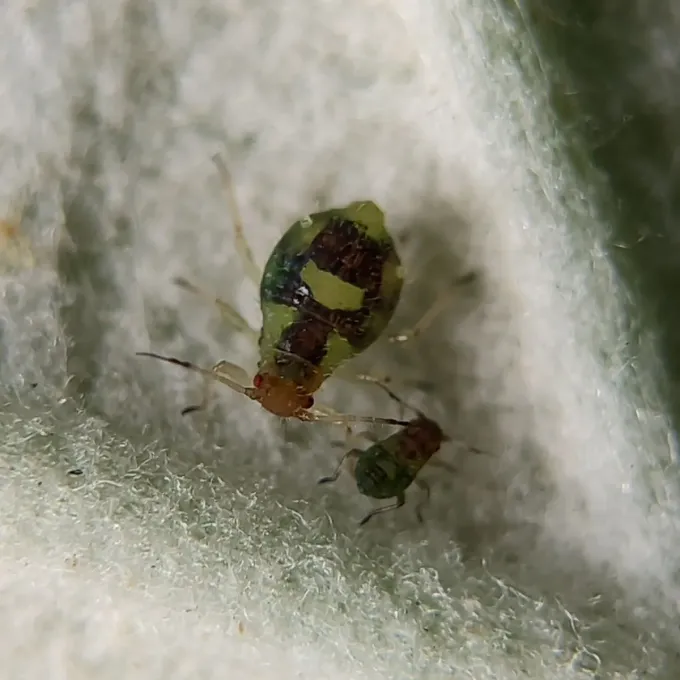
Adults are generally dark-colored, ranging from brownish to black, which allows them to blend in with the tree bark. Their bodies are covered in fine setae, and they typically possess dark appendages that contrast with their dark bodies.
The species produces both wingless and winged forms. The winged individuals are particularly important as they facilitate the rapid spread of the population to healthy branches or neighboring trees throughout the season.
Reproduction is primarily parthenogenetic during the spring and summer, allowing for extremely rapid population growth. This reproductive strategy makes the aphid a formidable pest in favorable weather conditions.
Overwintering occurs in the egg stage. Females lay their eggs in bark crevices or near bud scales, ensuring the survival of the species during cold winter months and facilitating a quick start in early spring.
What it damages
This pest feeds exclusively on trees of the genus Populus, with a strong preference for Populus nigra and Populus tremula. The aphids aggregate on young, succulent shoots and the underside of leaves.
Feeding disrupts the plant's nutrient transport system and causes significant stress. The removal of sap leads to leaf curling, chlorosis, and, in severe cases, the premature shedding of foliage.
The production of honeydew is a significant secondary issue. This sticky substance coats the leaves, providing a substrate for sooty mold fungi, which hinders the tree's photosynthetic capability.
In nursery settings, damage is particularly detrimental as it stunts the growth of saplings and reduces their marketability. Stressed trees also become more susceptible to secondary wood-boring insects and diseases.
Repeated annual infestations can lead to crown dieback, especially in trees already compromised by poor soil conditions or drought. The loss of foliage reduces the aesthetic value of urban landscape trees.
When it appears
The infestation cycle typically begins in early spring, synchronized with the budburst of the poplar trees. The first generation of nymphs emerges from eggs and immediately begins feeding on tender young leaves.
Population density typically peaks in late spring and early summer. Prolonged dry, warm weather is ideal for the aphid, leading to multiple overlapping generations within a short period.
By mid-summer, colonies can become quite large. While many aphids move to other branches, the presence of these colonies remains a persistent issue throughout the active growing season of the tree.
As the days shorten in autumn, the aphid transitions to sexual reproduction. Males appear, mating occurs, and females lay the overwintering eggs that will remain dormant until the following spring.
The winter period is exclusively spent in the egg stage. These eggs are hardy and adapted to withstand freezing temperatures, allowing the population to rebound reliably each year.
Signs of infestation
One of the most obvious signs is the curling and distortion of young leaves. If you observe closely, you will see a dense aggregation of dark aphids hiding inside the folded leaf tissues.
The presence of sticky honeydew on the foliage and surrounding branches is a clear indicator of aphid activity. This substance is often shiny and attractive to various other insects.
Sooty mold growth is a characteristic late-stage symptom. The leaves appear blackened or "dirty" due to the fungal development on the honeydew, which is a major aesthetic issue in urban areas.
Increased ant activity on the tree trunk and branches is a reliable diagnostic indicator. Ants protect the aphid colonies to harvest the honeydew, and their presence usually correlates with a high infestation level.
- Distorted, curled leaves with yellowing edges
- Sticky residue on foliage and stems
- Presence of black sooty mold on the leaves
- Clusters of dark insects on leaf undersides
- Increased movement of ants on the bark
Control measures
Systemic insecticides are the most effective management tool, as they are absorbed by the tree and circulate in the sap, targeting aphids even within curled leaves.
In preventive programs, applying contact insecticides during the early spring as buds break can significantly lower the initial population, keeping it below the economic damage threshold.
Encouraging natural predators such as ladybugs, lacewings, and hoverfly larvae is an essential part of an integrated pest management (IPM) approach. These predators can provide natural suppression in healthy ecosystems.
Pruning out heavily infested shoots in early summer can help reduce the local population density. All removed plant material should be immediately destroyed to prevent migration.
Maintaining optimal tree health through proper fertilization and irrigation is vital. A robust, well-watered tree is much better at defending itself against aphid attacks and recovering from injury.
Taxonomy
- Latin name
- Chaitophorus populeti
- Order
- Hemiptera (bugs, aphids, leafhoppers)
- Family
- Chaitophoridae
- EPPO code
- CHAIBE
Discussion
No discussions yet — be the first.