
Poplar black aphid
Chaitophorus leucomelas
Description
How to identify
The Poplar black aphid (Chaitophorus leucomelas) is a small insect belonging to the order Hemiptera and the family Aphididae. Its scientific name highlights its distinct dark, almost black appearance, which distinguishes it from many other aphid species.
These insects are typically about 1.5 to 2 millimeters long. They possess specialized piercing-sucking mouthparts, which they use to extract nutrient-rich sap from their host plants, causing systemic stress to the tree's vascular tissues.
What it damages
This species is highly host-specific, feeding primarily on various species of poplar trees (Populus). They predominantly colonize the underside of leaves and the growing tips of young succulent shoots.
The damage is particularly significant in nursery settings and urban landscapes where aesthetic and structural integrity of the trees is essential. Severe infestations can cause leaf drop and stunted shoot growth, weakening the plant's overall health.
When it appears
The life cycle begins in early spring when overwintering eggs on the tree bark hatch into nymphs. Throughout the growing season, multiple generations are produced via parthenogenesis, allowing for rapid population growth.
By late summer and into autumn, the population structure shifts as sexual forms appear. These individuals mate, and the resulting eggs are laid in crevices of the bark, where they enter diapause until the following spring.
Signs of infestation
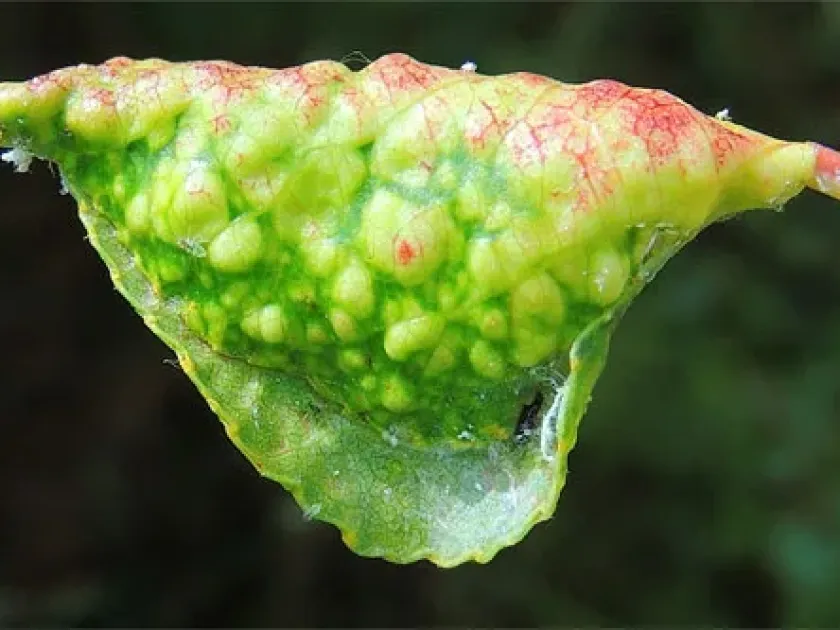
The most obvious symptoms of infestation include curled, chlorotic leaves and premature senescence. The sticky honeydew secreted by the aphids often encourages the growth of sooty mold, which creates a dark, unsightly layer on the foliage.
Monitoring for high ant activity is a standard field practice, as ants are often found tending the aphid colonies for their honeydew. The presence of ants on branches is often the first visible cue for an arborist to examine the leaves closely.
Control measures
Effective management requires an integrated pest management (IPM) approach. In severe cases, chemical interventions are necessary, while preventative measures are key for long-term control.
- Application of systemic insecticides during the early stages of colony formation.
- Promotion of natural biological control agents like lady beetles, lacewings, and parasitic wasps.
- Regular inspection of saplings in the spring to detect initial colonization.
- Maintenance of plant vigor through adequate watering and balanced fertilization to help trees recover from damage.
- Installation of sticky barriers on trunks to disrupt the symbiotic relationship between ants and aphids.
Taxonomy
- Latin name
- Chaitophorus leucomelas
- Order
- Hemiptera (bugs, aphids, leafhoppers)
- Family
- Chaitophoridae
- EPPO code
- EICHVE
Discussion
No discussions yet — be the first.