
Poplar aphid
Chaitophorus populialbae
Description
How to identify
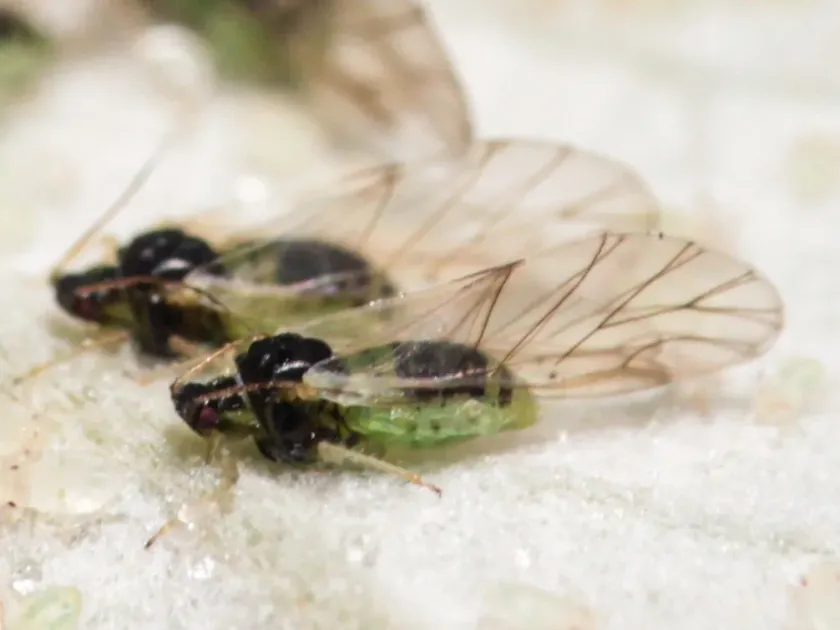
The Poplar aphid (Chaitophorus populialbae) is a small insect belonging to the family Aphididae, order Hemiptera. Adults are typically greenish-yellow to brownish in color, which helps them blend in with the foliage of their host trees.
The insect undergoes an incomplete metamorphosis, with a life cycle characterized by multiple generations including both wingless and winged forms to facilitate rapid dispersal.
They overwinter primarily as fertilized eggs deposited in crevices of the bark or near the buds of host plants, ensuring their survival through the harsh winter months.
As spring temperatures rise, the overwintered eggs hatch into fundatrices (stem mothers), which initiate the colonization process on newly emerged leaves.
These aphids tend to form dense colonies on the undersides of leaves, protected from direct sunlight and environmental factors, which allows them to feed undisturbed.
What it damages
The primary host for this species is the White poplar (Populus alba), although they frequently infest other poplar species commonly used in urban landscaping and forestry.
The aphids feed by piercing plant tissues and extracting sap, which deprives the tree of essential nutrients and disrupts its normal physiological functions.
Heavy infestations lead to leaf curling, deformation, and premature leaf drop, which can significantly reduce the photosynthetic capacity and aesthetic value of the tree.
The secretion of honeydew provides an ideal substrate for the growth of sooty mold, which covers the foliage in a black, sticky layer and further hinders gas exchange.
Weakened trees are significantly more susceptible to environmental stressors such as drought, secondary fungal infections, and winter injury.
When it appears
Activity begins in early spring, synchronized with the bud break of the host trees, when the stem mothers start feeding on tender spring growth.
Population density typically peaks during the mid-summer months, when temperatures are optimal for the rapid development of successive generations.
Throughout the season, the species produces several generations, including winged adults that facilitate movement between trees in a forest or park setting.
As autumn approaches, the environmental cues trigger the production of sexual forms, resulting in the deposition of overwintering eggs to complete the cycle.
Early season scouting is critical, as controlling the initial spring colonies is much easier than managing large, established populations later in the summer.
Signs of infestation
Visual identification starts with observing curled or distorted leaf tips and the presence of yellowing patches on the foliage where the aphids have been feeding.
The accumulation of shiny, sticky honeydew on the leaves and branches is a definitive sign of an aphid presence, often accompanied by a distinct sweet smell.
The presence of ants is a strong indicator; ants are attracted to the sugary honeydew and will actively farm the aphids and protect them from predators.
The development of black sooty mold on the foliage and bark confirms that the aphid colony has been active for an extended period of time.
Checking the undersides of leaves often reveals dense clusters of these small insects, which are easily disturbed and scatter when the branches are shaken.
Control measures
Successful management of the Poplar aphid involves a mix of cultural, biological, and chemical control methods to minimize damage.
- Application of systemic insecticides during early spring to target the initial population.
- Encouraging the presence of natural predators like ladybugs, lacewings, and hoverflies in the area.
- Pruning infested branches in the early stages to reduce the total population density.
- Monitoring trees regularly and applying horticultural oils or soaps where appropriate for smaller infestations.
- Promoting overall tree vigor through adequate watering and soil health to help trees withstand damage.
Taxonomy
- Latin name
- Chaitophorus populialbae
- Order
- Hemiptera (bugs, aphids, leafhoppers)
- Family
- Chaitophoridae
- EPPO code
- CHAIPA
Discussion
No discussions yet — be the first.