
Willow aphid
Chaitophorus capreae
Description
How to identify
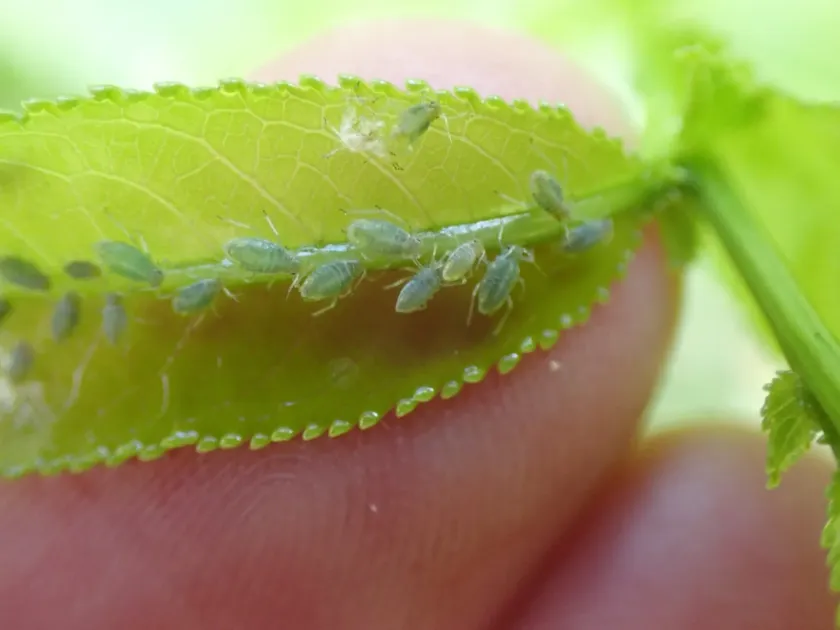
The willow aphid (Chaitophorus capreae) is a small insect belonging to the family Aphididae. It is a common pest that specializes in feeding on the leaves of willow trees.
The adults are typically 1.5–2.5 mm long, with a soft body that ranges in color from light green to brown. They are often found in dense colonies on the undersides of leaves.
The life cycle begins with overwintering eggs laid on the bark of young shoots. These hatch in early spring, producing the first generation of aphids.
Throughout the summer, the population grows through asexual reproduction, allowing them to cover large areas of foliage very quickly.
By late autumn, sexual individuals emerge to mate and lay the eggs that will survive the winter, ensuring the population's continuity for the next year.
What it damages
This species is primarily associated with the genus Salix. It is particularly damaging to young, vigorous shoots where nutrient flow is high.
Infestations are commonly found in commercial willow plantations and nurseries, where aphid activity can significantly reduce the quality and growth rate of the trees.
Signs of infestation
Infested leaves exhibit curling and yellowing due to the loss of sap. This deformation is a clear sign that a colony is established on the branch.
The secretion of honeydew is a characteristic symptom. This sugary substance often covers the leaves and promotes the growth of sooty mold, which blocks photosynthesis.
Young twigs fail to elongate properly and may appear twisted or stunted. This negatively impacts the aesthetics of ornamental willow varieties.
Premature leaf drop is frequently observed in heavily infested plants, which weakens the tree and makes it susceptible to cold winters.
High ant activity on the tree is a strong indicator of an aphid presence, as ants are often attracted to the honeydew produced by the pests.
Control measures
Cultural control involves pruning and disposing of heavily infested branches during the early stages of the season to reduce the overall population.
Promoting natural enemies like ladybirds, hoverflies, and lacewings is essential. Integrated pest management aims to protect these predators to maintain balance.
When chemical intervention is necessary, systemic insecticides applied early in the season are highly effective at controlling aphid colonies.
Regular monitoring of nursery stock is crucial. Early detection allows for spot treatments, which minimizes the need for blanket spraying across the entire site.
Maintaining healthy tree growth through proper site selection and balanced fertilization helps the plants withstand moderate aphid pressure without suffering long-term damage.
Taxonomy
- Latin name
- Chaitophorus capreae
- Order
- Hemiptera (bugs, aphids, leafhoppers)
- Family
- Chaitophoridae
- EPPO code
- PSEMSA
Discussion
No discussions yet — be the first.