
Poplar aphid
Chaitophorus psylloides
Description
How to identify
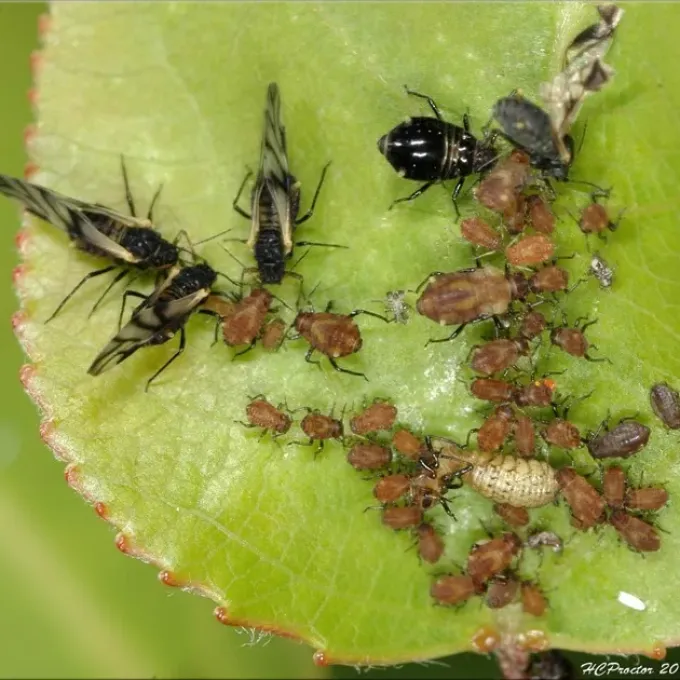
The poplar aphid Chaitophorus psylloides is a member of the Aphididae family, specializing in feeding on trees within the genus Populus.
These small insects are typically found in dense colonies on the undersides of leaves, utilizing their piercing-sucking mouthparts to extract plant sap.
Adults exhibit varied coloration, ranging from light green to brownish, which provides excellent camouflage against the foliage of the host tree.
Their life cycle involves both asexual reproduction throughout the growing season and sexual reproduction in autumn, ensuring population survival.
Morphologically, they are identified by specific structures such as their siphunculi and the pattern of hairs on their body, which are characteristic of the Chaitophorus genus.
What it damages
This pest primarily affects black poplars and various other poplar species, focusing its feeding efforts on young, succulent shoots and new leaf growth.
Feeding activities lead to significant tissue damage, causing leaves to curl, yellow, and eventually lose their photosynthetic efficiency.
In addition to direct physiological stress, the aphids secrete honeydew, which serves as a medium for the growth of sooty mold, further harming the tree's health.
Young nursery stock is particularly vulnerable, as heavy aphid infestations can cause stunted growth and reduced vigor in developing trees.
High population densities can lead to premature leaf drop, which degrades the aesthetic value of street trees and park landscapes.
When it appears
The life cycle begins in spring as overwintered eggs hatch, coinciding with the bud break of the host poplar trees.
As temperatures rise during late spring and early summer, the aphid population expands rapidly through successive generations of nymphs.
Winged forms appear in mid-summer, facilitating the dispersal of the colony to nearby trees or different parts of the same host.
In autumn, sexual reproduction occurs, leading to the deposition of overwintering eggs in the crevices of the tree bark.
The pest's ability to survive harsh winters in the egg stage makes it a persistent threat to poplar plantations year after year.
Signs of infestation
Visual identification starts with observing curled and deformed leaves on the growing tips of poplar branches.
The presence of sticky honeydew on the leaves is a primary indicator of aphid activity, which often attracts ants that forage on the sugary substance.
Sooty mold, appearing as black patches on the foliage, is a common secondary symptom resulting from the colonization of honeydew by fungi.
Reduced vigor and chlorosis (yellowing) in young shoots are clear signs that the tree is under severe pressure from sap-feeding pests.
- Curled and distorted leaf blades
- Visible sticky honeydew residue
- Increased ant activity on trunks and branches
- Black sooty mold deposits
- Premature loss of foliage
Control measures
Chemical control using systemic insecticides is highly effective for managing severe outbreaks, especially in commercial nurseries or high-value landscapes.
It is critical to apply treatments thoroughly to the undersides of the leaves to ensure direct contact with the aphid colonies.
Encouraging the presence of natural predators, such as lady beetles, lacewings, and hoverflies, can provide long-term biological control of aphid populations.
Cultural practices, including the removal and destruction of heavily infested branches, help to reduce the overall population pressure on the tree.
Monitoring for the first signs of aphids in the spring allows for timely intervention, preventing the insects from reaching damaging population levels.
Taxonomy
- Latin name
- Chaitophorus psylloides
- Order
- Hemiptera (bugs, aphids, leafhoppers)
- Family
- Chaitophoridae
- EPPO code
- CHAIPS
Discussion
No discussions yet — be the first.