
Brimstone butterfly
Celastrina
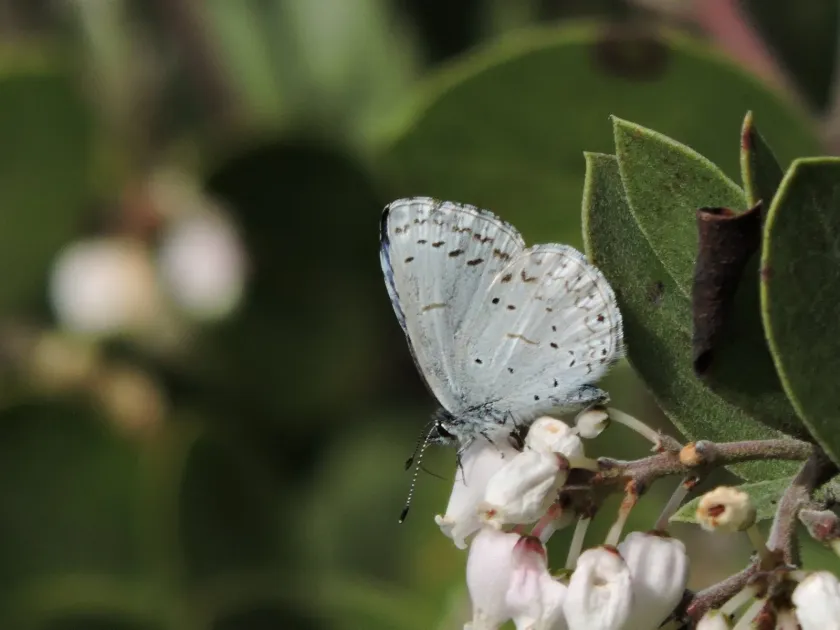
Description
How to identify
The Brimstone butterfly (Gonepteryx rhamni) is a member of the Pieridae family. Adults are easily recognized by their distinct wing shape and bright lemon-yellow (males) or greenish-white (females) color.
The larvae are cylindrical, matte green with a lateral light stripe, providing excellent camouflage while feeding on host plant foliage throughout their development stages.
The lifecycle includes complete metamorphosis. Unlike most other butterfly species, the adult Brimstone overwinters in thick vegetation, emerging very early in the spring.
The development time of caterpillars is highly dependent on ambient temperatures, with growth cycles typically completing over several weeks of the spring and summer.
Pupation usually occurs on the stems or undersides of host plant leaves, where the pupa remains camouflaged until the adult butterfly emerges to continue the cycle.
What it damages
The primary host plants for this species are members of the Rhamnaceae family, specifically the Common Buckthorn (Rhamnus cathartica) and Alder Buckthorn.
Caterpillars feed primarily on leaves, consuming the leaf tissue from the margins inward, which can lead to significant defoliation in cases of high population density.
Young nursery stock and ornamental buckthorn hedges are the most vulnerable to damage, as heavy feeding can stunt plant growth and reduce overall vigor.
While mature trees are generally resilient to the damage caused by these caterpillars, young saplings may suffer growth retardation if heavily infested during the early growing season.
Economic impact is generally low in commercial agriculture, but the pest can be a nuisance in decorative landscaping where visual quality of foliage is paramount.
Signs of infestation
The most visible sign of infestation is irregular holes in the leaf blades, often starting from the edges or appearing as perforations within the leaf tissue.
Frass (caterpillar droppings) found on the foliage or on lower branches provides clear evidence of active feeding and the presence of larvae in the canopy.
Small eggs laid on the underside of leaves during the spring are an early indicator that should prompt monitoring before the hatching of the larvae begins.
Reduced shoot growth and thinning of the canopy are typical long-term signs that the plant is suffering from extensive feeding by a large colony of caterpillars.
In severe cases, visible skeletonization of the leaves can occur, where only the toughest veins remain, significantly compromising the plant's photosynthetic capability.
Control measures
Cultural control is the most effective approach, which involves removing unwanted buckthorn bushes from the vicinity of sensitive ornamental gardens.
Hand-picking caterpillars is a highly effective and eco-friendly method for controlling the population in small-scale gardens or on individual specimen plants.
Biological insecticides, specifically those containing Bacillus thuringiensis (Bt), are highly effective at targeting the caterpillars while preserving beneficial garden insects.
Application of chemical pesticides should be strictly reserved for emergency situations where population levels threaten the survival or structural integrity of young plants.
Regular inspection of host plants during the early spring allows for early detection, preventing the need for more intensive management strategies later in the season.
Taxonomy
- Latin name
- Celastrina
- Order
- Lepidoptera (butterflies)
- Family
- Lycaenidae
- EPPO code
- CELSSP
Discussion
No discussions yet — be the first.