
Purple finch
Carpodacus purpureus
Description
How to identify
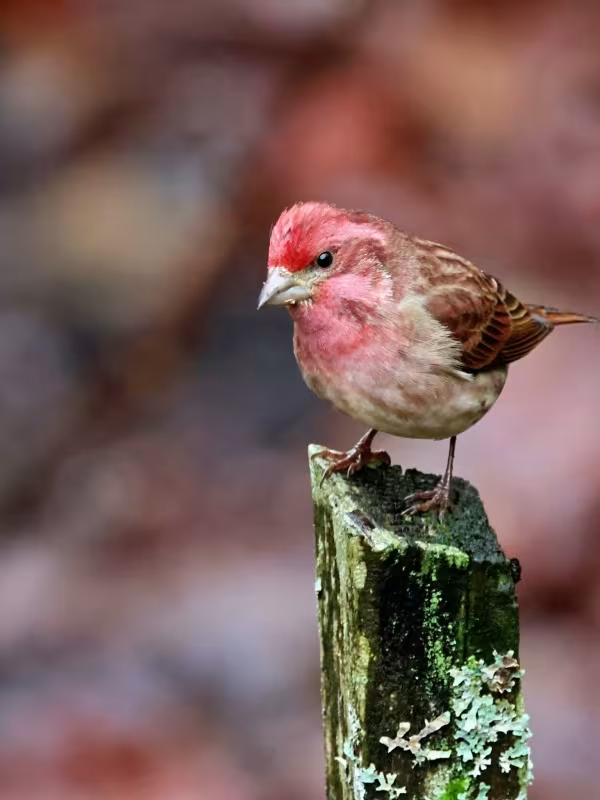
The Purple Finch (Carpodacus purpureus) is a songbird belonging to the Fringillidae family. The male is known for its distinctive raspberry-red head, breast, and back, while females exhibit a duller, streaky brown appearance.
Equipped with a robust, conical beak, this bird is highly efficient at crushing hard seeds and tree buds. This anatomical feature makes them a significant challenge for fruit growers during specific times of the year.
Native to coniferous and mixed forests in North America, these birds perform seasonal migrations. When food resources are scarce, they may form large flocks that forage in gardens, orchards, and agricultural fields.
Adult individuals typically measure between 14 and 16 centimeters in length. They are generally elusive and tend to forage high in the canopy, often making them difficult to spot until significant damage has already occurred.
Their melodious song is a key identifier. Farmers and agronomists should be aware that a sudden increase in birdsong near the orchard during early spring can be a precursor to potential bud damage.
What it damages
The most severe damage occurs in early spring when birds feed on the developing buds of fruit trees. By consuming these buds, they destroy the potential flowers and future fruits, leading to a substantial yield reduction.
As the season progresses, Purple Finches may also damage ripening fruits. Their strong beaks allow them to puncture the skin of berries and stone fruits to access the sweet pulp, causing both direct loss and cosmetic damage.
Injured fruits and buds are highly susceptible to secondary fungal infections. Once the bird has breached the plant tissue, it creates an entry point for various pathogens, complicating plant health management.
Persistent foraging on branches can weaken the trees and reduce their overall vigor. In young orchards, repeated attacks may cause stunted growth and long-term productivity losses.
The economic impact depends on the local flock size and the timing of food availability in the surrounding wild habitats. Severe infestations can significantly impact the commercial viability of a harvest.
When it appears
The primary period of concern is early spring, starting from late winter through to the leafing-out phase. This is when the birds focus heavily on tree buds to meet their nutritional requirements after winter.
Late summer represents a secondary high-risk window when fruit ripening occurs. During this time, the availability of high-sugar food sources draws the birds into orchards and berry plantations.
Migration periods can lead to sudden, temporary spikes in bird activity on agricultural lands. These events require vigilant monitoring and immediate deployment of deterrents to protect the crop.
Winter activity is typically lower, but in regions with harsh weather, birds may congregate near farm buildings and gardens seeking artificial food sources or accessible vegetation.
Agronomic observation should be proactive, focusing on the weeks leading up to bud burst and the peak fruit-ripening weeks to implement protection strategies before damage peaks.
Control measures
Effective deterrents include visual aids such as reflective tapes, spinning devices, and realistic predator decoys. These should be moved regularly to maintain a deterrent effect and prevent habituation.
Physical exclusion remains the most reliable protection method. Applying netting over small fruit bushes or individual tree branches effectively prevents birds from accessing the fruit and buds.
Acoustic systems, such as distress call broadcasts, can be used to drive flocks away from high-value areas. It is recommended to randomize the broadcast patterns to increase the efficacy of this method.
Managing the habitat around the orchard can also help. Removing or modifying vegetation that provides cover for birds before they swoop into the orchard can reduce the attractiveness of the site.
Integrated bird management strategies prioritize non-lethal deterrents, as they align with sustainable agricultural practices and are often more acceptable in professional farming environments.
Taxonomy
- Latin name
- Carpodacus purpureus
- Family
- Fringillidae
- EPPO code
- CARDPU
Discussion
No discussions yet — be the first.